
Adjustment, Exercise or Both? What Works Best for Lower Back Pain?
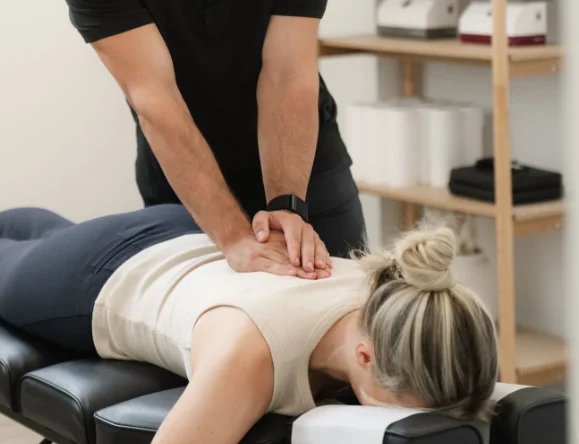
If you have lower back pain, you may wonder whether you should rest, start exercising, or see a chiropractor for an adjustment.
In reality, it often isn’t a choice between adjustment or exercise.
They can play different roles at different stages of lower back pain, and for many people, a combination of hands-on treatment, appropriate movement and gradual strengthening may form part of their management plan.
Where do chiropractic adjustments fit in?
A chiropractic adjustment, often referred to as spinal manipulation in research, involves applying a controlled movement to a joint in the spine.
Recent research continues to support spinal manipulation as one conservative option for people with lower back pain. A major 2026 Cochrane review found that spinal manipulation may help improve pain and function in some people with chronic lower back pain.
Not every patient needs the same type of adjustment either.
For someone who is very sore, guarded or uncomfortable with traditional manual manipulation, a chiropractor may choose a lower-force approach.
One option we use at Lakeside Chiropractic is the Activator Method. The Activator is a handheld instrument that delivers a quick, controlled impulse to a specific joint without the twisting or manual thrust commonly associated with traditional adjustments.
This can be particularly useful when we want to use a gentler form of chiropractic adjustment, including in some patients experiencing an acute episode of lower back pain.
The type of technique used should always depend on the individual presentation, examination findings and what the patient is comfortable with.
And where does exercise fit in?

Once pain starts to settle, one of the most important goals is usually getting the person moving confidently again.
Exercise doesn’t necessarily mean going straight back to heavy lifting or completing a difficult gym program.
Early exercise might simply involve walking, gentle mobility work or movements that the person can comfortably tolerate. As symptoms improve, rehabilitation and strengthening exercises can be progressed to help rebuild strength, endurance and confidence with everyday activities.
Research supports exercise as an important part of managing persistent lower back pain.
The key is choosing an appropriate starting point.
Someone with a sudden painful flare-up may initially need very simple movement, while someone who has experienced recurring lower back pain for several years may benefit from a more structured strengthening program.
So, adjustment or exercise?
For many patients, the answer can be both, but not necessarily all at once.
During a painful or restricted stage, chiropractic treatment may focus more on helping manage pain and improving comfortable movement. This could involve manual adjustment, mobilisation or a lower-force technique such as the Activator Method.
As movement becomes easier, exercise and rehabilitation can gradually take a larger role.
A 2025 systematic review looking at manual therapy combined with exercise found improvements in pain and disability in several studies, particularly over the short term, although the researchers noted variation between the studies.
Read the systematic review on manual therapy and exercise This is why we generally don’t think of hands-on treatment and exercise as competing options.
They can complement each other.
For example, a patient may initially find bending or walking uncomfortable. Chiropractic treatment may form one part of helping them manage that painful stage, while gradually introducing movement and exercise can help them return to normal activity.
What about a sudden episode of lower back pain?
One of the most common reactions to acute lower back pain is to stop moving because everything feels irritated.
While there are situations where activity needs to be modified, prolonged avoidance of movement is not generally the goal.
A large recent randomised clinical trial involving 1,000 adults with acute or subacute lower back pain also highlighted the importance of supported self-management and staying engaged with movement during recovery.
Read the PACBACK clinical trial The important part is appropriate movement.
That might mean temporarily avoiding heavy lifting or movements that sharply aggravate symptoms, while continuing with comfortable walking and gradually increasing activity.
For someone who is particularly acute or guarded, treatment can also be modified. Instead of a traditional manual adjustment, we may use gentler mobilisation or an Activator adjustment, depending on the findings during assessment.
Finding the right balance
Two people with lower back pain can require very different approaches.
Someone who hurt their back yesterday lifting something may need a different starting point from someone who has experienced recurrent lower back pain for five years.
A chiropractic assessment looks at factors such as how the pain began, which movements aggravate it, mobility, strength, previous episodes and how the symptoms are affecting work and everyday life.
From there, management may include chiropractic adjustments, mobilisation, soft tissue treatment, movement advice and rehabilitation exercises.
The balance can also change as you improve.
Early treatment may involve more hands-on care. Later, the emphasis may shift toward exercise, strengthening and helping you return to the activities that matter to you.
So rather than asking “adjustment or exercise?”, a better question may be:
“What does my back need at this stage?”
If you’re experiencing lower back pain, our chiropractors at Lakeside Chiropractic in Joondalup can assess your presentation and discuss which treatment and exercise options may be appropriate for you.
Research
de Zoete A, et al. Spinal manipulative therapy for adults with chronic low back pain. Cochrane Database of Systematic Reviews, 2026. https://www.cochranelibrary.com/cdsr/doi/10.1002/14651858.CD008112.pub3/full Narenthiran P, et al. Does the addition of manual therapy to exercise improve outcomes in low back pain? Systematic review, 2025. https://pubmed.ncbi.nlm.nih.gov/40325660/ Bronfort G, et al. Spinal Manipulation and Clinician-Supported Biopsychosocial Self-Management for Acute Back Pain: The PACBACK Randomized Clinical Trial. JAMA. https://jamanetwork.com/journals/jama/fullarticle/2843253 This article provides general health information and is not intended to replace individual assessment or medical advice.
Latest Posts


