
Pes Anserine Bursitis Treatment in Joondalup: Relief for Inner Knee Pain
If you’ve got tender, aching pain on the inside of your knee below the joint line, our Joondalup team can help settle pes anserine bursitis and address what’s driving it.
What Is Pes Anserine Bursitis?
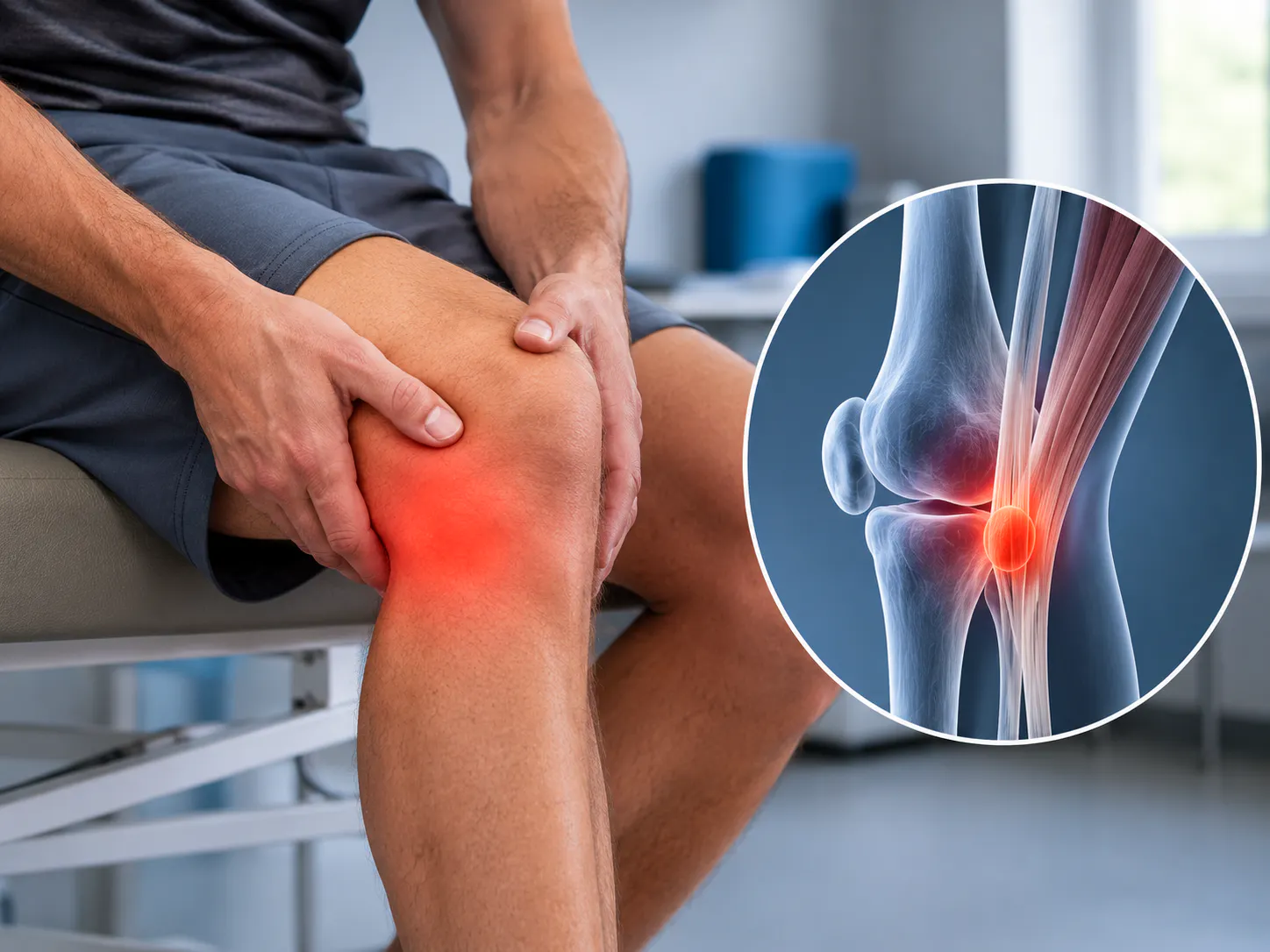
Pes anserine bursitis causes pain and tenderness on the inner side of the knee, a few centimetres below the joint itself.
It’s common in people with knee osteoarthritis, runners, and anyone who has tight hamstrings, and we see it regularly across our Joondalup and Currambine patient base.
The pes anserinus is the point where three muscle tendons, from the sartorius, gracilis and semitendinosus muscles, attach together on the inner shin bone just below the knee. A small bursa sits underneath this attachment to reduce friction. When the tendons are tight or overloaded, or the bursa is irritated by repetitive friction, it can become inflamed and painful. It’s often linked with other knee conditions, particularly osteoarthritis, and with lower limb alignment that puts extra strain on the inner knee.
Symptoms of Pes Anserine Bursitis
- Pain and tenderness on the inner knee, below the joint line
- Discomfort that’s worse going up stairs or when getting up from sitting
- Pain that can come on gradually rather than from a specific injury
- Mild swelling over the inner shin, just below the knee
- Discomfort with resisted knee bending, since the pes anserinus tendons are active during this movement
What Causes Pes Anserine Bursitis
- Tight hamstring muscles, which increase tension through the pes anserinus tendons
- Existing knee osteoarthritis, which is commonly associated with this condition
- Flat feet or altered lower limb alignment, which changes the angle of pull through the inner knee
- A rapid increase in running or training volume
- Being overweight, which adds load through the knee generally
Understanding the Evidence
The evidence points to hamstring flexibility and biomechanics as key contributing factors.
A detailed review of the condition by Helfenstein and Kuromoto (2010) describes pes anserine pain as closely tied to hamstring tightness and lower limb biomechanics, and notes it is frequently seen alongside knee osteoarthritis, supporting a treatment approach that addresses these underlying contributors rather than just the painful area itself.
How We Can Help
Because tight hamstrings and lower limb mechanics play such a large role in this condition, treatment usually looks at the whole leg, not just the sore spot.
This might include:
A low-load option to help manage pain and inflammation over the bursa while the underlying tightness is addressed.
Read more about cold laser at our new website Cold Laser Perth .
References
- Helfenstein M Jr, Kuromoto J. Anserine syndrome. Revista Brasileira de Reumatologia. 2010;50(3):313-327. PMID 21125167
Disclaimer: This page is intended as general information only and does not replace individual assessment and advice from a qualified health professional. If you're dealing with pain on the inside of your knee, book an appointment with our team so we can assess your specific situation and recommend an appropriate treatment plan.
Location Details

| Day | Hours |
|---|---|
| Sunday | 9:00 AM - 4:00 PM |
| Monday | 9:00 AM - 7:00 PM |
| Tuesday | 8:00 AM - 7:00 PM |
| Wednesday | 8:00 AM - 7:00 PM |
| Thursday | 8:00 AM - 7:00 PM |
| Friday | 8:00 AM - 7:00 PM |
| Saturday | 8:00 AM - 4:00 PM |

