
Sacroiliac Joint Dysfunction Treatment in Joondalup and Perth's Northern Suburbs
Pain in the lower back, buttock, or back of the thigh that does not follow the typical nerve patterns of sciatica is often coming from the sacroiliac joint, a commonly overlooked source of back pain.
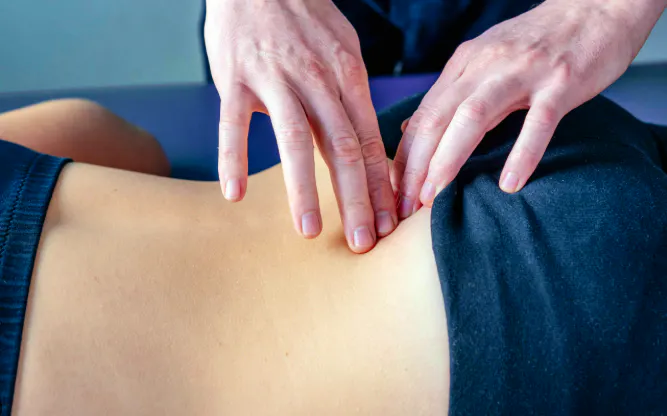
What Is the Sacroiliac Joint?
The sacroiliac joint, or SIJ, connects the sacrum at the base of the spine to the ilium of the pelvis on each side.
It carries significant load during walking, running, bending, and lifting. Although the joint moves very little, it is richly supplied with nerves and can be a significant source of pain when its mechanics become disrupted.
SIJ dysfunction refers to altered movement or position of the joint that produces pain. It accounts for a meaningful proportion of low back pain presentations and is often misdiagnosed as lumbar disc or facet joint pain because the symptoms can overlap.
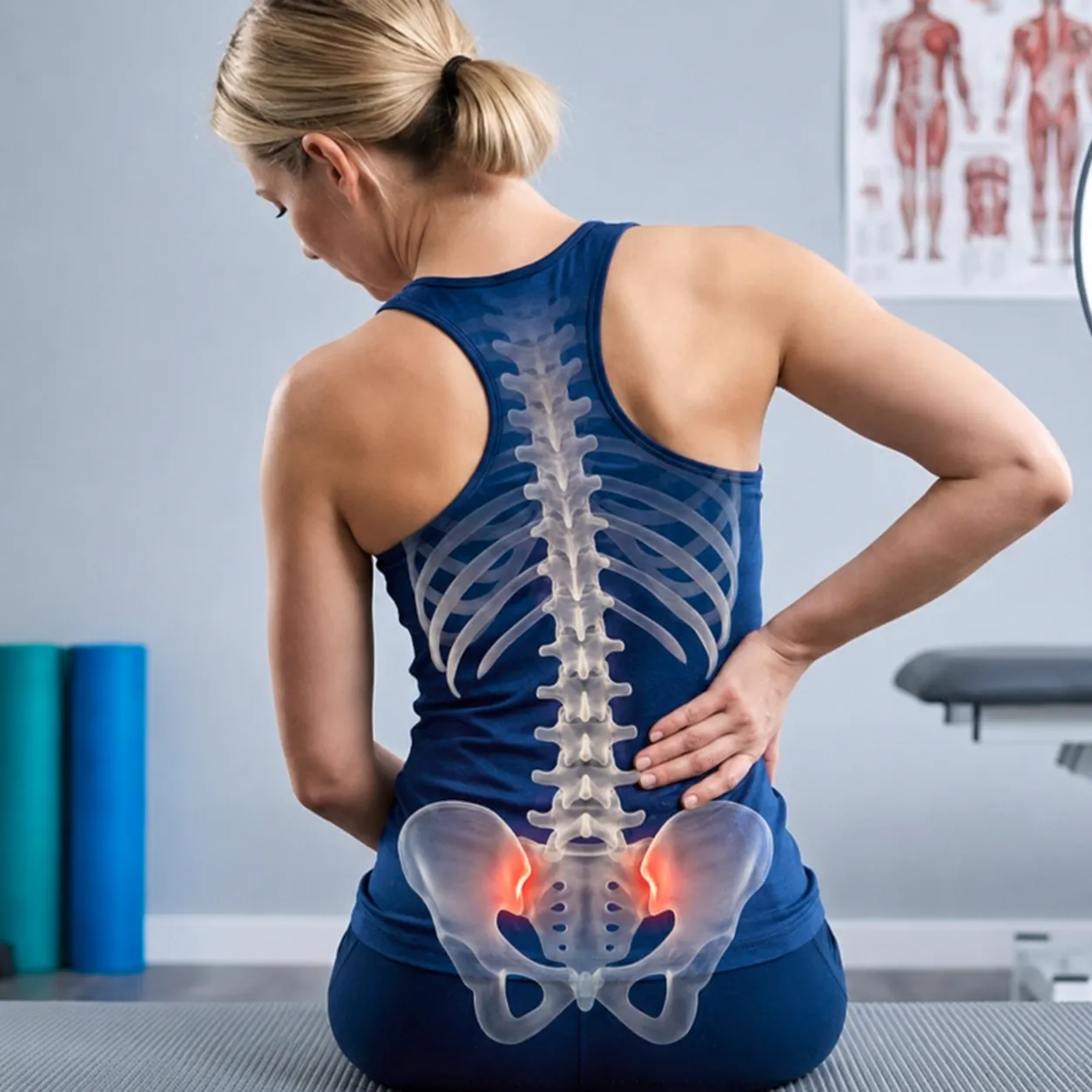
SIJ Pain Can Develop in Several Different Contexts
SIJ pain can be a feature of pregnancy-related pelvic pain, after a fall onto the hip, following motor vehicle accidents, and in people with leg length differences or altered gait mechanics.
Symptoms
The classic pattern is a deep, aching pain on one side of the lower back that may spread into the buttock, back of the thigh, or groin.
- Deep aching pain in the lower back, usually on one side
- Pain extending into the buttock, back of the thigh, or groin
- Pain aggravated by prolonged sitting
- Discomfort when getting up from a chair
- Pain when walking on uneven ground or climbing stairs
- Pain when rolling over in bed
- A sharp catch with certain movements in some people
What the Research Shows
Research supports manual therapy and lumbopelvic rehabilitation as useful conservative approaches for sacroiliac joint pain.
- A 2024 systematic review and meta-analysis by Trager et al. (2024) analysed randomised controlled trials on manual therapy for sacroiliac joint pain syndrome.
- The review found a statistically significant moderate effect of SIJ manual therapy on reducing disability. Evidence on pain was mixed, but the authors concluded that manual therapy appears clinically useful for this population.
- Javadov et al. (2021) conducted a randomised controlled trial comparing manual therapy combined with SIJ exercises against exercise alone in patients with SIJ dysfunction syndrome.
- All three treatment groups improved significantly in pain and function, with the groups receiving manual therapy showing sustained improvements at follow-up.
- Laslett (2008) provided an evidence-based framework for diagnosing and treating SIJ pain, identifying specific pain provocation tests as the most clinically useful diagnostic approach.
- The review highlighted lumbopelvic stabilisation training as one of the most evidence-supported treatment strategies.
How Chiropractic Care Can Help
At Lakeside Chiropractic in Joondalup, we use a combination of manual therapy, exercise, and soft tissue work to address sacroiliac joint dysfunction.
Correct diagnosis is the first step, and we use a set of specific clinical provocation tests to confirm that the SIJ is the primary pain source before designing your care plan.
The ligaments and muscles around the SIJ, including the gluteals, piriformis, and thoracolumbar fascia, frequently become tight and painful with ongoing dysfunction.
Hands-on treatment of these structures supports joint recovery.
Dry needling into the gluteal and lumbar muscles that refer pain around the SIJ region can significantly reduce pain and improve movement.
Lumbopelvic stabilisation exercises are a key part of managing SIJ dysfunction. We guide you through a progressive program that improves the control and support around the joint so it is less vulnerable to flare-ups.
Taping around the SIJ and gluteal region can provide proprioceptive feedback and support during recovery, particularly for active patients or those on their feet all day.
Cold laser therapy can help reduce inflammation in and around the SIJ and the supporting ligaments.
Learn more about Cold Laser Therapy or visit Cold Laser Perth .
Getting the Diagnosis Right Matters
Because SIJ pain overlaps with other lower-back conditions, we take time to assess your movement patterns, apply specific diagnostic tests, and understand your symptom history before making recommendations.
If appropriate, we can also advise on when imaging or referral may be warranted.
Serving Perth's Northern Suburbs
We see patients from Joondalup, Currambine, Woodvale, Kingsley, Duncraig, Wanneroo, and the surrounding northern suburbs.
If lower back and buttock pain has been hard to pin down, we would be glad to help you work out what is going on.
Disclaimer: This page provides general health information only and is not a substitute for professional assessment, diagnosis, or treatment. Results vary between individuals. Please consult a qualified health professional to discuss your individual circumstances.
References
- Trager RJ, et al. Efficacy of manual therapy for sacroiliac joint pain syndrome: a systematic review and meta-analysis of randomized controlled trials. J Man Manip Ther. 2024;32(6):561-572. PMID 38353102
- Javadov A, et al. The efficiency of manual therapy and sacroiliac and lumbar exercises in patients with sacroiliac joint dysfunction syndrome. Pain Physician. 2021;24(3):223-233. PMID 33988941
- Laslett M. Evidence-based diagnosis and treatment of the painful sacroiliac joint. J Man Manip Ther. 2008;16(3):142-152. PMID 19119403
Location Details

| Day | Hours |
|---|---|
| Sunday | 9:00 AM - 4:00 PM |
| Monday | 9:00 AM - 7:00 PM |
| Tuesday | 8:00 AM - 7:00 PM |
| Wednesday | 8:00 AM - 7:00 PM |
| Thursday | 8:00 AM - 7:00 PM |
| Friday | 8:00 AM - 7:00 PM |
| Saturday | 8:00 AM - 4:00 PM |

