
Chiropractic Care for Postpartum Recovery in Joondalup: Healing After Birth
Gentle chiropractic care can support your recovery after birth, helping ease back and pelvic pain as your body adjusts to a new routine of feeding, carrying and lifting.
The weeks and months after birth bring a whole new set of physical demands, feeding, carrying, bending over a cot or car seat, often on very little sleep. Many mums across Joondalup and Perth’s northern suburbs come to see us with back or pelvic pain that either continued from pregnancy or showed up for the first time postpartum.

What Causes Postpartum Pain?
The ligament laxity that builds up during pregnancy doesn’t disappear the moment your baby is born, it takes months to fully settle.
At the same time, new movement patterns like feeding positions, carrying a baby on one hip, and repetitive bending and lifting place fresh demands on the lower back, pelvis and upper back and shoulders.
Recovery from a vaginal delivery or a caesarean adds another layer, with its own healing timeline and movement considerations.
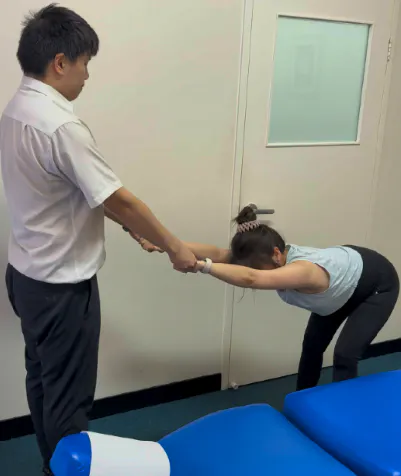
Symptoms of Postpartum Pain
- Ongoing low back or pelvic pain that hasn’t settled since giving birth
- Upper back and neck tension, often related to feeding positions
- Pain or stiffness around a caesarean scar or the abdominal area
- Hip or pelvic discomfort with walking or standing for long periods
- General fatigue related muscle tension through the back and shoulders
What the Research Shows
Chiropractic care shows favourable, though still developing, evidence for postpartum pain.
A systematic review by Weis et al. (2020) , the companion review to the pregnancy paper above and published in the same journal, assessed chiropractic care for postpartum low back and pelvic girdle pain and found inconclusive but favourable evidence supporting its use as part of a broader recovery plan.
Exercise is a well established, first line treatment for persistent low back pain generally, postpartum included.
There isn’t a large body of research specifically on exercise for postpartum back pain, but a 2021 Cochrane review by Hayden et al. (2021) , covering 249 trials and over 24,000 adults, found moderate certainty evidence that exercise is effective for chronic low back pain generally. Since the mechanics of a sore lower back don’t change just because the pain started postpartum, this evidence base applies just as much here as anywhere else.
Dry needling has good evidence for the muscular trigger points behind a lot of postpartum tension.
A systematic review and meta-analysis by Liu et al. (2018) found moderate quality evidence that dry needling of myofascial trigger points reduces pain intensity in low back pain, particularly when combined with other treatment. Trigger points in the neck, shoulders and lower back are exactly the kind of tension that builds up from feeding and carrying postures, so this evidence translates directly.
How We Can Help
Treatment is tailored to where you’re at in your recovery, whether that’s a few weeks or many months postpartum. This might include:
Continued postpartum-adapted care as your body transitions out of pregnancy, addressing the lower back, pelvis and any caesarean related restrictions.
Hands on spinal and pelvic manipulation, adapted to your recovery stage and any caesarean healing, in line with the chiropractic evidence above.
Hands on work to the neck, upper back and shoulders, common problem areas given the postures involved in feeding and carrying.
Used to release tight, overworked muscles in the neck, shoulders and upper back that build up from feeding and carrying postures.
An electrotherapy modality that can help settle pain in the lower back or pelvis alongside hands on treatment.
A gradual return to exercise plan, rebuilding strength through the core and lower back at a pace that suits your recovery.
Taping to support the lower back or pelvis during the day while you’re carrying and feeding your baby.
References
- Weis CA, Pohlman K, Draper C, da Silva-Oolup S, Stuber K, Hawk C. Chiropractic Care of Adults With Postpartum-Related Low Back, Pelvic Girdle, or Combination Pain: A Systematic Review. Journal of Manipulative and Physiological Therapeutics. 2020;43(7):732-743. PMID 32873418
- Hayden JA, Ellis J, Ogilvie R, Malmivaara A, van Tulder MW. Exercise therapy for chronic low back pain. Cochrane Database of Systematic Reviews. 2021;9:CD009790. PMID 34580864
- Liu L, Huang QM, Liu QG, Thitham N, Li LH, Ma YT, Zhao JM. Evidence for Dry Needling in the Management of Myofascial Trigger Points Associated With Low Back Pain: A Systematic Review and Meta-Analysis. Archives of Physical Medicine and Rehabilitation. 2018;99(1):144-152. PMID 28690077
Disclaimer: This page is intended as general information only and does not replace individual assessment and advice from a qualified health professional. If you're dealing with back, pelvic or postural pain after having your baby, book an appointment with our team so we can assess your specific situation and recommend an appropriate treatment plan.
Location Details

| Day | Hours |
|---|---|
| Sunday | 9:00 AM - 4:00 PM |
| Monday | 9:00 AM - 7:00 PM |
| Tuesday | 8:00 AM - 7:00 PM |
| Wednesday | 8:00 AM - 7:00 PM |
| Thursday | 8:00 AM - 7:00 PM |
| Friday | 8:00 AM - 7:00 PM |
| Saturday | 8:00 AM - 4:00 PM |

