
Piriformis Syndrome Treatment in Joondalup and Perth's Northern Suburbs
Deep buttock pain that mimics sciatica is often coming from the piriformis muscle rather than the spine itself. Targeted manual therapy and stretching are the mainstay of treatment.
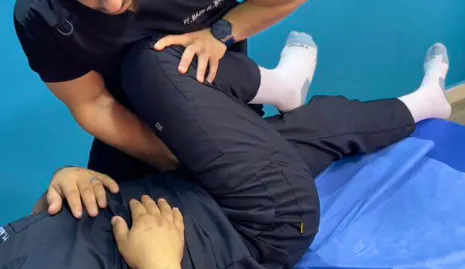
What Is Piriformis Syndrome?
The piriformis is a small muscle deep in the buttock that runs from the sacrum to the top of the thigh bone.
The sciatic nerve passes close beside the piriformis or, in some people, directly through it. Piriformis syndrome occurs when the muscle becomes tight, irritated, or goes into spasm, compressing or irritating the sciatic nerve as it passes through the region.
It is sometimes confused with sciatica of spinal origin because the referred leg pain can feel very similar, but the underlying mechanism and treatment approach are different.
Common triggers include prolonged sitting, direct trauma to the buttock, overuse from running or repetitive hip movement, and muscular imbalance around the hip and pelvis.
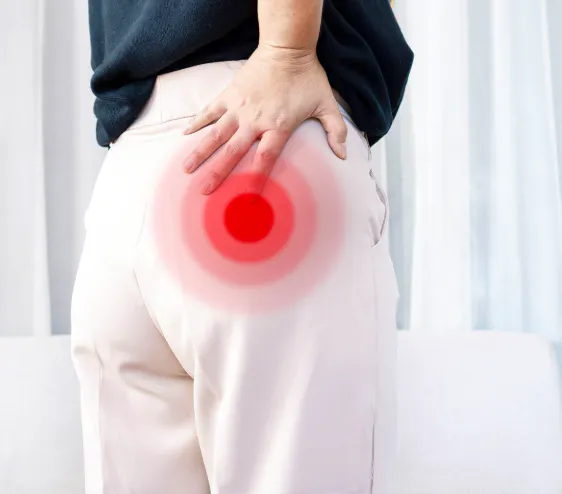
Piriformis Syndrome and Spinal Sciatica Can Feel Similar
Piriformis syndrome is a common but underrecognised source of buttock and leg pain, particularly in people with desk-based jobs or those training for running events. Confirming the source of symptoms helps determine the right treatment approach.
Symptoms
Symptoms usually begin as a deep ache or sharp pain in the buttock and may travel down the back of the thigh.
- Deep aching or sharp pain in the buttock
- Pain that may radiate down the back of the thigh
- Symptoms aggravated by prolonged sitting
- Pain with climbing stairs or hip-rotation movements
- Tenderness directly over the piriformis muscle
- Increased pain when crossing the legs
- Relief with standing or walking
- Symptoms that rarely extend below the knee
- Usually no lower-back pain driving the presentation
What the Research Shows
Research supports targeted manual therapy and stretching as effective conservative options for piriformis syndrome.
- Danazumi et al. (2021) , published in the Journal of Osteopathic Medicine, conducted a randomised clinical trial comparing an integrated neuromuscular inhibition technique with a positional release technique in patients with confirmed piriformis syndrome.
- Both manual therapy approaches, combined with stretching, produced significant improvements in pain, function, and hip range of motion. The integrated technique showed greater improvement.
- Shahzad et al. (2020) , published in the Journal of Back and Musculoskeletal Rehabilitation, compared two myofascial stretching techniques for piriformis syndrome.
- Both approaches produced meaningful improvements in pain, muscle length, and functional performance, supporting stretching and manual therapy as effective conservative options.
How Chiropractic Care Can Help
We assess the hip, pelvis, and lower back together to confirm that the piriformis is the primary source of symptoms before beginning treatment.
Accurate diagnosis makes a real difference because piriformis syndrome and spinal sciatica can feel similar but require different treatment strategies.
Hands-on release techniques directly targeting the piriformis and surrounding gluteal muscles are one of the most effective approaches for reducing pain and restoring normal muscle length.
Dry needling into the piriformis and surrounding gluteal muscles may help release tight bands of muscle and reduce referred pain into the leg.
A targeted stretching and strengthening program for the hip and pelvic muscles is central to resolving piriformis syndrome and reducing the chance of recurrence.
Cold laser may help reduce inflammation around the irritated muscle and nearby nerve tissue.
Learn more about Cold Laser Therapy or visit Cold Laser Perth .
What to Expect
We use specific orthopaedic tests to help distinguish piriformis syndrome from spinal causes of sciatica.
If symptoms extend below the knee or point more clearly to a spinal cause, we will explain that and adjust the treatment plan accordingly.
If deep buttock pain has been affecting sitting, walking, or exercise, we can help you get to the bottom of it.
Serving Perth's Northern Suburbs
We see patients from Joondalup, Currambine, Woodvale, Kingsley, Duncraig, Wanneroo, and the surrounding northern suburbs.
Disclaimer: This page provides general health information only and is not a substitute for professional assessment, diagnosis, or treatment. Results vary between individuals. Please consult a qualified health professional to discuss your individual circumstances.
References
- Danazumi MS, et al. Effect of integrated neuromuscular inhibition technique compared with positional release technique in the management of piriformis syndrome. J Osteopath Med. 2021;121(8):693-703. PMID 34049428
- Shahzad M, et al. Effects of ELDOA and post-facilitation stretching technique on pain and functional performance in patients with piriformis syndrome: a randomized controlled trial. J Back Musculoskelet Rehabil. 2020;33(6):983-988. PMID 32894238
Location Details

| Day | Hours |
|---|---|
| Sunday | 9:00 AM - 4:00 PM |
| Monday | 9:00 AM - 7:00 PM |
| Tuesday | 8:00 AM - 7:00 PM |
| Wednesday | 8:00 AM - 7:00 PM |
| Thursday | 8:00 AM - 7:00 PM |
| Friday | 8:00 AM - 7:00 PM |
| Saturday | 8:00 AM - 4:00 PM |

