
Golfer's Elbow Treatment in Joondalup and Perth's Northern Suburbs
Pain on the inner side of the elbow that worsens with gripping or wrist flexion — golfer's elbow affects far more than golfers and responds well to the right hands-on care.
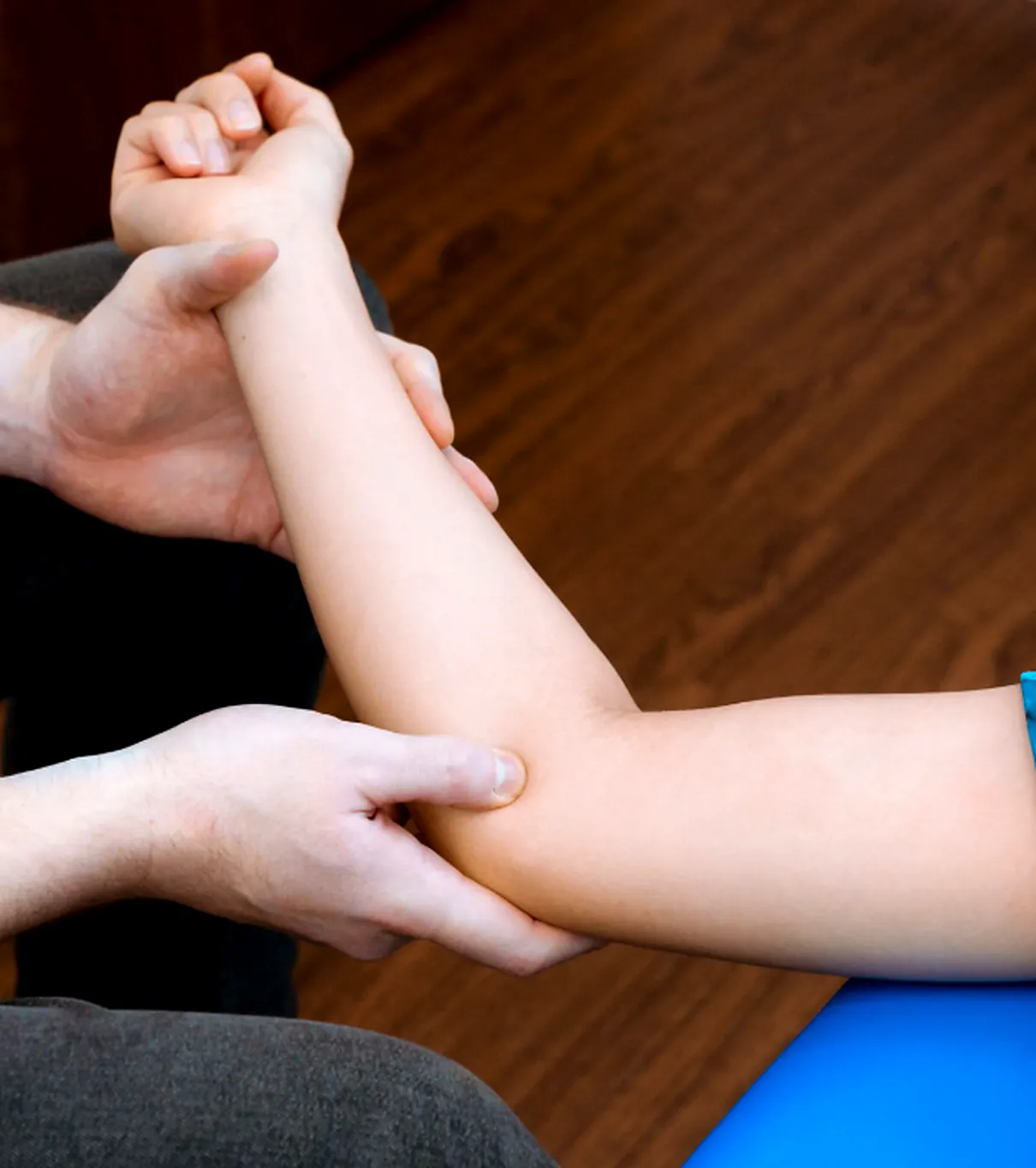
Golfer's elbow, known clinically as medial epicondylalgia, is a tendinopathy affecting the flexor tendons where they attach to the inner bony point of the elbow. It shares many characteristics with tennis elbow but can be more stubborn because the flexor-pronator muscles are involved in almost every gripping and lifting task.
What Is Golfer's Elbow?
The flexor-pronator muscle group converges on the medial epicondyle at the inner side of the elbow.
When repeatedly overloaded, the common flexor tendon develops degenerative changes at its attachment, producing the characteristic inner-elbow pain.
The ulnar nerve runs directly behind the medial epicondyle. Irritation of this nerve can accompany the tendinopathy and may produce tingling into the ring and little fingers.
Common Causes
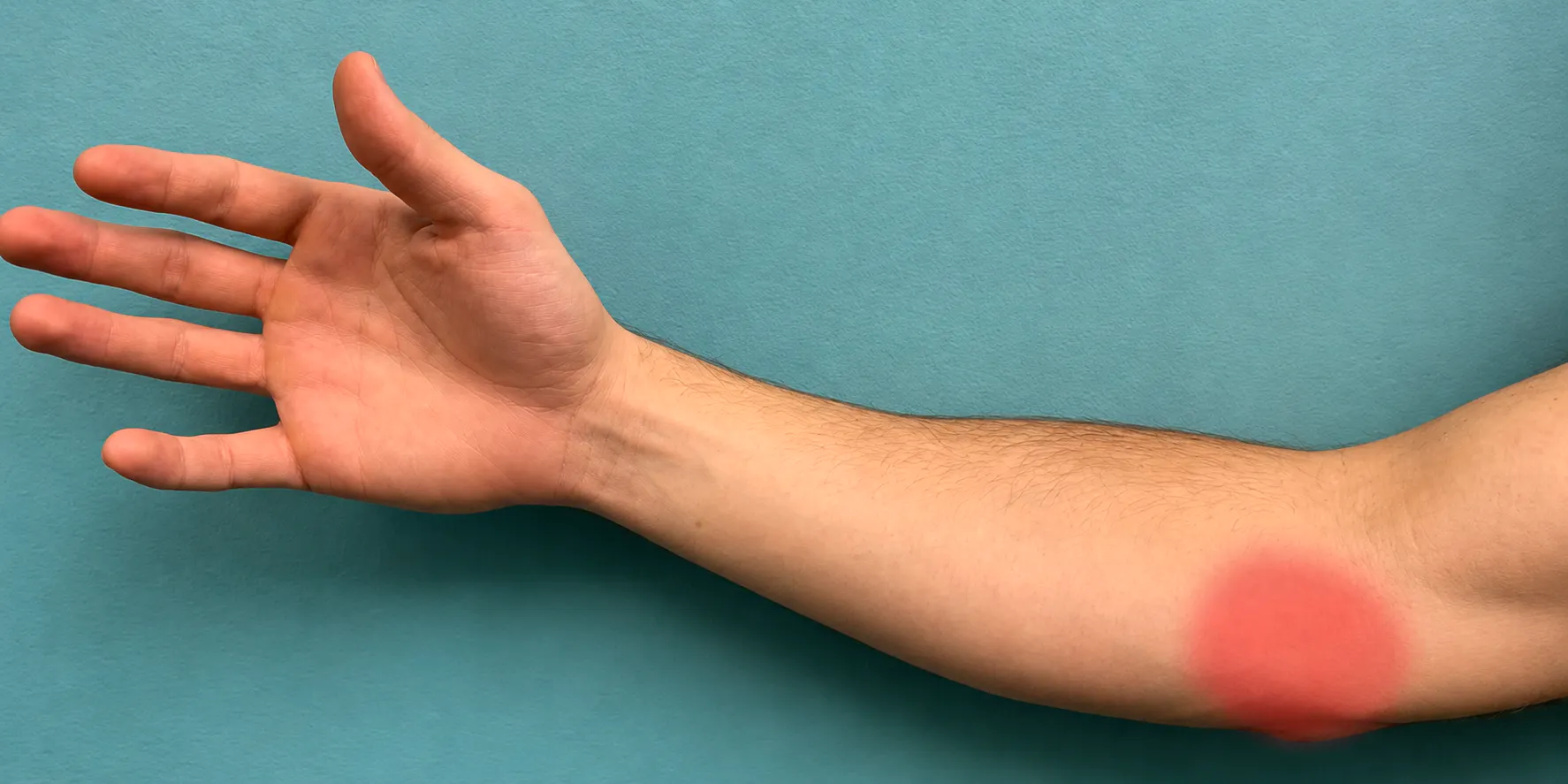
The flexor-pronator tendon is commonly overloaded by gripping, wrist flexion, throwing, climbing, or repeated forearm rotation.
- Repetitive wrist flexion or forearm pronation under load
- Gripping tools, weights, or equipment for extended periods
- Throwing sports, golf, rock climbing, or racquet sports
- A sudden increase in training volume or a new physical task
- Prolonged keyboard or mouse use in certain wrist positions
Symptoms
- Pain on the inner side of the elbow, at or just below the medial epicondyle
- Tenderness to touch over the inner elbow
- Pain with gripping, wrist flexion, or forearm rotation
- Weakness in grip strength
- Occasional tingling or numbness into the ring and little fingers if the ulnar nerve is involved
What the Research Shows
Research supports progressive tendon loading and manual therapy as part of a conservative multimodal approach.
- The 2006 Bisset et al. BMJ trial established that manipulation combined with exercise outperformed corticosteroid injection in the long term and waiting without treatment in the short term for elbow tendinopathy. The principles of progressive tendon loading and manual therapy are also applied to medial elbow presentations.
- The 2022 overview by Di Filippo et al. confirmed that conservative multimodal care is the most consistently supported approach for elbow tendinopathy, with exercise and manual therapy favoured as first-line management across the spectrum of elbow presentations.
How We Can Help
Care is selected according to the involved tendon, grip tolerance, forearm movement, symptom duration, and whether the ulnar nerve is contributing.
Cross-friction therapy may be applied directly to the common flexor tendon at the medial epicondyle, combined with longitudinal treatment of the flexor carpi radialis, flexor carpi ulnaris, and pronator teres.
An instrument may be used along the medial epicondyle and flexor tendon to address fibrotic tissue that can develop in chronic presentations.
Dry needling may target the flexor carpi radialis and pronator teres alongside the medial tendon attachment. When ulnar nerve irritation is present, the flexor carpi ulnaris may also be assessed and treated.
Cold laser may be applied at the medial epicondyle and along the flexor tendon to reduce pain and support tendon recovery, particularly when the area is initially too sore for progressive exercise loading.
Learn more about Cold Laser Therapy or visit Cold Laser Perth .
A counterforce strip may be applied below the medial epicondyle to reduce load at the tendon attachment during gripping tasks and support work or sport while the tendon recovers.
Rehabilitation may progress from pain-free isometric wrist-flexion holds to eccentric loading and heavy slow resistance training of the flexor-pronator group. Grip strengthening and forearm rotation exercises may be added as the tendon tolerates more load.
Persistent Inner-Elbow Pain Is Worth Assessing
Lakeside Chiropractic is based in Joondalup and sees patients from Currambine, Woodvale, Kingsley, Duncraig, Wanneroo, Tapping, Carramar, Heathridge, Edgewater, Mullaloo, Padbury, Banksia Grove, Yanchep, Gnangara, and across Perth's northern suburbs.
Call us on 9300 0095 or visit lakesidechiro.com.au .
Disclaimer: This page provides general health information only and is not a substitute for professional assessment, diagnosis, or treatment. Results vary between individuals. Please consult a qualified health professional to discuss your individual circumstances.
References
- Bisset L, et al. Mobilisation with movement and exercise, corticosteroid injection, or wait and see for tennis elbow: randomised trial. BMJ. 2006;333(7575):939. PMID 17012266
- Di Filippo L, et al. Treatment, diagnostic criteria and variability of terminology for lateral elbow pain: findings from an overview of systematic reviews. Healthcare (Basel). 2022;10(6):1095. PMID 35742152
Location Details

| Day | Hours |
|---|---|
| Sunday | 9:00 AM - 4:00 PM |
| Monday | 9:00 AM - 7:00 PM |
| Tuesday | 8:00 AM - 7:00 PM |
| Wednesday | 8:00 AM - 7:00 PM |
| Thursday | 8:00 AM - 7:00 PM |
| Friday | 8:00 AM - 7:00 PM |
| Saturday | 8:00 AM - 4:00 PM |

