
Hip Bursitis Treatment in Joondalup and Perth's Northern Suburbs
Conservative management of hip bursitis and trochanteric bursa pain through chiropractic care, soft tissue therapy, and rehabilitation in Joondalup and Perth's northern suburbs.
What Is Hip Bursitis?
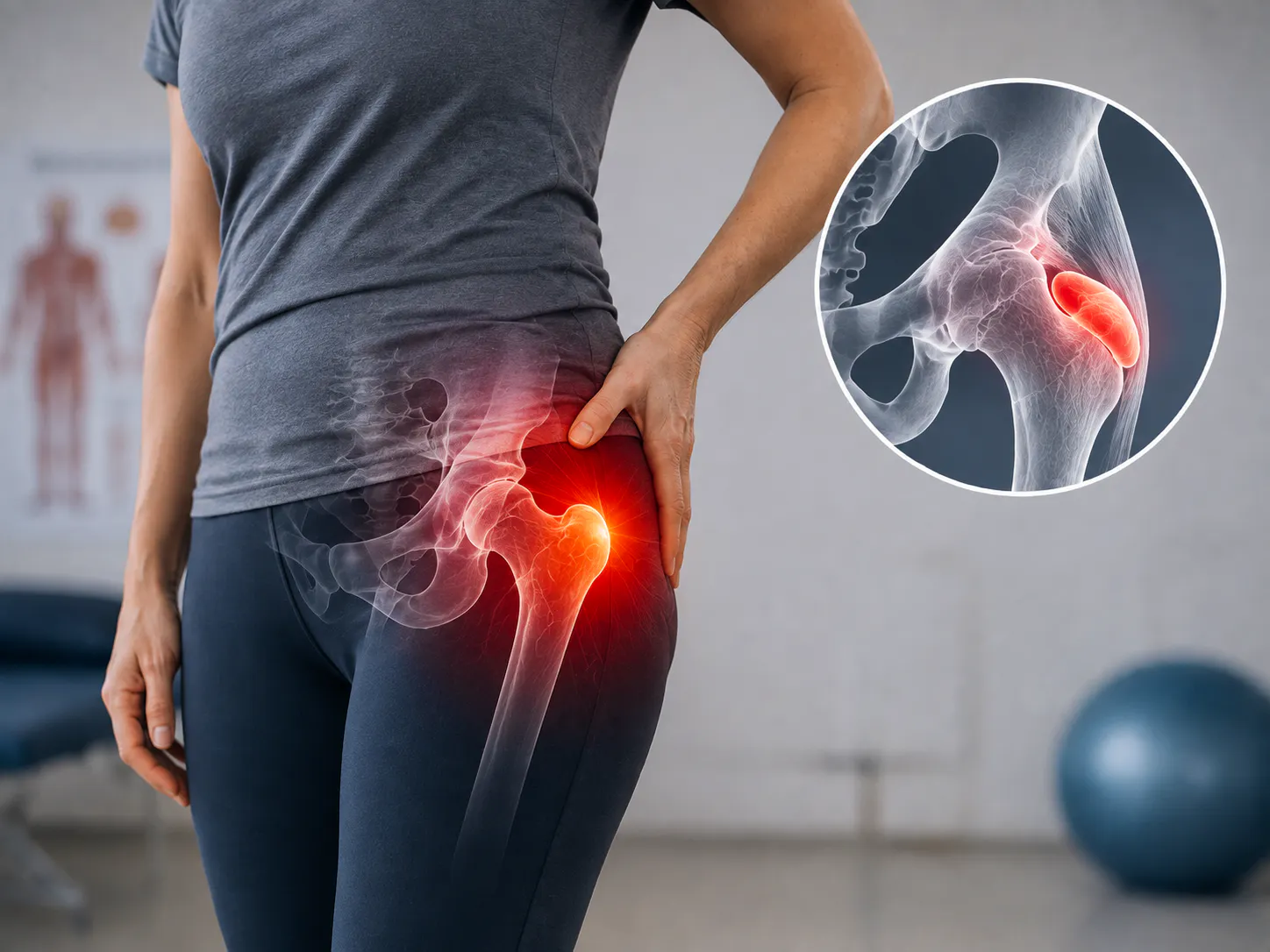
Hip bursitis refers to inflammation of one or more of the bursae around the hip joint.
Bursae are small fluid-filled sacs that cushion the tendons, muscles, and bones where they move against each other. When they become irritated or inflamed, they cause localised pain, tenderness, and swelling.
The most commonly affected bursa in the hip is the trochanteric bursa, which sits between the greater trochanter (the bony outer part of the upper thigh) and the overlying soft tissue.
Pain is felt on the outer side of the hip and upper thigh, often described as a deep aching or burning sensation. It is frequently worse when lying on the affected side at night, walking on uneven ground, or getting up after sitting for a prolonged period.
Hip Bursitis Can Exist Alongside Gluteal Tendon Problems
It is worth noting that the term "hip bursitis" has been used broadly for many years, and more recent imaging and surgical research has shown that true bursal inflammation is often secondary to an underlying tendon problem in the gluteal muscles.
In many cases, the two conditions exist together, which is why assessment and treatment needs to address both the bursa and the surrounding tendons and muscles.
What Causes Hip Bursitis?
Hip bursitis is often triggered by a combination of factors.
Repetitive activities that compress or rub the bursa, such as running, cycling, or prolonged standing, are common contributors. Sudden increases in training load are a frequent culprit in active people.
Direct trauma to the outer hip, such as a fall, can also trigger bursitis.
Underlying biomechanical factors play an important role. Weakness of the hip abductors and gluteal muscles, tightness in the iliotibial band, and altered movement patterns in the pelvis and lower back can all create conditions where the trochanteric bursa is repeatedly compressed or irritated.
This is why addressing these factors is essential for lasting improvement.
How Chiropractic Care Can Help
At Lakeside Chiropractic in Joondalup, we assess the hip as part of the broader lower limb and pelvic system.
As well as treating the painful area directly, we look at what is driving the irritation, whether that is muscle weakness, restricted movement, or loading patterns that need to be adjusted.
For most people, a conservative approach combining manual therapy, targeted exercise, and load management is effective in settling hip bursitis.
For more persistent or acutely inflamed cases, we may recommend a referral for imaging or a cortisone injection to reduce inflammation before rehabilitation begins.
What the Research Shows
Education and Exercise Outperformed Injection
A 2018 randomised controlled trial by Mellor et al. published in the BMJ found that an education and exercise program outperformed both corticosteroid injection and a wait-and-see approach for people with gluteal tendinopathy and lateral hip pain, with the exercise group showing better outcomes at both eight weeks and 52-week follow-up.
Exercise Supports Long-Term Improvement
A 2024 meta-analysis by Kjeldsen et al. in Physiotherapy supports exercise as the first-line treatment for GTPS and lateral hip conditions, finding that exercise was superior to corticosteroid injection for long-term improvement.
Treatment at Lakeside Chiropractic
We take a staged approach to hip bursitis: settling the acute inflammation first, then rebuilding strength and correcting the biomechanical factors that contributed to the problem.
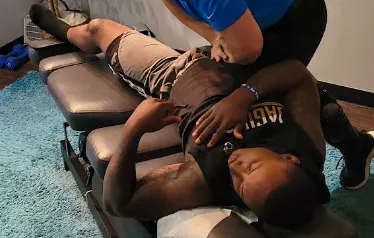
Gentle massage and myofascial techniques are applied to the muscles surrounding the hip, including the gluteals, tensor fasciae latae, and iliotibial band. This reduces compressive forces on the bursa and improves local tissue health.
Low-level laser light is applied to painful, inflamed tissue to support cellular repair and reduce pain.
Learn more about Cold Laser Therapy or visit Cold Laser Perth .
Dry needling to the gluteal muscles and hip rotators helps reduce hypertonicity and muscle guarding that can increase pressure on the inflamed bursa.
Progressive hip abductor strengthening and gluteal loading exercises are introduced carefully, starting with positions that avoid compressing the bursa and building from there.
Where restricted movement in the hip, pelvis, or lumbar spine is contributing to altered load transfer, mobilisation and manipulation help restore normal movement patterns.
Tape applied around the lateral hip can reduce compressive load on the bursa during activity and provide some pain relief while the area settles.
When to Seek Further Assessment
If hip pain is severe, associated with significant swelling, or has not responded to several weeks of conservative care, further investigation may be warranted.
We can refer you for ultrasound imaging or to your GP for consideration of an image-guided cortisone injection if appropriate. We communicate openly about when a referral is the right next step.
Hip Bursitis in Joondalup's Northern Suburbs
We regularly see hip bursitis in people across Joondalup, Wanneroo, Currambine, Woodvale, Kingsley, Duncraig, and the surrounding northern suburbs.
It is particularly common in female recreational walkers and runners, people returning to exercise after a break, and those with a history of hip surgery or altered gait from another lower limb condition.
References
- Mellor R et al. Education plus exercise versus corticosteroid injection use versus a wait and see approach on global outcome and pain from gluteal tendinopathy. BMJ. 2018;361:k1662. PMID 29720374
- Kjeldsen T et al. Exercise compared to a control condition or other conservative treatment options in patients with Greater Trochanteric Pain Syndrome: a systematic review and meta-analysis. Physiotherapy. 2024;123:69-80. PMID 38295551
Disclaimer: This page provides general health information only and is not a substitute for professional assessment, diagnosis, or treatment. Results vary between individuals. Please consult a qualified health professional to discuss your individual circumstances.

