
Shin Splints Treatment in Joondalup: Relief for Medial Tibial Stress Syndrome
Load management, hands on treatment and addressing lower limb biomechanics can help runners and new exercisers in Perth’s northern suburbs work through shin splints.
What Is Medial Tibial Stress Syndrome?
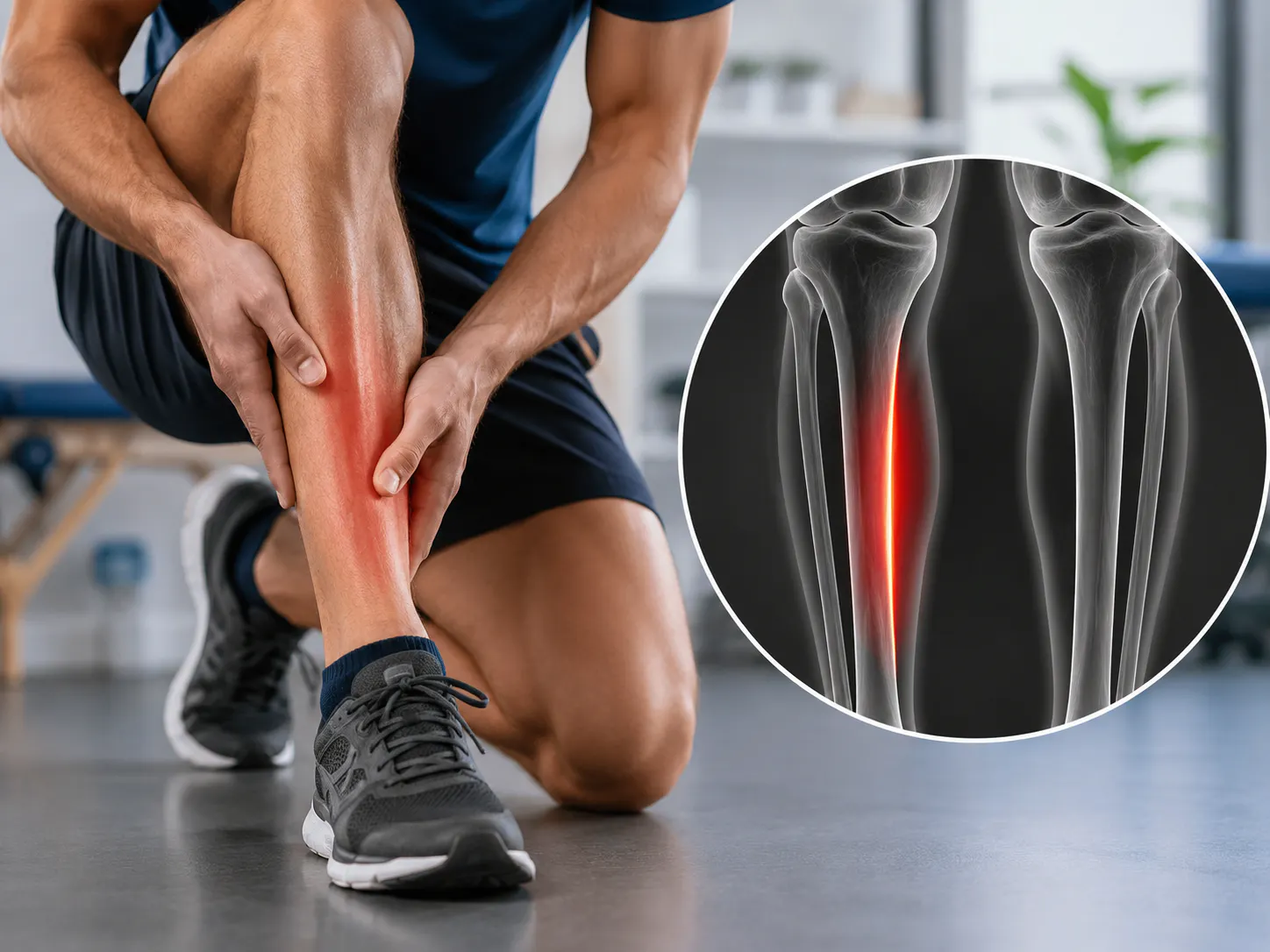
Shin splints, known clinically as medial tibial stress syndrome, is a common complaint among runners and anyone who has recently increased their walking or running load around Joondalup and Wanneroo.
It causes an aching or sharp pain along the inner edge of the shin bone that typically flares up with impact activity.
Medial tibial stress syndrome develops when repetitive impact through the lower leg outpaces the tibia’s ability to adapt, leading to irritation of the bone and the muscles that attach along its inner edge. It sits on a spectrum with more serious tibial stress injuries, so it’s worth knowing the signs that suggest something more serious, which we’ve covered below.
Symptoms of Shin Splints
- Aching or sharp pain along the inner edge of the shin bone, usually over a broader area rather than one specific point
- Pain that starts during exercise and may ease as you warm up, then return afterward
- Tenderness along the shin when pressed
- Mild swelling along the lower inner leg in some cases
- Pain that gradually worsens with continued training if left unaddressed
What Causes Shin Splints
- A sudden increase in running distance, frequency or intensity
- Running or exercising on hard surfaces without adequate adaptation time
- Worn out or unsuitable footwear
- Flat feet or excessive inward rolling of the foot during impact
- Tightness or weakness in the calf and surrounding lower leg muscles
Shin Splints or Stress Fracture? How to Tell the Difference
Shin splints and a tibial stress fracture sit on the same spectrum of overuse injury, and it’s not always obvious which one you’re dealing with.
A few features can point you in the right direction, though a proper diagnosis still needs a clinical assessment and sometimes imaging, since plain X-rays can miss an early stress fracture.
- Location of tenderness: shin splints cause soreness spread along a length of the inner shin, while a stress fracture tends to produce one sharply tender spot you can point to with a single finger.
- Pain pattern: shin splint pain often settles once you’ve warmed up and returns afterward, while stress fracture pain tends to build steadily through a session and doesn’t ease with warming up.
- Pain at rest: shin splints are usually activity related, while a stress fracture can eventually hurt with ordinary walking or even at rest as it progresses.
- Swelling: a stress fracture is more likely to cause localised swelling right over the sore spot, rather than the milder, more general thickening sometimes felt with shin splints.
- Response to hopping: pain that’s sharply reproduced by hopping on the affected leg is a recognised sign that raises suspicion for a stress fracture rather than straightforward shin splints.
If your pain is becoming more localised, more intense, or starting to bother you at rest or overnight, it’s worth getting it properly assessed rather than assuming it’s ordinary shin splints. Our tibial stress fracture page covers this in more detail.
What the Research Shows
Managing training load is the foundation of effective treatment.
A systematic review by Winters et al. (2013) assessed the available randomised and controlled trials for medial tibial stress syndrome and found that, while several treatments have been studied, the overall evidence quality for any single intervention was limited, reinforcing the importance of a careful, individualised approach built around load management rather than relying on one treatment alone.
Diffuse tenderness along the shin is what separates shin splints from a stress fracture on examination.
A widely cited critical review by Moen et al. (2009) describes medial tibial stress syndrome as pain and tenderness spread along a length of the posteromedial shin, distinct from the more contained, focal tenderness typical of a tibial stress fracture, and outlines this spread versus single point pattern as one of the clearest ways to tell the two conditions apart clinically.
How We Can Help
Because shin splints usually reflect a mismatch between load and capacity, treatment focuses on calming the irritated area while addressing the training and biomechanical factors behind it.
This might include:
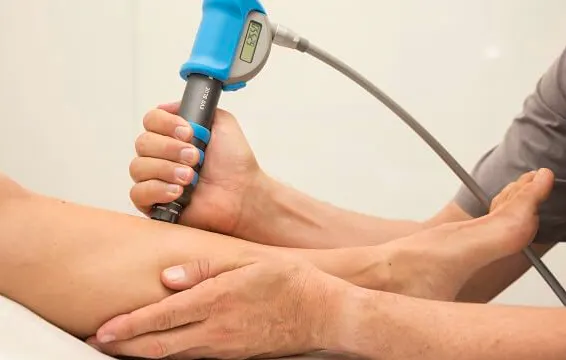
Hands on treatment to the calf and tibialis posterior muscles to reduce tension along the inner shin.
Used to address tight, overworked calf and lower leg muscles contributing to the irritation.
Guidance on training load, footwear and a graded return to running, along with strengthening for the lower leg and foot.
Taping along the shin to help support the lower leg and reduce strain on the tibialis posterior during a graded return to running.
A low-load option to help manage pain along the shin while training load is adjusted.
Read more about cold laser at our new website Cold Laser Perth .
References
- Winters M, Eskes M, Weir A, Moen MH, Backx FJG, Bakker EWP. Treatment of medial tibial stress syndrome: a systematic review. Sports Medicine. 2013;43(12):1315-1333. PMID 23979968
- Moen MH, Tol JL, Weir A, Steunebrink M, de Winter TC. Medial tibial stress syndrome: a critical review. Sports Medicine. 2009;39(7):523-546. PMID 19530750
Disclaimer: This page is intended as general information only and does not replace individual assessment and advice from a qualified health professional. If you're dealing with shin pain, particularly if it’s related to running or a recent increase in activity, book an appointment with our team so we can assess your specific situation and recommend an appropriate treatment plan.
Location Details

| Day | Hours |
|---|---|
| Sunday | 9:00 AM - 4:00 PM |
| Monday | 9:00 AM - 7:00 PM |
| Tuesday | 8:00 AM - 7:00 PM |
| Wednesday | 8:00 AM - 7:00 PM |
| Thursday | 8:00 AM - 7:00 PM |
| Friday | 8:00 AM - 7:00 PM |
| Saturday | 8:00 AM - 4:00 PM |

