
Thoracic Outlet Syndrome Treatment in Joondalup and Perth's Northern Suburbs
Arm pain, numbness, or weakness that comes from the neck and shoulder region — thoracic outlet syndrome is often missed or misdiagnosed, and conservative care is the recommended first approach.
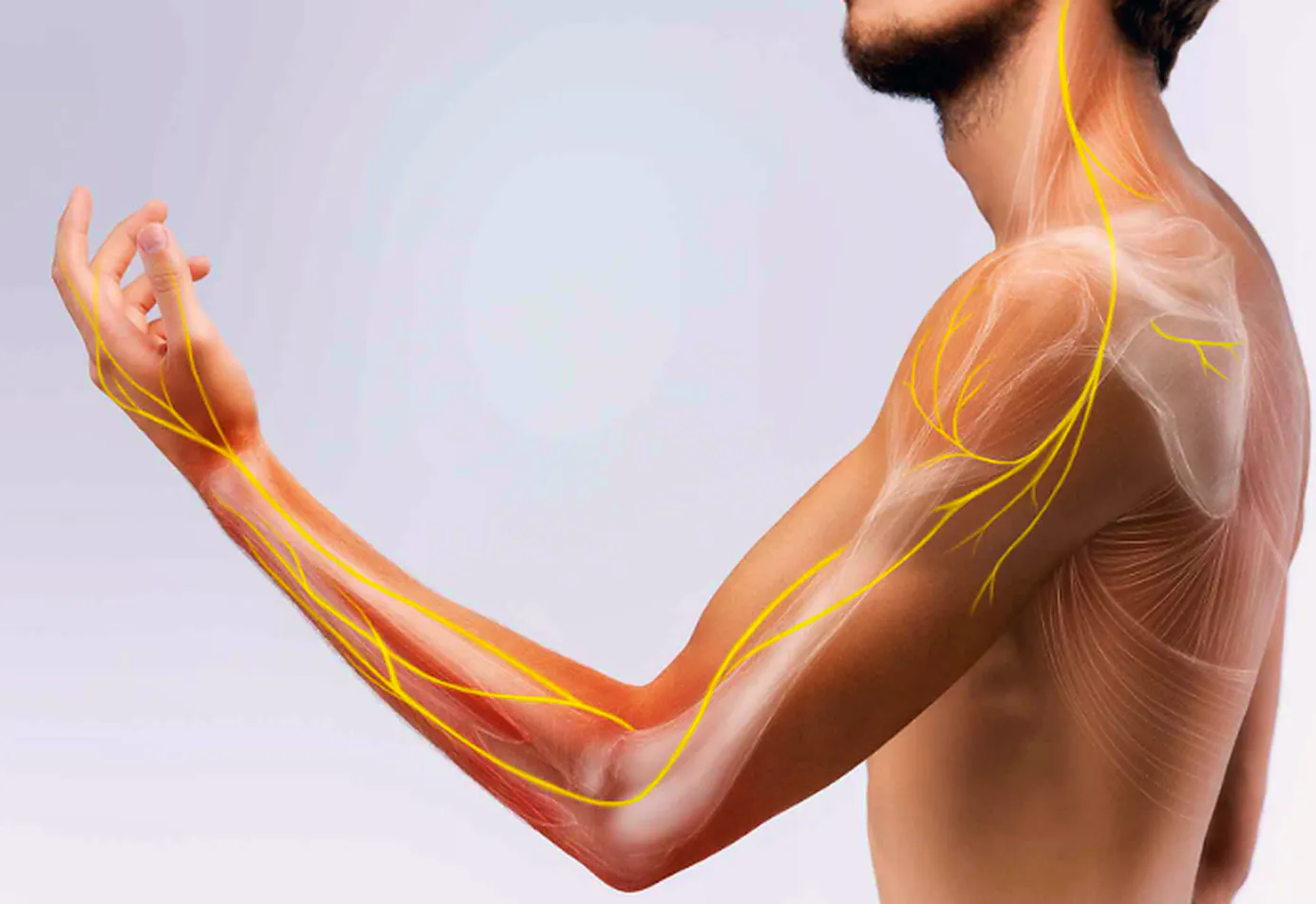
Thoracic outlet syndrome, or TOS, occurs when nerves or blood vessels are compressed in the space between the collarbone and the first rib.
It can produce arm and hand symptoms that look similar to cervical radiculopathy or carpal tunnel syndrome. The most common form is neurogenic TOS, where the brachial plexus is compressed.

What Causes Thoracic Outlet Syndrome?
The outlet may narrow because of muscular tension, posture, anatomy, repetitive overhead activity, or altered neck and shoulder mechanics.
- Tight scalene muscles in the neck compressing the brachial plexus between them
- A tight pectoralis minor muscle compressing the plexus against the rib cage
- Rounded shoulders and forward head posture narrowing the outlet space
- A cervical rib, which is a small extra rib present from birth in some people
- Repetitive overhead activity or a history of whiplash that has altered neck and shoulder mechanics
Symptoms
Symptoms commonly affect the neck, shoulder, arm, and hand and may worsen when the arm is held overhead.
- Aching, heaviness, or pain in the arm, shoulder, or neck
- Numbness or tingling in the arm, often in the ring and little fingers
- Weakness in the arm or hand
- Symptoms that worsen with overhead activity or sustained arm elevation
- In vascular TOS, which is less common, colour changes, swelling, or coldness in the hand
What the Research Shows
The evidence base remains limited, but conservative management is consistently recommended before surgical discussion.
- High-quality randomised trials for thoracic outlet syndrome are scarce, and the overall evidence base remains limited.
- A 2024 case report by Glowa and Trybulec documented significant improvements in pain, cervical range of motion, and clinical test findings in a young athlete with neurogenic TOS using trigger-point therapy, deep-tissue massage, and cervical manipulation over eight sessions.
- The reported improvements were maintained at the one-month follow-up.
How We Can Help
Care considers the structures compressing the outlet, the mobility of the brachial plexus, first-rib position, posture, and the activities that provoke symptoms.
We focus on the anterior and middle scalenes, which are the primary muscular compressors of the brachial plexus in neurogenic TOS, and the pectoralis minor, which compresses the plexus from the front.
Releasing these two muscle groups often produces the most immediate symptom reduction.
We may needle the scalenes, subclavius, and pectoralis minor, which are the three muscles most likely to be compressing the outlet.
These muscles are often chronically hypertonic in TOS and may respond to needling when manual release alone is insufficient.
Cold laser may be applied along the brachial-plexus pathway from the neck through the shoulder to reduce perineural inflammation and support nerve-tissue recovery, particularly when symptoms have been present for months.
Learn more about Cold Laser Therapy or visit Cold Laser Perth .
A shoulder-retraction and first-rib-depression taping technique may help hold the outlet in a more open position during the day, particularly when work posture is a major driver of compression.
We prescribe scalene and pectoral stretching, deep-neck flexor strengthening, and thoracic-extension work to address the postural pattern driving the compression over the longer term.
Without addressing the postural component, hands-on treatment alone may not hold.
Vascular or Progressive Symptoms Require Further Review
If vascular TOS is suspected, or if symptoms are severe and progressive with signs of muscle wasting, we will refer you promptly for specialist review.
The large majority of TOS presentations are neurogenic and are well suited to conservative management.
Persistent Arm Tingling or Weakness Is Worth Assessing
Lakeside Chiropractic is based in Joondalup and sees patients from Currambine, Woodvale, Kingsley, Duncraig, Wanneroo, Tapping, Carramar, Heathridge, Edgewater, Mullaloo, Padbury, Banksia Grove, Yanchep, Gnangara, and across Perth's northern suburbs.
Call us on 9300 0095 or visit lakesidechiro.com.au .
Disclaimer: This page provides general health information only and is not a substitute for professional assessment, diagnosis, or treatment. Results vary between individuals. Please consult a qualified health professional to discuss your individual circumstances.
References
- Glowa J, Trybulec B. The management of thoracic outlet syndrome induced by bilateral cervical ribs in a young female athlete: a case report. J Bodyw Mov Ther. 2024;40:1967-1972. PMID 39593552
- Basson A, et al. The effectiveness of neural mobilization for neuromusculoskeletal conditions: a systematic review and meta-analysis. J Orthop Sports Phys Ther. 2017;47(9):593-615. PMID 28704626
Location Details

| Day | Hours |
|---|---|
| Sunday | 9:00 AM - 4:00 PM |
| Monday | 9:00 AM - 7:00 PM |
| Tuesday | 8:00 AM - 7:00 PM |
| Wednesday | 8:00 AM - 7:00 PM |
| Thursday | 8:00 AM - 7:00 PM |
| Friday | 8:00 AM - 7:00 PM |
| Saturday | 8:00 AM - 4:00 PM |

