
Tibial Stress Fracture Treatment in Joondalup: Supporting Bone Healing in the Lower Leg
Once a stress fracture is properly diagnosed, careful load management and low-load supportive care such as cold laser can play a role in a safe return to activity.
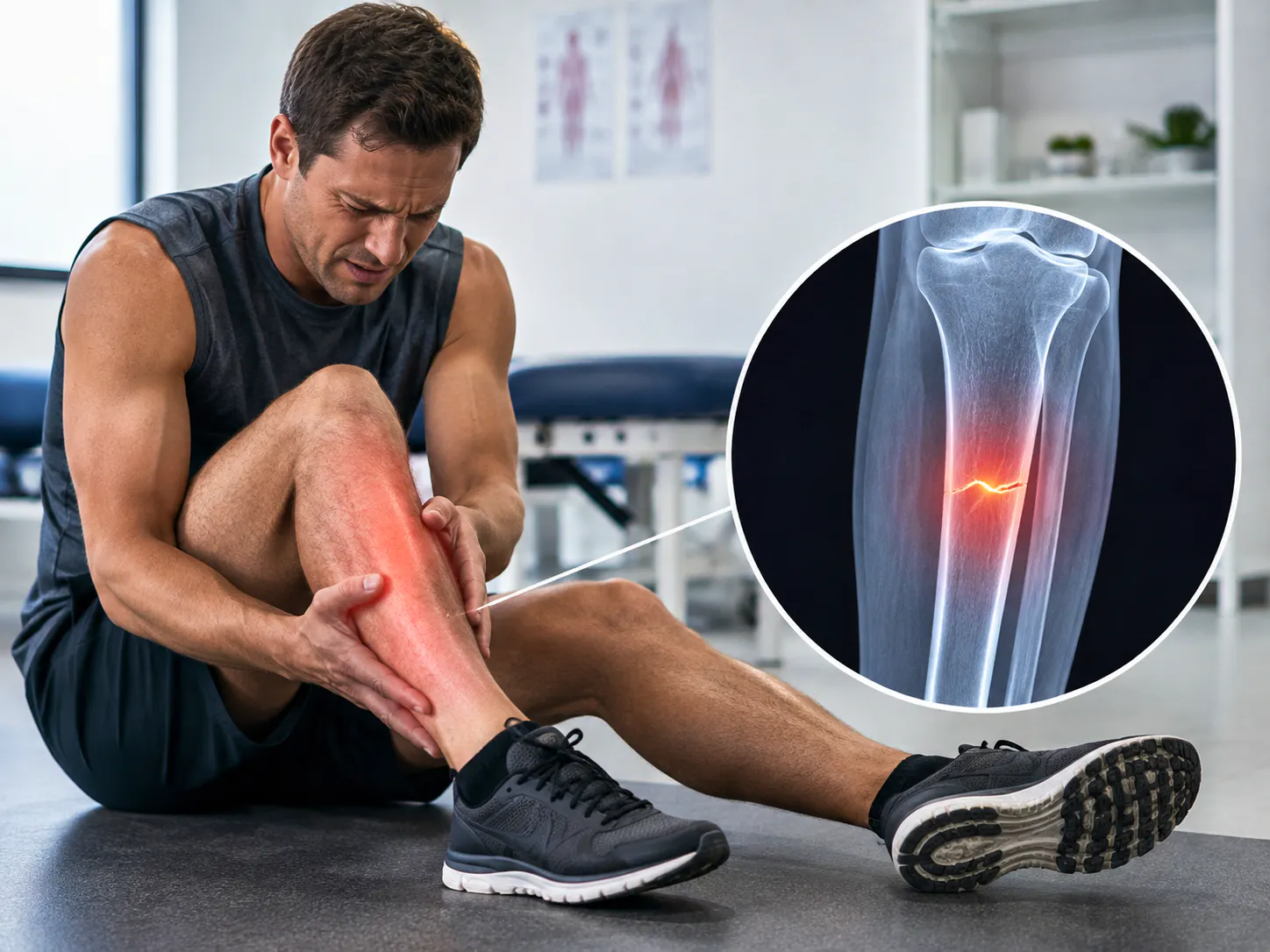
What Is a Tibial Stress Fracture?
A tibial stress fracture is a more serious step along the same spectrum as shin splints, and it’s something we take seriously when we see it in runners and athletes across Joondalup and Perth’s northern suburbs.
Unlike shin splints, a stress fracture involves an actual crack in the bone, so getting the diagnosis right and managing load carefully matters more than usual.
A stress fracture develops when repeated impact loading outpaces the bone’s ability to repair and remodel itself, eventually leading to a small crack, most often in the shin bone for runners. It usually follows a period of rapidly increased training, and it can be easy to mistake for shin splints in the early stages, which is why proper assessment matters. Plain X-rays often miss stress fractures, particularly early on, so further imaging such as an MRI or bone scan is sometimes needed to confirm the diagnosis.
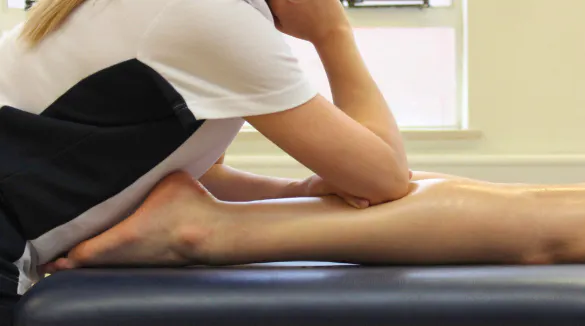
Symptoms of a Tibial Stress Fracture
- Pain that’s more localised to one specific point on the shin bone, rather than spread along a wider area
- Pain that progressively worsens with continued activity, rather than easing as you warm up
- Pain that can eventually occur with everyday walking or even at rest
- Noticeable tenderness when pressing directly over the painful spot
- Occasionally, mild swelling over the area
What Causes a Tibial Stress Fracture
- A rapid increase in running volume or intensity without enough recovery time
- Training predominantly on hard surfaces
- Inadequate energy intake relative to training load
- Biomechanical factors such as poor shock absorption through the foot and ankle
- A history of unresolved shin splints that progressed under continued load
What the Research Shows
Photobiomodulation, the mechanism behind cold laser, has been studied specifically for supporting fracture healing.
A systematic review and meta-analysis of randomised controlled trials by Neto et al. (2020) examined photobiomodulation, delivered through low-level laser therapy, in adults with bone fractures and found it was associated with a reduction in pain compared with placebo. This supports cold laser as a reasonable low-load adjunct alongside appropriate rest and load management, rather than a substitute for proper diagnosis and activity modification.
How We Can Help
Because the bone itself needs time and appropriate load to heal, treatment for a tibial stress fracture is more conservative and staged than for most soft tissue injuries.
Depending on where you’re at in the healing process, this might include:
A genuinely low-load treatment option that doesn’t place additional mechanical stress through the healing bone, making it well suited to this condition, and supported by the fracture healing evidence above.
Read more about cold laser at our new website Cold Laser Perth .
Careful guidance on activity and load modification during healing, followed by a graded return to running once you’re cleared to progress.
Work to the surrounding calf and lower leg muscles once appropriate, to address the biomechanical factors that contributed to the injury and reduce the risk of it recurring.
References
- Neto FCJ, Martimbianco ALC, de Andrade RP, Bussadori SK, Mesquita-Ferrari RA, Fernandes KPS. Effects of photobiomodulation in the treatment of fractures: a systematic review and meta-analysis of randomized clinical trials. Lasers in Medical Science. 2020;35(3):513-522. PMID 30982176
Disclaimer: This page is intended as general information only and does not replace individual assessment and advice from a qualified health professional. If you're dealing with shin pain that’s localised, worsening or present at rest, as this needs prompt and accurate assessment, book an appointment with our team so we can assess your specific situation and recommend an appropriate treatment plan.
Location Details

| Day | Hours |
|---|---|
| Sunday | 9:00 AM - 4:00 PM |
| Monday | 9:00 AM - 7:00 PM |
| Tuesday | 8:00 AM - 7:00 PM |
| Wednesday | 8:00 AM - 7:00 PM |
| Thursday | 8:00 AM - 7:00 PM |
| Friday | 8:00 AM - 7:00 PM |
| Saturday | 8:00 AM - 4:00 PM |

