
High Low Manual Flexion Table
A specialised chiropractic table used for gentle, low-force flexion-distraction and spinal decompression therapy.

What Is the High Low Manual Flexion Table?
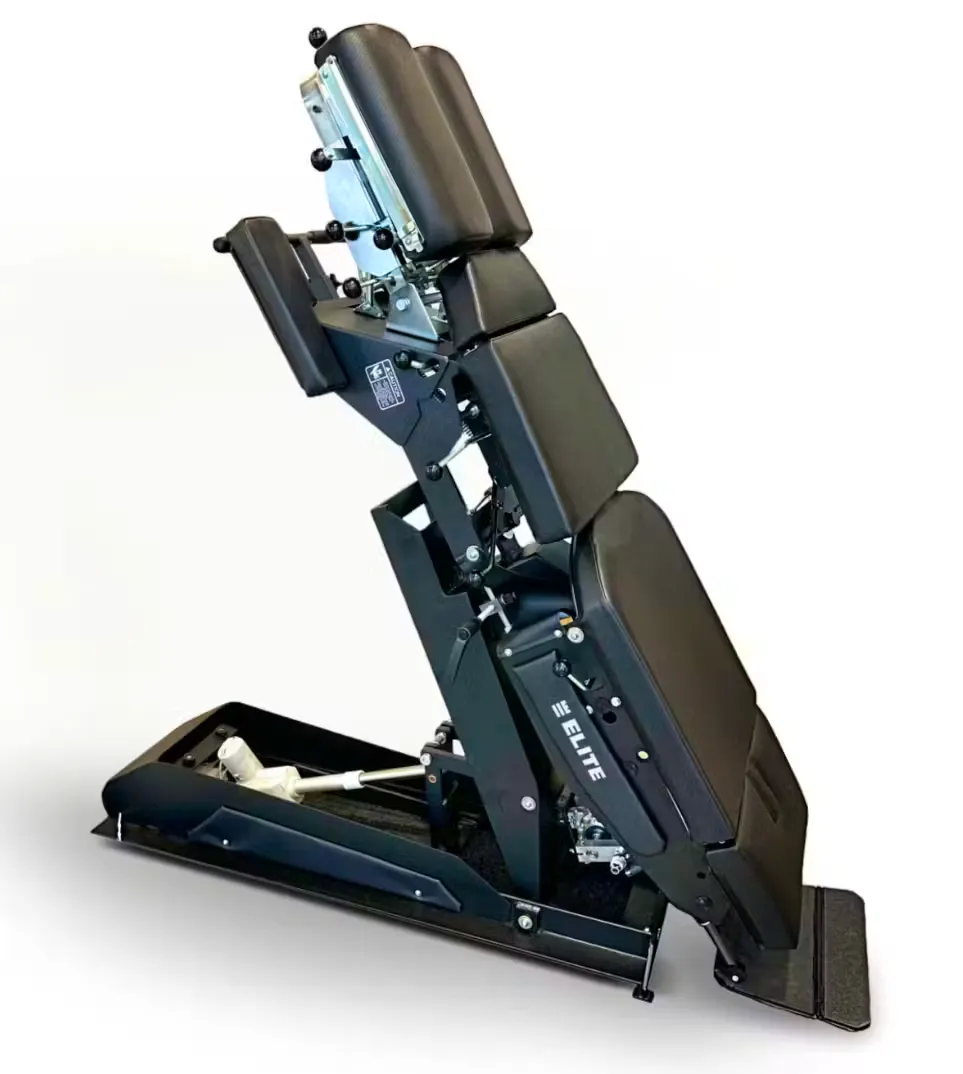
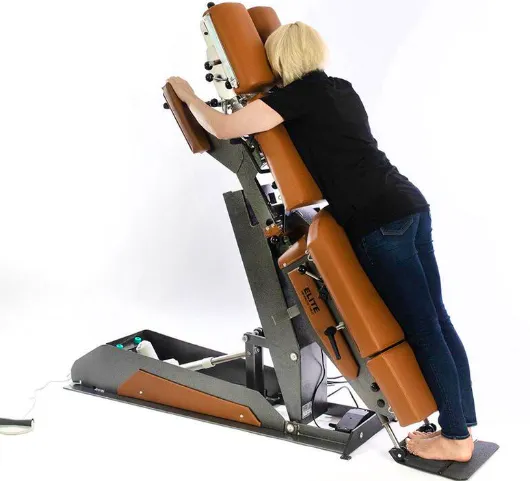
The High Low Manual Flexion Table is a specialised chiropractic table designed for gentle flexion-distraction and spinal decompression therapy.
Instead of using an automatic motor, the flexion is entirely controlled by your chiropractor, allowing precise, hands-on adjustment of the angle, depth, and rhythm of movement.
The table combines:
- High-low tilt function: allows the table to move from vertical to horizontal so patients can step on and off easily
- Manual flexion and distraction: the lower section bends and stretches the spine in a slow, controlled motion
- Adjustable head, thoracic, and pelvic sections: allows customised positioning of the neck, mid-back, and lower back
This table is commonly used at Lakeside Chiropractic for patients who need a gentle, low-force option for disc injuries, sciatica, spinal stenosis, or chronic lower back pain.
How Does It Work?
You will lie face-down on the table while your chiropractor adjusts the lower section under your pelvis and lumbar spine.
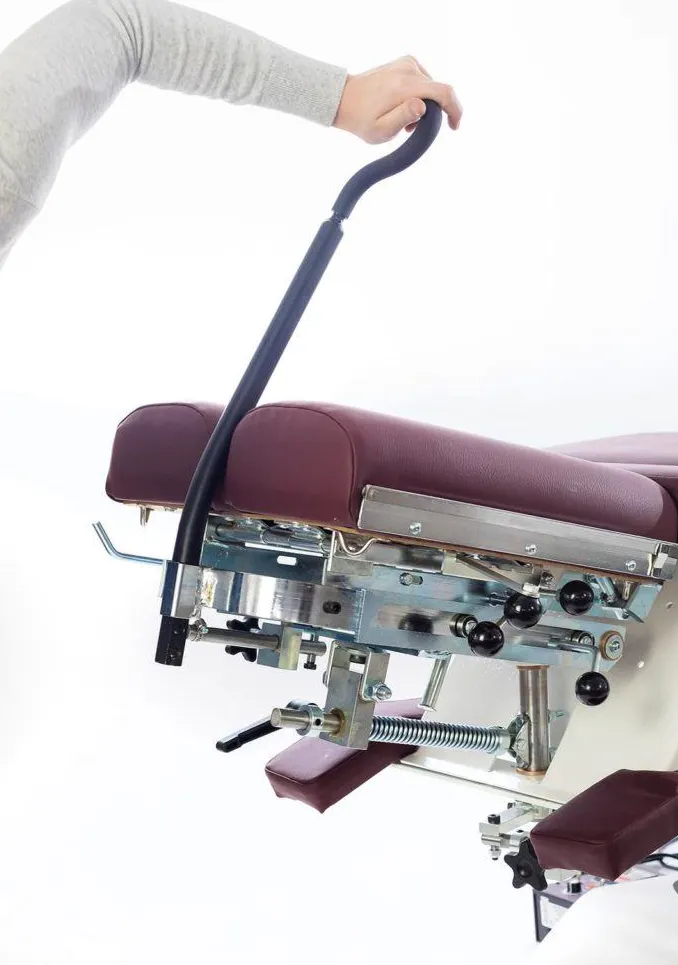
Using a manual control handle, your chiropractor guides the table through a smooth pumping motion while applying gentle pressure to specific spinal segments.
This controlled movement helps:
- Reduce pressure inside spinal discs, assisting in re-centring bulging or herniated discs
- Gently decompress spinal joints, helping stiff or irritated joints move more freely
- Increase disc and joint spacing, reducing pressure on irritated nerves
- Improve circulation and fluid flow to spinal tissues
- Relax tight muscles and ligaments through slow, rhythmic movement
Because flexion is manual, your chiropractor can adjust:
- The depth of each movement
- The speed and rhythm
- The direction, including forward, lateral, or circular movement
- The starting angle
This ensures treatment is comfortable, precise, and tailored to your condition.
Key Features We Use at Lakeside Chiropractic
Our High Low Manual Flexion Table includes:
- High-low tilt function for safer and easier patient entry
- Manual flexion-distraction mechanism controlled entirely by the chiropractor
- Multidirectional headpiece with tilt, elevation, and width adjustments
- Adjustable table height for smoother, more controlled movements
- Elevating thoracic and pelvic sections for optimal spinal support
- Optional drops, when appropriate, for low-force chiropractic adjustments
These features support gentle spinal decompression and targeted, comfortable treatment.
Who May Benefit From Manual Flexion Therapy?
High Low Manual Flexion is commonly used for:
- Bulging or herniated discs
- Degenerative disc disease
- Sciatica and nerve compression
- Spinal stenosis
- Chronic low back pain
- Facet joint irritation
- Post-surgical spinal cases, with medical clearance
Your chiropractor will always assess your condition first to make sure this treatment is appropriate for you.
Research & Clinical Evidence
Flexion-distraction therapy, performed on manual flexion tables like this one, has been studied for spinal, disc, and nerve-related conditions.
Flexion-distraction therapy has shown benefits in clinical research, including:
- Reducing pain and disability in chronic lower back pain
- Lowering intradiscal pressure in the lumbar spine
- Improving spinal mobility, disc height, and nerve-related symptoms
- Clinical research shows significant pain reduction in patients with chronic low back pain when treated with flexion distraction compared to active exercise programs. A randomized clinical trial reported greater improvements in pain and disability for the flexion-distraction group.
- A study on lumbar disc herniation found that flexion-distraction decreased intradiscal pressure, increased disc space, and reduced nerve compression, contributing to improved leg pain and neurological symptoms.
- Research comparing flexion-distraction to high-velocity manipulation showed that flexion distraction was effective in improving mobility and reducing chronic lower back pain symptoms.
- Additional studies report benefits for lumbar spinal stenosis, with significant improvements in pain levels and daily function after flexion distraction therapy.
While individual results may vary, manual flexion-distraction is a low-force, well-tolerated therapy, especially for patients with disc issues, nerve irritation, or age-related spinal changes.
Frequently Asked Questions
Learn more about manual flexion therapy, how the table is controlled, and whether it may be suitable for your condition.
Your chiropractor uses a manual flexion control handle to guide the table through smooth forward, sideways, or circular movements.
This hands-on control allows them to:
- Adjust the depth of each movement
- Change the speed or rhythm instantly
- Modify the angle or direction based on your condition
- Maintain full control and stop immediately if needed
A typical High Low Manual Flexion session is included as part of your standard chiropractic appointment. Most appointments run 20–30 minutes, depending on:
- Your condition
- Whether additional therapies are used, such as soft tissue work, mobilisations, or cold laser
- Your response to the flexion-distraction technique
Yes, the high-low tilt function allows the table to raise and lower smoothly, helping patients who struggle to bend, twist, or climb onto a flat table.
The gentle manual flexion is especially helpful for people who:
- Have acute lower back pain
- Cannot tolerate strong adjustments
- Are recovering from injury
- Experience muscle guarding or stiffness

