
Ultrasound Therapy
A non-invasive therapy using high-frequency sound waves to support healing, reduce pain, and improve mobility in muscles, tendons, and joints.

What Is Ultrasound Therapy?
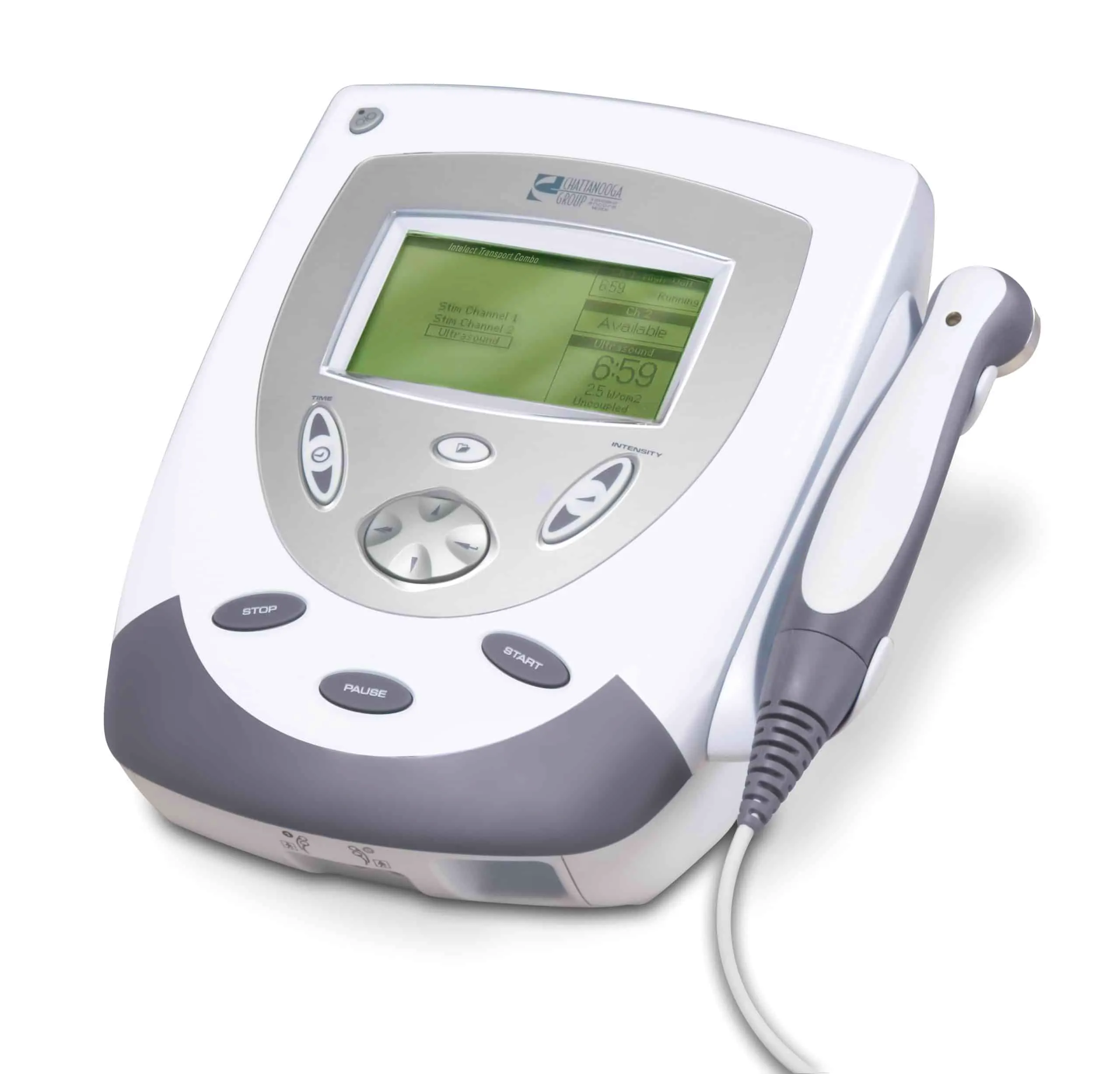
The Chattanooga Intelect Advanced is a professional therapeutic device used in physiotherapy and chiropractic clinics for ultrasound therapy.
It uses high-frequency sound waves to help reduce pain, support healing, and improve mobility in muscles, tendons, and joints.
How Does Ultrasound Therapy Work?
This system uses a 5 cm² ultrasound applicator that emits high-frequency sound waves at 1 MHz or 3 MHz.
These waves penetrate into muscles, tendons, and ligaments, helping to reduce inflammation, improve blood flow, and support tissue healing.
Each treatment can be tailored to your comfort with adjustable settings for intensity, time, and pulsed or continuous delivery.
Ultrasound therapy is particularly effective when integrated into a structured care plan, often used before manual adjustments or exercises to loosen tight areas and enhance overall results.
Ultrasound Therapy May Be Used For
- Muscle strains, ligament sprains, and tendon injuries
- Joint stiffness, arthritis, and post-surgery rehabilitation
- Scar tissue and soft-tissue healing support
- Pain management in chronic or acute musculoskeletal conditions
Ultrasound therapy may be used alongside chiropractic adjustments, soft-tissue work, exercise rehabilitation, and cold laser therapy as part of a broader care plan.
Relevant Research & Evidence
Research has explored ultrasound therapy for musculoskeletal pain, knee osteoarthritis, and joint function.
- Guan et al. reviewed ultrasound for musculoskeletal pain and found it significantly reduced knee-related pain, with mixed results for shoulder issues. Overall, the study supports ultrasound as a helpful option for reducing lower-limb musculoskeletal discomfort. Read more.
- Loyola-Sánchez et al. examined ultrasound for knee osteoarthritis and reported reduced pain and possible improvements in movement. Benefits were positive but required further high-quality studies to confirm consistency. Read more.
- Draper et al. showed that long-duration, low-intensity ultrasound significantly reduced pain and improved joint function in patients with moderate to severe knee osteoarthritis, supporting its use as a non-invasive option for relieving knee pain. Read more.
Frequently Asked Questions
Learn more about what ultrasound therapy feels like, how long sessions take, and when it may be used.

