
Coccydynia Treatment in Joondalup and Perth's Northern Suburbs
Tailbone pain can make sitting, standing up, and everyday activities surprisingly difficult. Conservative care helps most people recover without injections or surgery.
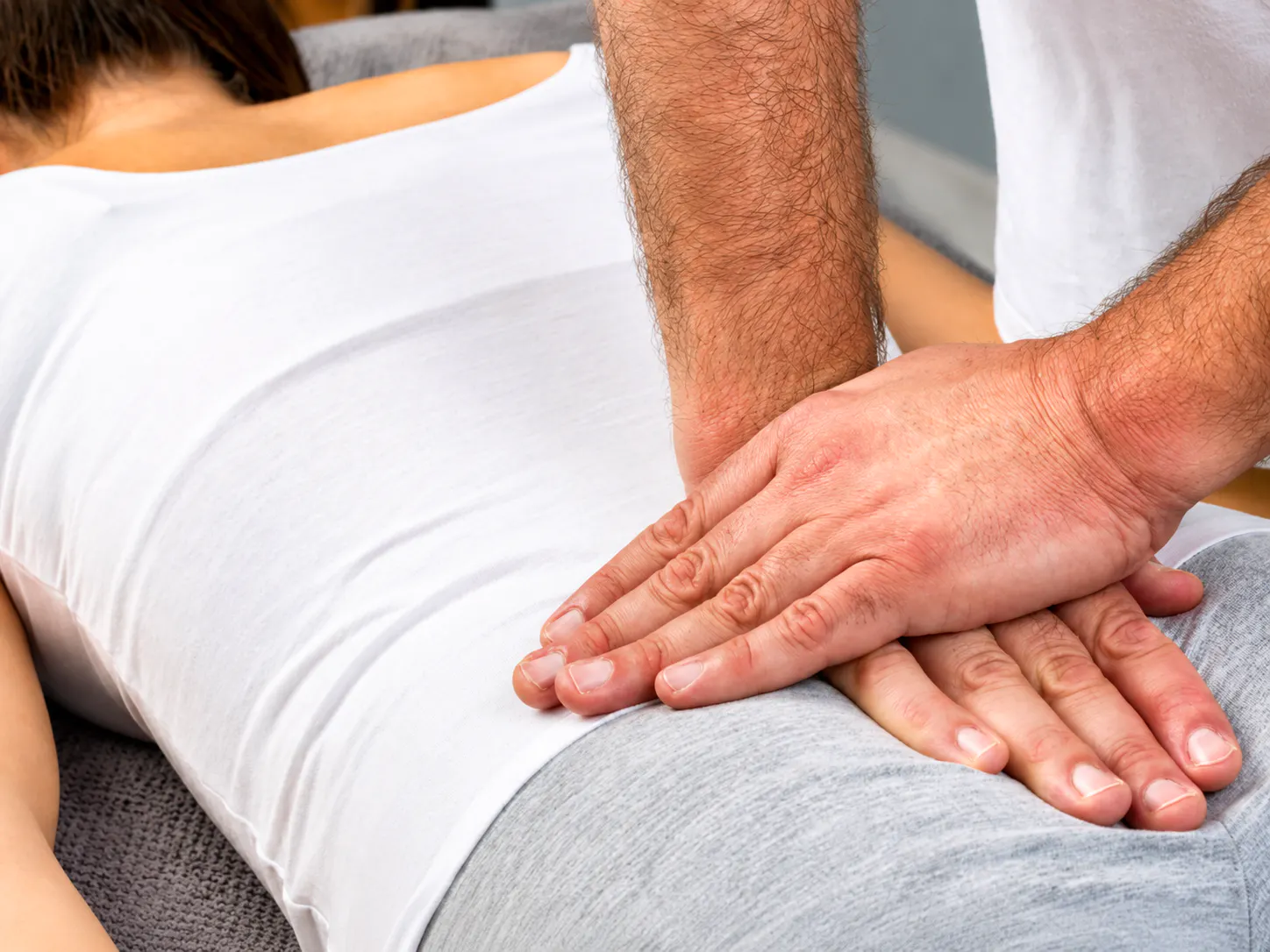
What Is Coccydynia?
Coccydynia is pain arising from the coccyx, or tailbone, the small triangular bone at the very base of the spine.
It can follow a fall directly onto the tailbone, occur after childbirth, develop from prolonged sitting on hard or narrow surfaces, or begin without any clear trigger.
The coccyx has limited movement but is still subject to load through the ligaments and small joints connecting it to the sacrum. Irritation in this area can be surprisingly persistent.
It is more common in women than men, partly because of pelvic anatomy and childbirth, and can affect people of any age. It is also an underdiagnosed source of lower-back and pelvic pain that may be mistaken for general lower-back pain.
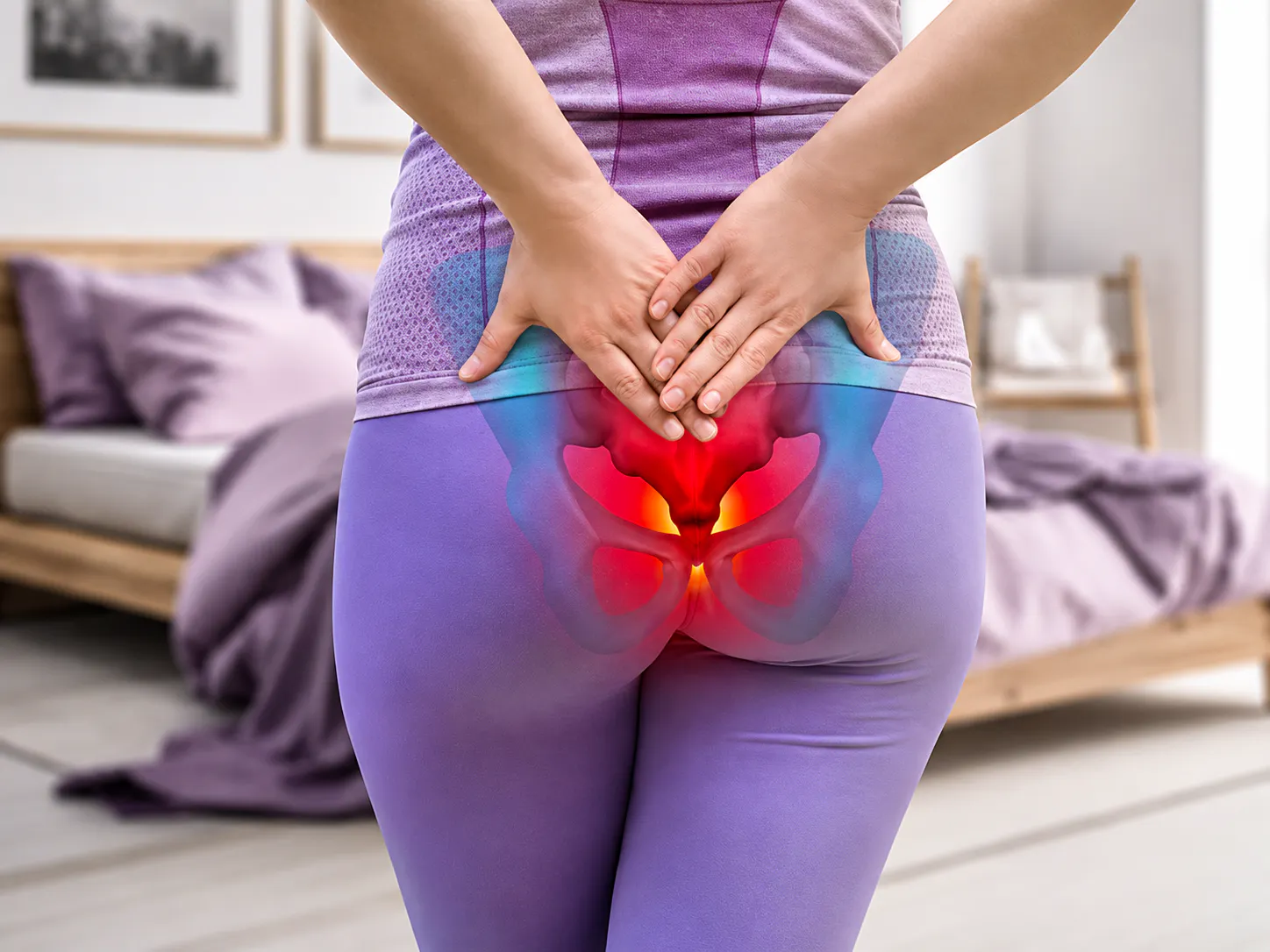
Common Triggers
Coccydynia may follow a direct fall, childbirth, prolonged sitting, or repeated pressure through the sacrococcygeal region. In some cases, no clear starting event can be identified.
Symptoms
The defining feature is pain directly over the tailbone that increases with sitting and transitions from sitting to standing.
- Pain localised directly over the coccyx or tailbone
- Pain that is worse when sitting on hard surfaces
- Increased pain when leaning back while seated
- Pain when standing up from a seated position
- Possible discomfort during bowel movements or intercourse
- Typically no radiating leg pain like that seen with sciatica
What the Research Shows
Research supports physiotherapy and manual approaches, while also recognising that larger and longer-term studies are still needed.
- According to PubMed, Blanco-Diaz et al. (2025) , published in BMC Musculoskeletal Disorders, conducted a systematic review of nine randomised controlled trials on physiotherapy approaches for coccydynia.
- Manual therapy was found to be particularly effective in recent-onset cases, and kinesiology taping improved pain perception.
- The authors noted that effects can diminish over time and called for larger, longer-term studies to strengthen the evidence base.
How Chiropractic Care Can Help
We focus on reducing load and irritation around the coccyx while addressing the surrounding muscles and joints that often contribute to ongoing symptoms.
Recent-onset coccydynia tends to respond better to conservative care than long-standing presentations, so earlier assessment is helpful.
Gluteal muscle release is an important part of treating coccydynia because tight or guarded gluteal muscles pull directly on the structures around the tailbone.
We may also work through the ligaments attaching around the sacrum and coccyx, including pelvic-floor-adjacent structures that are often tender and guarded.
Taping around the sacrococcygeal region may reduce pressure and provide support during sitting, which is often the most aggravating activity for this condition.
We guide appropriate pelvic and lumbar stability exercises and practical strategies such as supportive cushioning and sitting-posture changes to reduce ongoing irritation while the area settles.
Cold laser therapy may help reduce localised inflammation around the coccyx and supporting ligaments.
Learn more about Cold Laser Therapy or visit Cold Laser Perth .
When Conservative Care Is Not Enough: Internal Coccyx Correction
For coccydynia that has not settled with soft tissue work, taping, cold laser, and rehabilitation, internal coccyx correction is another option offered at Lakeside Chiropractic.
This technique corrects the position of the coccyx from inside the rectum, allowing a more direct and precise correction than external work alone can achieve.
It is currently performed only by Dr Kaitlyn, Dr Sam, and Dr Sariah, who have specific training in this technique.
A randomised, placebo-controlled trial found that intrarectal manipulation produced a mild but statistically significant improvement in chronic coccydynia compared with sham treatment, with better outcomes in patients whose stress x-rays showed coccygeal instability.
An earlier pilot study by the same research group compared different manual techniques and helped identify which patients tended to respond best.
More recent research combining internal manipulation with a steroid injection reported higher rates of complete pain relief and fewer relapses than injection alone, although patient numbers in these studies remain relatively small.
What to Expect
We take a careful history, including how and when the pain began, because recent-onset and long-standing coccydynia are managed somewhat differently.
For persistent cases that do not respond to conservative care, we can discuss whether further investigation or referral for specialist injection-based treatment may be appropriate.
If tailbone pain is making sitting or daily activities difficult, we would be glad to help.
Serving Perth's Northern Suburbs
We see patients from Joondalup, Currambine, Woodvale, Kingsley, Duncraig, Wanneroo, and the surrounding northern suburbs.
Disclaimer: This page provides general health information only and is not a substitute for professional assessment, diagnosis, or treatment. Results vary between individuals. Please consult a qualified health professional to discuss your individual circumstances.
References
- Blanco-Diaz M, et al. Physiotherapy approaches for coccydynia: evaluating effectiveness and clinical outcomes. BMC Musculoskelet Disord. 2025;26(1):514. PMID 40420056
- Seker A, Sarikaya IA, Korkmaz O, Yalcin S, Malkoc M, Bulbul AM. Management of persistent coccydynia with transrectal manipulation: results of a combined procedure. Eur Spine J. 2018;27(5):1166-1171. PMID 29234884
- Maigne JY, Chatellier G, Faou ML, Archambeau M. The treatment of chronic coccydynia with intrarectal manipulation: a randomized controlled study. Spine (Phila Pa 1976). 2006;31(18):E621-E627. PMID 16915077
- Maigne JY, Chatellier G. Comparison of three manual coccydynia treatments: a pilot study. Spine (Phila Pa 1976). 2001;26(20):E479-E483. PMID 11598528
Location Details

| Day | Hours |
|---|---|
| Sunday | 9:00 AM - 4:00 PM |
| Monday | 9:00 AM - 7:00 PM |
| Tuesday | 8:00 AM - 7:00 PM |
| Wednesday | 8:00 AM - 7:00 PM |
| Thursday | 8:00 AM - 7:00 PM |
| Friday | 8:00 AM - 7:00 PM |
| Saturday | 8:00 AM - 4:00 PM |

