
Leg Length Discrepancy Treatment in Joondalup and Perth's Northern Suburbs
A difference in leg length is common and usually harmless, but when it's significant enough, it can drive ongoing back, hip, knee, or leg pain. Identifying the cause and correcting it appropriately can make a real difference.
What Is Leg Length Discrepancy?
Leg length discrepancy, sometimes called leg length inequality, is a difference in length between the left and right leg.
It falls into two broad categories, and telling them apart matters for treatment.
Structural (anatomic) discrepancy is a true difference in the length of the bones themselves, in the femur, tibia, or both. It can come from a previous fracture, a growth plate injury or growth disturbance in childhood, a congenital difference present from birth, or changes following hip or knee surgery such as joint replacement.
Functional discrepancy is when the bones themselves are the same length, but the legs appear unequal due to how the body is positioned and moving.
This is usually driven by pelvic tilt or rotation, muscle tightness or weakness on one side, commonly through the hip flexors, quadratus lumborum, or IT band, or asymmetrical foot posture.
Structural and Functional Discrepancy Can Coexist
A person can have both a true bone-length difference and a functional compensation at the same time. That is why an accurate assessment matters before deciding on treatment.
Symptoms
Symptoms vary depending on the size of the discrepancy and how the body has compensated for it.
- One-sided lower back pain
- Hip pain
- Knee or leg pain
- Uneven shoe wear
- A change in gait
- One hip appearing higher than the other when standing
- In growing children, a functional postural curve in the spine
What the Research Shows
Research supports correcting meaningful structural differences when they are contributing to pain, joint loading, or functional postural changes.
Correcting the Discrepancy Can Resolve Functional Scoliosis in Children
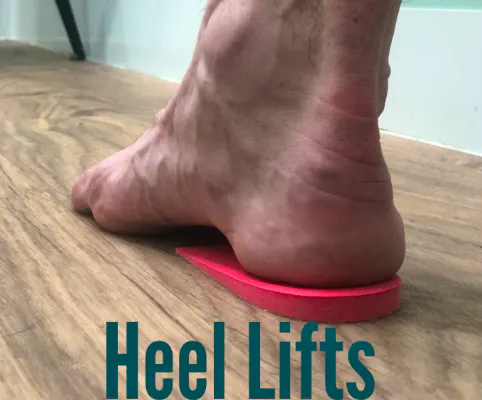
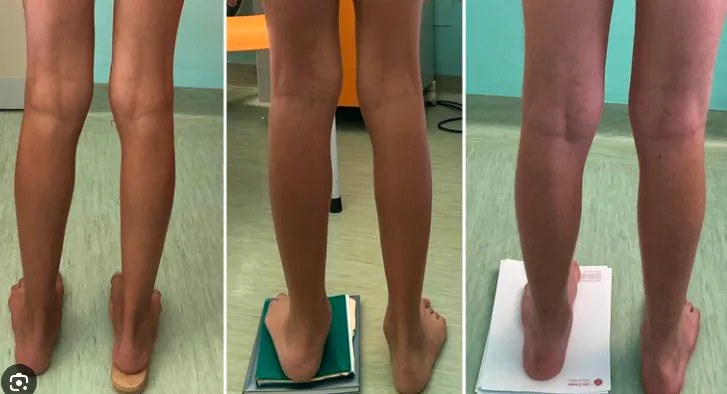
Raczkowski et al. (2010) followed 369 children with leg length discrepancy-related functional scoliosis and found that correcting the discrepancy with a shoe or heel lift resolved the curve in the large majority of cases within a few months.
This is functional scoliosis, a postural curve driven by the pelvic tilt from the leg length difference itself, which is different from structural or idiopathic scoliosis where the vertebrae themselves have rotated and wedged.
Correcting a leg length discrepancy will not straighten a structural scoliotic curve, but where a functional curve sits alongside a genuine discrepancy, addressing the leg length difference is often central to managing it. Read here to learn more about scoliosis.
Uncorrected Discrepancy Raises the Risk of Knee Osteoarthritis
Harvey et al. (2010) followed a cohort of over 3,000 adults and found that a radiographic leg length difference of 1cm or more was associated with a higher likelihood of existing, new, and worsening knee osteoarthritis, particularly on the shorter side. This reflects the uneven joint loading that an uncorrected discrepancy can create over years of walking and standing.
Heel Lift Correction Produces Measurable, Lasting Improvement
D'Amico et al. (2022) used 3-D posture analysis to assess patients with nonspecific low back pain and a measurable leg length discrepancy. Customised heel-lift orthotics that fully corrected the discrepancy produced measurable improvements in pain and postural alignment, with benefits maintained over the longer term after an adjustment period, supporting heel lift correction as a genuinely evidence-based option rather than just a comfort measure.
How Chiropractic Care Can Help
At Lakeside Chiropractic, we assess whether a leg length discrepancy is structural, functional, or a combination of both before deciding on treatment.
That distinction changes the approach, including whether the focus should be on muscle balance, spinal and pelvic mechanics, rehabilitation, or a prescribed heel lift.
Where a functional component is contributing, releasing tight hip flexors, quadratus lumborum, and IT band tension can reduce the apparent difference and ease the compensatory strain on the back and pelvis.
Trigger points often develop unevenly on one side of the lower back, hip, or thigh in response to a discrepancy. Dry needling helps resolve these focal areas of tension.
Targeted exercises help correct muscle imbalances contributing to a functional discrepancy and build the pelvic and core stability needed to tolerate any remaining structural difference comfortably.
What to Expect
Where a structural discrepancy is suspected, we refer for an X-ray using EOS imaging at SKG Radiology.
This allows an accurate, low-dose measurement of the true difference between the legs. This measurement is what we use to determine the correct heel lift height, rather than estimating it.
If you're dealing with one-sided back, hip, or leg pain and suspect a leg length difference might be part of the picture, we would be glad to assess it properly.
Serving Perth's Northern Suburbs
We see patients from Joondalup, Currambine, Woodvale, Kingsley, Duncraig, Wanneroo, and the surrounding northern suburbs.
Frequently Asked Questions
It depends on the size of the discrepancy and its cause. Where there's a large, confirmed structural difference, ongoing use of the heel lift is often the most practical long-term approach.
Where the discrepancy is smaller or has a significant functional component, many people only need the lift for a shorter period, to stabilise the pelvis and take pressure off the spine while it settles.
Once the irritation and inflammation have resolved and the discrepancy isn't large, some people choose to stop wearing it altogether. We reassess this with you over time rather than committing you to one approach indefinitely.
Disclaimer: This page provides general health information only and is not a substitute for professional assessment, diagnosis, or treatment. Results vary between individuals. Please consult a qualified health professional to discuss your individual circumstances.
References
- Raczkowski JW, Daniszewska B, Zolynski K. Functional scoliosis caused by leg length discrepancy. Arch Med Sci. 2010;6(3):393-398. PMID 22371777
- Harvey WF, Yang M, Cooke TDV, Segal NA, Lane N, Lewis CE, Felson DT. Association of leg-length inequality with knee osteoarthritis: a cohort study. Ann Intern Med. 2010;152(5):287-295. PMID 20194234
- D'Amico M, Kinel E, Roncoletta P. Leg Length Discrepancy and Nonspecific Low Back Pain: 3-D Stereophotogrammetric Quantitative Posture Evaluation Confirms Positive Effects of Customized Heel-Lift Orthotics. Front Bioeng Biotechnol. 2022;9:743132. PMID 35223808
- Raczkowski JW, Daniszewska B, Zolynski K. Functional scoliosis caused by leg length discrepancy. Arch Med Sci. 2010;6(3):393-398. PMID 22371777
- Harvey WF, Yang M, Cooke TDV, Segal NA, Lane N, Lewis CE, Felson DT. Association of leg-length inequality with knee osteoarthritis: a cohort study. Ann Intern Med. 2010;152(5):287-295. PMID 20194234
Location Details

| Day | Hours |
|---|---|
| Sunday | 9:00 AM - 4:00 PM |
| Monday | 9:00 AM - 7:00 PM |
| Tuesday | 8:00 AM - 7:00 PM |
| Wednesday | 8:00 AM - 7:00 PM |
| Thursday | 8:00 AM - 7:00 PM |
| Friday | 8:00 AM - 7:00 PM |
| Saturday | 8:00 AM - 4:00 PM |

