
Lakeside Chiropractic Logo
Lakeside Chiropractic · Joondalup

Headaches in Joondalup: What Type Do You Have and Can a Chiropractor Help?

Recurring headaches are one of the most common reasons people visit Lakeside Chiropractic in Joondalup. Here is what we look for, what the different types actually mean, and how chiropractic care may help.

Understand the Type Different headache patterns can require different approaches
Assess the Neck Cervical joints, muscles, posture, and movement are considered
Refer When Needed Medical referral is recommended when symptoms suggest it
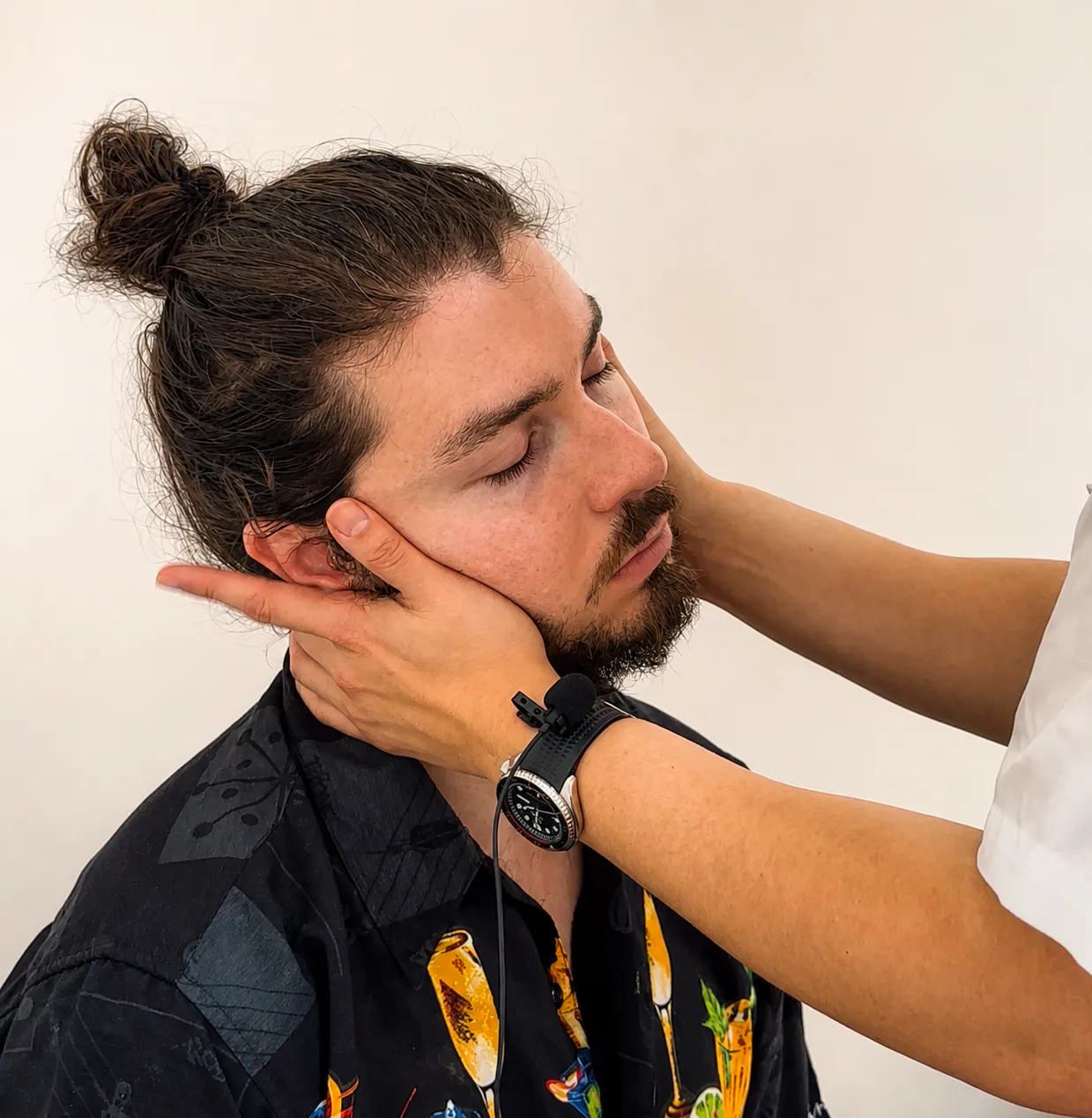
Chiropractor supporting a patient's neck during a headache and neck assessment in Joondalup
Why the headache type matters

Not All Headaches Are the Same

Most people who suffer from recurring headaches have never had the different types properly explained to them. The cause matters because it determines what actually helps.

Research published in the Journal of Manipulative and Physiological Therapeutics found that chiropractic care has strong support for cervicogenic headaches and shows benefit for episodic headaches more broadly, but the approach needs to match the type. Treating the wrong thing rarely helps.

Man holding his temples while experiencing headache pain
Common headache patterns

Types of Headache We Commonly Assess

The location, quality, duration, associated symptoms, and likely source of the pain all help guide the assessment.

Upper neck referral pattern

Cervicogenic Headache: When the Pain Starts in Your Neck

This is the headache type we see most often at Lakeside, and the one where chiropractic care has the clearest evidence. Pain originates in the upper cervical spine and refers upward into the head, usually on one side, starting at the base of the skull and travelling toward the forehead, eye, or temple. Sustained postures like long hours at a desk or looking down at a phone are common triggers.

A randomised controlled trial published in Spine found that both spinal manipulative therapy and targeted neck exercises significantly reduced headache frequency and intensity at 12-month follow-up. A review in Lancet Neurology identified the upper cervical joints as the most commonly involved structures. A more recent randomised trial found that manipulation and mobilisation of the upper cervical spine produced similar improvements in pain and headache impact.

At Lakeside, we use spinal manipulation, joint mobilisation, soft tissue therapy, and dry needling alongside specific neck rehabilitation exercises.

Dull, pressing tightness

Tension-Type Headache: The Band Around Your Head

Felt as a dull, pressing, band-like tightness across both sides of the head. It does not throb, is not usually one-sided, and does not typically come with nausea. The most common headache type in the general population, and often written off as stress when there is actually a physical component driving it.

Research in the Journal of Headache and Pain showed that both muscle tension and central sensitisation contribute to tension-type headache. A clinical practice guideline from the OPTIMa Collaboration recommended specific exercises and multimodal care including mobilisation and massage for chronic cases.

At Lakeside, we combine cervical and thoracic mobilisation, soft tissue therapy, and targeted rehabilitation where there is a musculoskeletal component involved.

Sharp, shooting, or electric pain

Occipital Neuralgia: Sharp, Shooting Pain From the Base of the Skull

Involves irritation of the nerves running from the upper neck up over the scalp. The pain is sharp, shooting, or electric, starting at the base of the skull and radiating upward. Regularly mistaken for migraine or cervicogenic headache because the location overlaps. The upper cervical joints and suboccipital muscles sit right next to these nerves, so joint dysfunction or muscle tension in that area can directly trigger symptoms.

Management may include upper cervical joint treatment, soft tissue therapy, dry needling, and cold laser therapy for the nerve irritation. Read more about cold laser at our new website Cold Laser Perth.

Severe one-sided attacks

Cluster Headache: Severe, One-Sided, and Often Misdiagnosed

A 2024 review in Frontiers in Pain Research reported that cluster headaches affect around 0.1% of the population and remain significantly underdiagnosed. Attacks last 15 minutes to 3 hours, occur up to several times a day in cycles, and are described as piercing or burning pain centred around one eye, often with a watering eye or blocked nostril on the same side.

Cluster headaches usually require medical management. If this pattern sounds familiar, we will assess properly and refer to your GP or a neurologist if needed.

Your assessment

What Happens When You Come In

We take a full history, assess your cervical spine and posture, and explain what we find in plain language.

  1. History: We discuss your headache pattern, location, triggers, duration, associated symptoms, and relevant health history.
  2. Physical assessment: We assess your cervical spine, posture, movement, and whether there appears to be a musculoskeletal component.
  3. Clear next steps: If chiropractic care is likely to be relevant, we explain why. If something else is going on, we will tell you and point you toward the right person.

Patients from across Joondalup, Currambine, Woodvale, Kingsley, Wanneroo, and Duncraig come in for exactly this kind of assessment. Call 9300 0095 or visit lakesidechiro.com.au.

Important safety information

When to See a Doctor Urgently

See a doctor the same day if you have:

  • A sudden severe headache unlike anything before
  • Headache with fever, stiff neck, or rash
  • Headache with confusion, weakness, or vision changes
  • Headache after a head injury

Disclaimer: This page provides general health information only and is not a substitute for professional assessment, diagnosis, or treatment. Chiropractic care may not be appropriate for all headache types. Results vary between individuals.

Supporting literature

References

  1. Bryans R, et al. (2011). Evidence-based guidelines for the chiropractic treatment of adults with headache. J Manipulative Physiol Ther, 34(5), 274-289. PMID 21640251
  2. Jull G, et al. (2002). A randomized controlled trial of exercise and manipulative therapy for cervicogenic headache. Spine, 27(17), 1835-1843. PMID 12221344
  3. Bogduk N & Govind J. (2009). Cervicogenic headache: an assessment of the evidence. Lancet Neurol, 8(10), 959-968. PMID 19747657
  4. Lerner-Lentz A, et al. (2020). Pragmatic application of manipulation versus mobilization to the upper cervical spine for cervicogenic headache. J Man Manip Ther, 29(5), 267-275. PMID 33148134
  5. Onan D, et al. (2023). Differences and similarities between tension-type headache and migraine. J Headache Pain, 24(1), 92. PMID 37474899
  6. Cote P, et al. (2019). Non-pharmacological management of persistent headaches: OPTIMa guideline. Eur J Pain, 23(6), 1051-1070. PMID 30707486
  7. San-Juan D, et al. (2024). Cluster headache: an update on clinical features, epidemiology and treatment. Front Pain Res, 5, 1373528. PMID 38524268
Headache assessment in Joondalup

Start With a Clear Assessment

We will listen to your symptoms, assess whether your neck or other musculoskeletal factors may be involved, and explain the next appropriate step.

Location Details

Address

3/45 Central Walk
Joondalup, Perth 6027

Phone

08 9300 0095

Social

Door front
Day Hours
Sunday 9:00 AM - 4:00 PM
Monday 9:00 AM - 7:00 PM
Tuesday 8:00 AM - 7:00 PM
Wednesday 8:00 AM - 7:00 PM
Thursday 8:00 AM - 7:00 PM
Friday 8:00 AM - 7:00 PM
Saturday 8:00 AM - 4:00 PM

Get in Touch

We are committed to your privacy. Do not include confidential or private information in this form. This form is for general questions or messages.

This site is protected by reCAPTCHA.