
Repetitive Strain Injury Treatment in Joondalup and Perth's Northern Suburbs
Aching, pain, or weakness in the arm, wrist, or hand that builds with repetitive activity. RSI is a broad term for a common group of overuse conditions that respond well to the right early management.
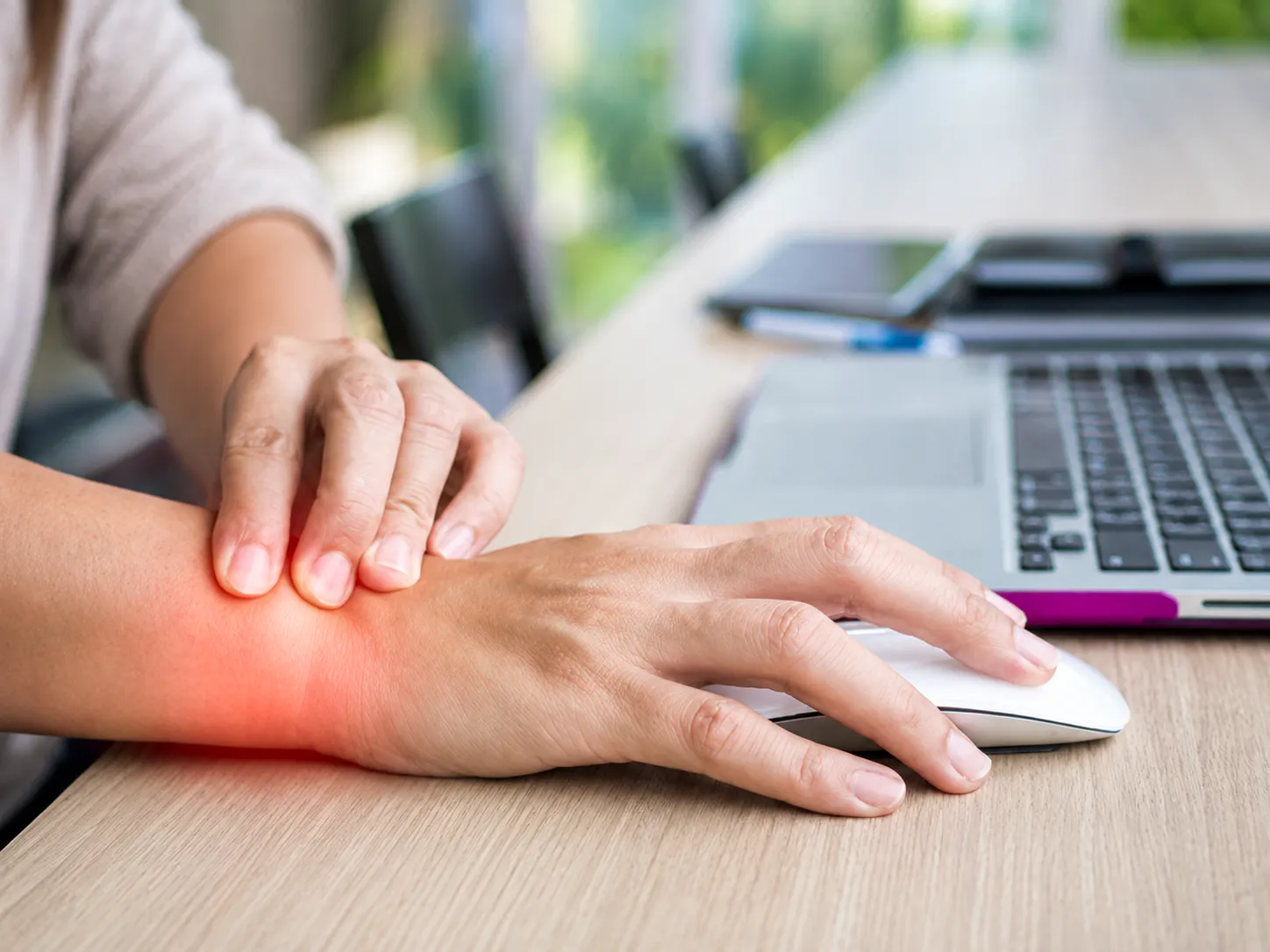
Repetitive strain injury, or RSI, is an umbrella term for a range of conditions that develop when muscles, tendons, or nerves in the upper limb are overloaded by repetitive or sustained activity.
At Lakeside Chiropractic, we see RSI most commonly in people who spend long hours at a keyboard and mouse, manual workers who use their hands repetitively, and athletes in throwing or racquet sports.

What Is Repetitive Strain Injury?
RSI is not a single diagnosis but a pattern of overuse injury. The management principles overlap considerably across the different conditions within this category.
Common specific conditions within the RSI spectrum include lateral and medial epicondylalgia, carpal tunnel syndrome, de Quervain's tenosynovitis, and non-specific forearm pain.
Assessment helps identify which tissues are involved, which activities are repeatedly loading them, and what changes may reduce strain while capacity is rebuilt.
Common Causes
RSI commonly develops when repetitive loading exceeds the recovery and conditioning capacity of the tissues involved.
- Prolonged, repetitive use of the same movement pattern at work or in sport
- Insufficient rest and recovery between bouts of loading
- Poor workstation setup that places the arm, wrist, or hand in sustained awkward positions
- A rapid increase in activity or a new tool or technique at work
- Inadequate strength or conditioning in the muscles being repeatedly called on
Symptoms
- Aching, burning, or soreness in the forearm, wrist, or hand during or after activity
- Stiffness or swelling in the affected area
- Weakness or reduced grip strength
- Tingling or numbness if nerve structures are involved
- Symptoms that worsen progressively through the working day or training session
What the Research Shows
Research supports conservative multimodal care that combines manual therapy, exercise, and load management.
- The 2006 Bisset et al. BMJ trial remains the strongest individual study for elbow-based RSI presentations. It found that manipulation combined with exercise significantly outperformed corticosteroid injection in the long term and wait-and-see management in the short term.
- The 2022 Di Filippo et al. overview of systematic reviews confirmed that conservative multimodal care combining manual therapy, exercise, and load management is the most consistently supported approach across lateral-elbow and upper-limb tendinopathies within the RSI spectrum.
How We Can Help
Care is based on the specific tissues involved, the activities provoking symptoms, the duration of the problem, and the amount of load the area can currently tolerate.
Soft tissue therapy may be used to release overloaded muscles and tendons of the forearm, wrist, and surrounding structures to reduce tension, improve circulation, and support tissue recovery.
Instrument-assisted treatment may be considered for thickened or fibrotic tendon tissue, particularly in chronic RSI where tissue quality has deteriorated.
Dry needling may target trigger points in the forearm and hand muscles that develop from sustained overuse and contribute to aching and weakness.
Cold laser may be applied to inflamed tendons or nerve pathways to reduce pain and support healing across a range of upper-limb overuse presentations.
Learn more about Cold Laser Therapy or visit Cold Laser Perth .
Kinesiology tape may be applied to offload specific tendons or provide proprioceptive support during the working day or training while tissue capacity is rebuilt.
A graduated loading program helps rebuild tissue capacity, supported by workstation assessment and practical advice on activity modification, rest breaks, and long-term load management.
Do Not Ignore a Repeating Symptom Pattern
Early treatment is important with RSI. Symptoms that are ignored or pushed through tend to become more entrenched and take longer to resolve.
If you are noticing symptoms building with repetitive work, it is worth getting the pattern assessed before it becomes a significant problem.
Persistent Work- or Activity-Related Symptoms Are Worth Assessing
Lakeside Chiropractic is based in Joondalup and sees patients from Currambine, Woodvale, Kingsley, Duncraig, Wanneroo, Tapping, Carramar, Heathridge, Edgewater, Mullaloo, Padbury, Banksia Grove, Yanchep, Gnangara, and across Perth's northern suburbs.
Call us on 9300 0095 or visit lakesidechiro.com.au .
Disclaimer: This page provides general health information only and is not a substitute for professional assessment, diagnosis, or treatment. Results vary between individuals. Please consult a qualified health professional to discuss your individual circumstances.
References
- Bisset L, et al. Mobilisation with movement and exercise, corticosteroid injection, or wait and see for tennis elbow: randomised trial. BMJ. 2006;333(7575):939. PMID 17012266
- Di Filippo L, et al. Treatment, diagnostic criteria and variability of terminology for lateral elbow pain: findings from an overview of systematic reviews. Healthcare (Basel). 2022;10(6):1095. PMID 35742152
Location Details

| Day | Hours |
|---|---|
| Sunday | 9:00 AM - 4:00 PM |
| Monday | 9:00 AM - 7:00 PM |
| Tuesday | 8:00 AM - 7:00 PM |
| Wednesday | 8:00 AM - 7:00 PM |
| Thursday | 8:00 AM - 7:00 PM |
| Friday | 8:00 AM - 7:00 PM |
| Saturday | 8:00 AM - 4:00 PM |

