
Chiropractic Care for Menopause in Joondalup: Managing Joint and Muscle Pain Through the Transition
Hands on care and targeted strengthening can help ease the joint and muscle pain that often accompanies the menopausal transition.
Joint and muscle pain is one of the most common, and most under-discussed, symptoms of menopause. We see a lot of women across Joondalup and Perth’s northern suburbs dealing with new or worsening aches through this stage of life, and it’s a completely legitimate reason to seek chiropractic care.

What Causes Menopausal Joint and Muscle Pain?
As oestrogen levels decline through perimenopause and menopause, it affects far more than reproductive function.
Oestrogen plays a role in joint cartilage health, tendon and ligament elasticity, and muscle mass, and its decline is linked to increased joint stiffness, aching and a loss of muscle strength, sometimes called the musculoskeletal syndrome of menopause.
These changes can affect any joint, though the hands, knees, hips, neck and lower back are commonly reported.
Symptoms
- New or worsening joint aching, often described as stiffness rather than sharp pain
- Muscle aches or a general loss of strength
- Stiffness that’s often worse in the morning and eases with movement
- Discomfort in multiple joints rather than one specific area
- Neck, shoulder or lower back tension
What the Research Shows
Manual therapy shows encouraging early results for menopausal joint and muscle pain.
A systematic review by Espírito Santo et al. (2024) evaluated manual therapy for musculoskeletal pain in menopausal women and found that most included trials showed improvements in pain. The authors noted these results came mainly from smaller studies with a higher risk of bias, so while encouraging, the findings should be interpreted with some caution.
Exercise has more robust evidence, easing joint and muscle pain alongside other perimenopausal symptoms.
A 2025 systematic review of randomised controlled trials by Philip et al. (2025) assessed exercise for perimenopausal symptoms and found consistent improvements across trials, including in joint pain, muscle pain and fatigue, alongside benefits for mood and sleep related symptoms. The authors noted exercise carries none of the side effect risks associated with hormone therapy, making it a reasonable first approach for mild to moderate symptoms.
How We Can Help
Because muscle and joint changes through menopause are widespread rather than limited to one area, treatment usually takes a broader approach. This might include:
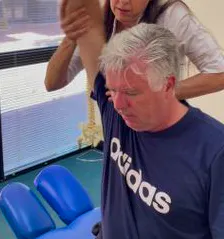
Hands on joint manipulation and mobilisation for particularly stiff or restricted joints, used as part of the broader manual therapy approach shown to help above.
Hands on work to ease generalised muscle tension and stiffness, particularly through the neck, shoulders and lower back.
A strength focused exercise program, in line with the exercise evidence above and important given the muscle mass changes that occur through menopause, alongside joint specific mobility work.
A low-load option that can help manage pain in specific joints affected by stiffness or aching.
Read more about cold laser at our new website Cold Laser Perth .
An electrotherapy modality that can help settle pain in more symptomatic joints alongside manual treatment.
Taping to support particularly aggravated joints during daily activity.
References
- Espírito Santo J, Moita J, Nunes A. The Efficacy of Manual Therapy on Musculoskeletal Pain in Menopause: A Systematic Review. Healthcare. 2024;12(18):1838. PMID 39337178
- Philip AE, Singh H, Nanjundiah SY, Samudrala PC, Theunissen DW, Robinson J, Banerjee I. Impact of Exercise on Perimenopausal Syndrome: A Systematic Review of Randomized Controlled Trials. Cureus. 2025;17(3):e80862. PMID 40255746
Disclaimer: This page is intended as general information only and does not replace individual assessment and advice from a qualified health professional. If you're dealing with joint or muscle pain related to perimenopause or menopause, book an appointment with our team so we can assess your specific situation and recommend an appropriate treatment plan.
Location Details

| Day | Hours |
|---|---|
| Sunday | 9:00 AM - 4:00 PM |
| Monday | 9:00 AM - 7:00 PM |
| Tuesday | 8:00 AM - 7:00 PM |
| Wednesday | 8:00 AM - 7:00 PM |
| Thursday | 8:00 AM - 7:00 PM |
| Friday | 8:00 AM - 7:00 PM |
| Saturday | 8:00 AM - 4:00 PM |

