
Patellar Tendinopathy Treatment in Joondalup: Relief for Jumper’s Knee
A loading based rehab program, supported by hands on treatment and cold laser, is the evidence backed way to work through patellar tendinopathy and get back to jumping sports.
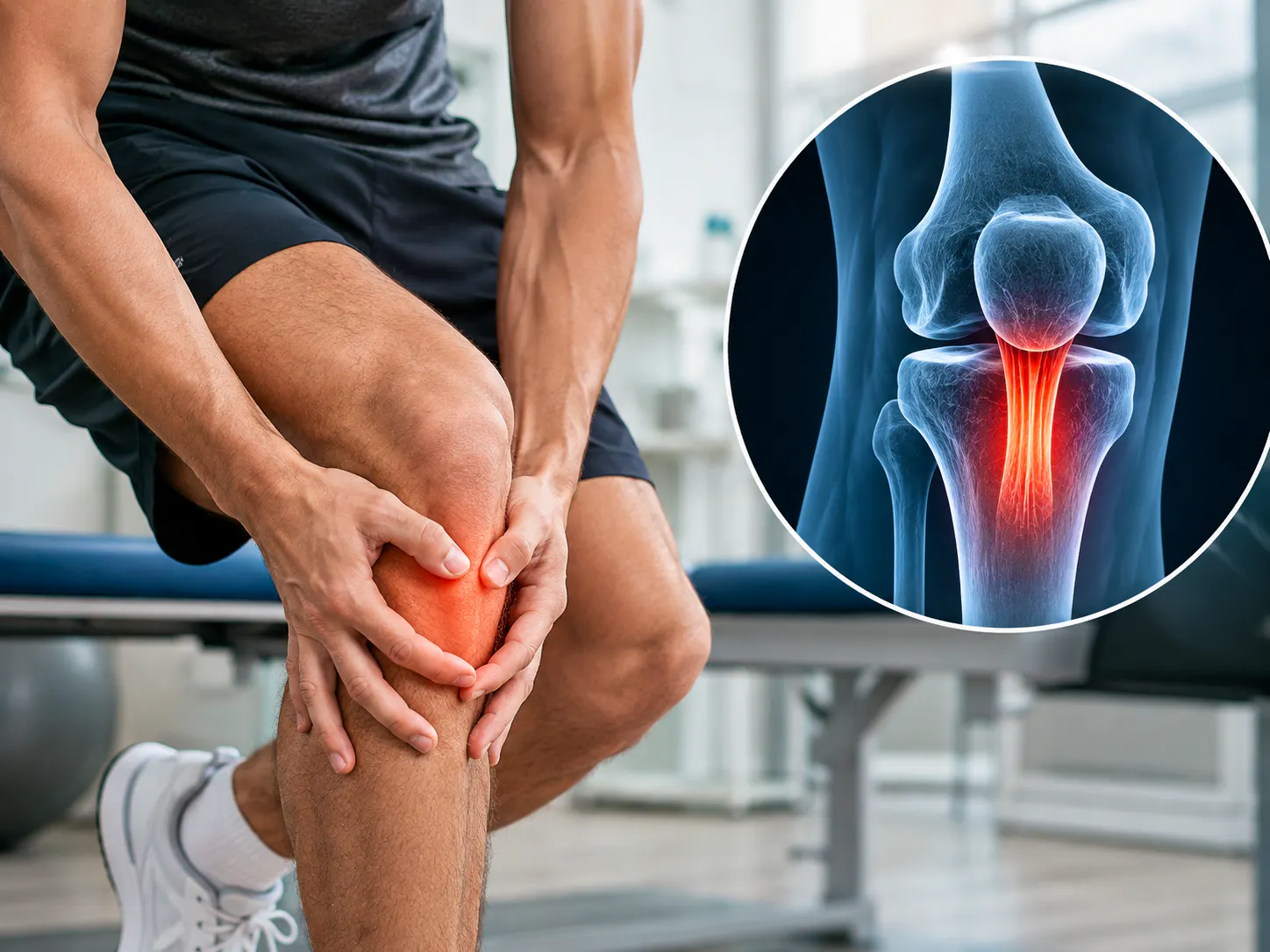
What Is Patellar Tendinopathy?
Patellar tendinopathy, commonly known as jumper’s knee, is a nagging pain right at the bottom of the kneecap that we see often in basketballers, netballers and volleyball players training and playing across Joondalup and Perth’s northern suburbs.
It tends to build up gradually with repetitive jumping and landing rather than appearing after a single injury.
The patellar tendon connects the bottom of the kneecap to the shin bone and takes a huge amount of load every time you jump, land or change direction.
Patellar tendinopathy develops when the tendon is loaded faster than it can adapt and recover, leading to changes in the structure of the tendon tissue itself. Unlike a typical inflammatory injury, it’s better understood as a problem of the tendon’s ability to tolerate load, which is why a gradual, structured loading program tends to be central to recovery.
Symptoms of Patellar Tendinopathy
- Pain localised to the bottom of the kneecap, at the top of the patellar tendon
- Pain that’s worse with jumping, landing, squatting or going down stairs
- Stiffness in the tendon first thing in the morning or after sitting
- Pain that may ease once you’ve warmed up, only to return afterward
- Tenderness when pressing directly on the tendon below the kneecap
What Causes Patellar Tendinopathy
- A sudden increase in jumping or sprinting load, common in pre-season training
- Playing on hard surfaces without adequate load management
- Weakness or poor control through the quadriceps
- Tightness in the quadriceps or hamstrings, which increases tension through the tendon
- Inconsistent training loads, such as sudden spikes after time off
What the Research Shows
Loading exercise, particularly eccentric training, has the strongest evidence base.
A systematic review of randomised controlled trials by Larsson et al. (2012) found strong evidence supporting eccentric training as an effective treatment for patellar tendinopathy, with moderate evidence for heavy slow resistance training as an alternative approach. Passive treatments alone showed weaker and less consistent support in comparison.
How We Can Help
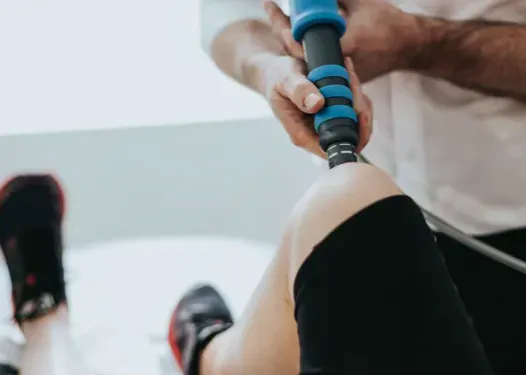
Because loading the tendon correctly is central to recovery, treatment is built around a structured rehab program supported by hands on care.
This might include:
A low-load treatment option that can help manage pain around the tendon without adding to the load it’s already under.
Read more about cold laser at our new website Cold Laser Perth .
Build a Safe Return-to-Sport Plan
If jumper’s knee is affecting your training or game day, get in touch with our Joondalup team on 9300 0095 so we can build you a plan to load the tendon safely and get you back to sport.
References
- Larsson MEH, Käll I, Nilsson-Helander K. Treatment of patellar tendinopathy: a systematic review of randomized controlled trials. Knee Surgery, Sports Traumatology, Arthroscopy. 2012;20(8):1632-1646. PMID 22186923
Disclaimer: This page is intended as general information only and does not replace individual assessment and advice from a qualified health professional. If you're dealing with pain at the bottom of your kneecap, particularly with jumping sports, book an appointment with our team so we can assess your specific situation and recommend an appropriate treatment plan.
Location Details

| Day | Hours |
|---|---|
| Sunday | 9:00 AM - 4:00 PM |
| Monday | 9:00 AM - 7:00 PM |
| Tuesday | 8:00 AM - 7:00 PM |
| Wednesday | 8:00 AM - 7:00 PM |
| Thursday | 8:00 AM - 7:00 PM |
| Friday | 8:00 AM - 7:00 PM |
| Saturday | 8:00 AM - 4:00 PM |

