
Retrocalcaneal Bursitis Treatment in Joondalup: Relief for Posterior Heel Pain
Addressing the tension and loading patterns around the Achilles insertion can help settle retrocalcaneal bursitis and reduce the friction that’s driving it.
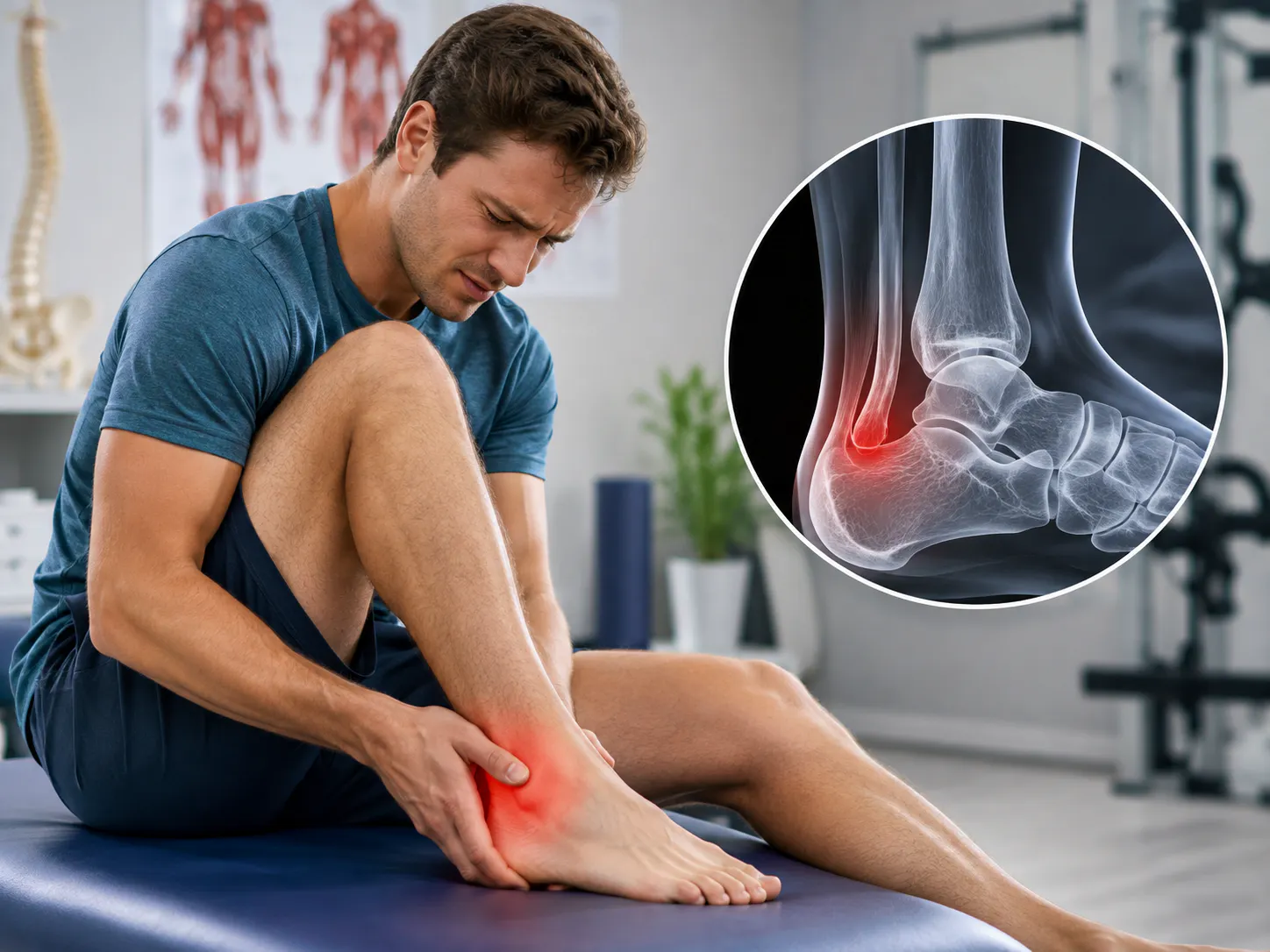
What Is Retrocalcaneal Bursitis?
Retrocalcaneal bursitis causes pain, swelling and tenderness right at the back of the heel, where the Achilles tendon meets the heel bone.
It’s common in runners, people who wear stiff or restrictive shoes, and often turns up alongside Achilles tendon irritation in our Joondalup and Wanneroo patients.
A small fluid filled sac, the retrocalcaneal bursa, sits between the Achilles tendon and the heel bone to reduce friction as the tendon moves. Repetitive friction, often from tight or poorly fitting shoes, overtraining, or a bony prominence on the heel called a Haglund’s deformity, can irritate this bursa and cause it to swell and become painful. It frequently occurs alongside irritation of the Achilles tendon itself where it attaches to the heel.
Symptoms of Retrocalcaneal Bursitis
- Pain and swelling at the back of the heel, just above where the Achilles tendon inserts
- Tenderness when squeezing the area from both sides
- Pain that’s worse with shoes that press on the back of the heel
- A visible bump or thickening at the back of the heel in some cases
- Pain aggravated by walking, running or climbing stairs
What Causes Retrocalcaneal Bursitis
- Tight or stiff backed shoes, including some running shoes and dress shoes
- A sudden increase in running or training load
- A bony prominence at the back of the heel, known as Haglund’s deformity, which increases friction at the site
- Tight calf muscles, which change how the Achilles tendon and bursa are loaded
What the Research Shows
A combined approach of loading exercise and soft tissue therapy is recommended for the closely related Achilles insertion problems this condition often accompanies.
A systematic review and network meta-analysis by Ko et al. (2023) examined non-surgical treatments for insertional Achilles tendinopathy, the condition retrocalcaneal bursitis is most closely linked with, and found that a combination of eccentric exercise and soft tissue therapy was the recommended approach, ahead of relying on any single treatment alone.
How We Can Help
Because this condition sits so close to the Achilles tendon, treatment usually addresses both the bursa and the surrounding tendon and muscle.
This might include:
Hands on work to the calf and Achilles complex to reduce the tension contributing to friction at the back of the heel, in line with the combined approach shown to help in the research.
A loading program for the calf and Achilles, adjusted to avoid excessive compression at the heel while the bursa settles.
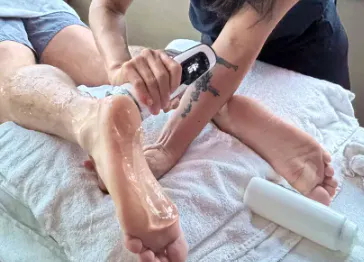
A low-load treatment option that can help manage pain and inflammation at the back of the heel without added friction on the area.
Read more about cold laser at our new website Cold Laser Perth.
Taping to help reduce friction from footwear over the back of the heel while the area recovers.
References
- Ko VMC, Cao M, Qiu J, Fong ICK, Fu SC, Yung PSH, Ling SKK. Comparative short-term effectiveness of non-surgical treatments for insertional Achilles tendinopathy: a systematic review and network meta-analysis. BMC Musculoskeletal Disorders. 2023;24(1):102. PMID 36750789
Disclaimer: This page is intended as general information only and does not replace individual assessment and advice from a qualified health professional. If you're dealing with pain or swelling at the back of your heel, book an appointment with our team so we can assess your specific situation and recommend an appropriate treatment plan.
Location Details

| Day | Hours |
|---|---|
| Sunday | 9:00 AM - 4:00 PM |
| Monday | 9:00 AM - 7:00 PM |
| Tuesday | 8:00 AM - 7:00 PM |
| Wednesday | 8:00 AM - 7:00 PM |
| Thursday | 8:00 AM - 7:00 PM |
| Friday | 8:00 AM - 7:00 PM |
| Saturday | 8:00 AM - 4:00 PM |

