
Tarsal Tunnel Syndrome Treatment in Joondalup: Relief for Nerve Pain in the Foot
Nerve mobilisation, soft tissue work and addressing foot mechanics can help settle the burning, tingling pain of tarsal tunnel syndrome.

What Is Tarsal Tunnel Syndrome?
Tarsal tunnel syndrome causes burning, tingling or numbness on the inside of the ankle and into the sole of the foot, and it’s often mistaken for plantar fasciitis in its early stages.
We see it across Joondalup and Perth’s northern suburbs, particularly in people with flat feet or those who spend long hours on their feet.
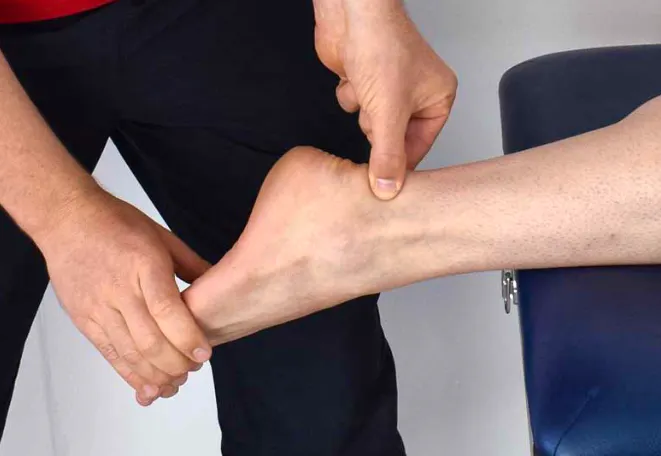
The tarsal tunnel is a narrow space on the inside of the ankle, behind the bony bump called the medial malleolus, through which the posterior tibial nerve travels on its way to the sole of the foot. When this nerve becomes compressed or irritated within the tunnel, it produces symptoms similar to carpal tunnel syndrome in the wrist, but in the foot. It can be triggered by swelling, flat feet that stretch the nerve, or tightness in the surrounding tissue, and it’s worth distinguishing from plantar fasciitis, since the two are commonly confused but respond to different approaches.
Symptoms of Tarsal Tunnel Syndrome
- Burning, tingling or numbness on the inside of the ankle and sole of the foot
- Pain that can radiate into the toes
- Symptoms that are often worse at night or after standing and walking for long periods
- A positive response when tapping over the inside of the ankle, reproducing the tingling sensation
- In some cases, mild weakness in the small muscles of the foot
What Causes Tarsal Tunnel Syndrome
- Flat feet, which stretch and place extra tension on the posterior tibial nerve
- Swelling around the ankle from a previous injury or another underlying condition
- Tightness in the muscles and soft tissue surrounding the tarsal tunnel
- Repetitive stress from standing, walking or running for long periods
What the Research Shows
Adding nerve mobilisation exercises to standard conservative care improves outcomes.
A randomised clinical trial by Kavlak and Uygur (2011) , published in the Journal of Manipulative and Physiological Therapeutics, found that adding nerve mobilisation exercises to a standard conservative treatment program produced a positive effect on pain reduction and functional ability in patients with tarsal tunnel syndrome, compared with conservative treatment alone.
How We Can Help
Because flat feet and tight surrounding tissue are such common contributors, treatment looks at the whole foot and ankle, not just the irritated nerve.
This might include:
Nerve mobilisation and gliding exercises alongside foot and ankle strengthening, in line with the evidence supporting this as an adjunct to conservative care.
Hands on work to the muscles and soft tissue around the tarsal tunnel to reduce compression on the nerve.
Taping to support the arch and reduce excess stretch on the nerve during activity, particularly useful where flat feet are a contributing factor.
A low-load option that can help manage pain and irritation around the nerve.
Read more about cold laser at our new website Cold Laser Perth .
References
- Kavlak Y, Uygur F. Effects of nerve mobilization exercise as an adjunct to the conservative treatment for patients with tarsal tunnel syndrome. Journal of Manipulative and Physiological Therapeutics. 2011;34(7):441-448. PMID 21875518
Disclaimer: This page is intended as general information only and does not replace individual assessment and advice from a qualified health professional. If you're dealing with burning, tingling or numbness in your foot or ankle, book an appointment with our team so we can assess your specific situation and recommend an appropriate treatment plan.
Location Details

| Day | Hours |
|---|---|
| Sunday | 9:00 AM - 4:00 PM |
| Monday | 9:00 AM - 7:00 PM |
| Tuesday | 8:00 AM - 7:00 PM |
| Wednesday | 8:00 AM - 7:00 PM |
| Thursday | 8:00 AM - 7:00 PM |
| Friday | 8:00 AM - 7:00 PM |
| Saturday | 8:00 AM - 4:00 PM |

