
Shockwave Therapy
A nonsurgical treatment that delivers controlled mechanical pressure pulses to targeted soft tissues. Shockwave therapy may be considered as part of a broader care plan for selected persistent tendon, fascia and musculoskeletal conditions.
What Is Shockwave Therapy?
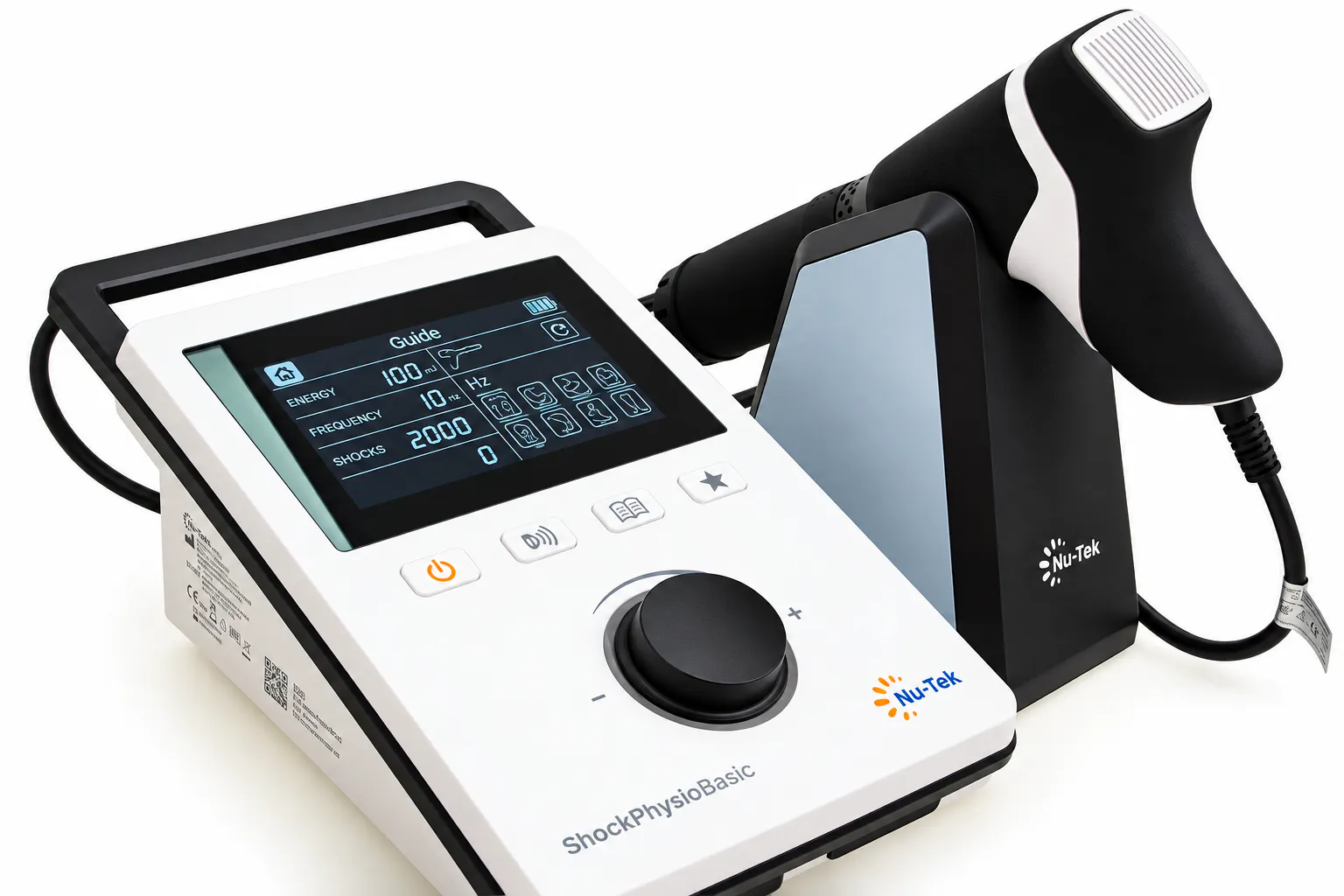
Shockwave therapy delivers repeated mechanical pressure pulses through the skin to a selected treatment area. These pulses provide a mechanical stimulus that may influence pain signalling and local tissue response. The exact biological mechanisms continue to be studied.
At Lakeside Chiropractic, shockwave therapy is considered after an assessment. It is most commonly considered for longer lasting tendon or fascia problems that have not settled as expected with activity modification, exercise or other conservative care.
How Shockwave Therapy Is Used
Assessment
Your chiropractor assesses the painful area, movement, tolerance for loading and relevant medical history to decide whether shockwave therapy may be appropriate.
Targeting the area
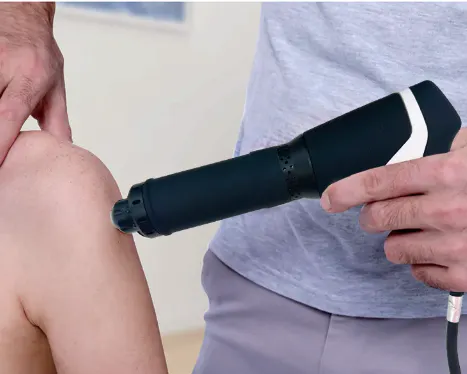
The handheld applicator is positioned over the selected area. Treatment may focus on a specific tender point or move across a broader area, depending on the tissue being treated.
Mechanical pulses
A controlled series of pressure pulses is delivered. Treatment usually begins at a lower intensity and can be gradually adjusted according to the body area and your response.
Reassessment and rehabilitation
Shockwave therapy is usually one part of a broader care plan. Your plan may also include strengthening, mobility work, changes to activity or loading, soft tissue care, or other chiropractic treatment.
Conditions Shockwave Therapy May Be Considered For
Research has explored shockwave therapy for several persistent tendon and fascia conditions. Depending on your assessment, it may be considered for:
- Plantar fasciopathy, also known as persistent plantar heel pain
- Achilles tendinopathy
- Patellar tendinopathy
- Lateral elbow tendinopathy, often called tennis elbow
- Some gluteal tendon problems and greater trochanteric pain presentations
- Selected calcific shoulder tendon conditions
- Selected myofascial pain presentations
- Other persistent tendon or soft tissue problems where shockwave therapy is clinically appropriate
What to Expect During Treatment
During treatment, you will usually hear repeated clicking and feel a rapid tapping or pulsing sensation over the target area. Some areas can feel sensitive, particularly at the start of a session, so the treatment level can be adjusted.
- Treatment may be directed at a specific tender point or moved across a broader area.
- A session is generally brief, although the exact time depends on the area and treatment plan.
- Temporary soreness, redness, swelling, bruising or small red spots can occur around the treated area. Some reactions may become more noticeable during the following one to two days.
- You can usually continue with usual daily activities, although your chiropractor may recommend temporarily changing sport or heavy loading depending on the condition being treated.
When Shockwave Therapy May Not Be Appropriate
Shockwave therapy may not be appropriate for everyone. Your chiropractor will review your medical history and the treatment area before recommending it. Factors that may affect suitability include:
- Pregnancy
- Active infection, open wounds or tumours in or near the treatment area
- A recent fracture, muscle tear or other acute tissue injury
- Blood clotting disorders or medications that alter blood clotting
- Vascular disease or an implanted electronic device near the treatment area
- Treatment over the lungs, air filled cavities, cartilage surfaces, growth plates or sensitive spinal areas
- Reduced sensation, certain neurological conditions, or other circumstances where treatment may be unsuitable
Research and Clinical Evidence
Evidence for shockwave therapy varies by condition and treatment protocol. Reviews have reported improvements for some persistent tendon and fascia conditions, although results and treatment parameters vary between studies. Shockwave therapy may be used alongside appropriate rehabilitation as part of an individualised care plan.
Plantar fasciopathy
A 2024 systematic review and meta-analysis reported reductions in pain with shockwave therapy for plantar fasciopathy. The authors found that treatment parameters influenced outcomes and that the optimal programme remains uncertain.
Tendinopathy more broadly
A 2024 systematic review and meta-analysis examined 45 clinical studies covering several types of tendinopathy. It reported pain reductions for some conditions while noting that further high quality research is needed to establish the best treatment options for each condition.
Comparison with other treatments
Another systematic review found that outcomes varied by condition and that shockwave therapy did not consistently outperform comparison treatments across all tendon conditions studied.
Shockwave therapy in physically active people
A 2024 systematic review found that shockwave therapy may be useful for selected sports related conditions, either on its own or alongside exercise. The evidence varied by condition.
Frequently Asked Questions
Research References
- Lippi L, et al. Efficacy and tolerability of extracorporeal shock wave therapy in patients with plantar fasciopathy: a systematic review with meta-analysis and meta-regression. Eur J Phys Rehabil Med. 2024;60(5):832-846. PubMed PMID 39257331
- Majidi L, et al. The effect of extracorporeal shock-wave therapy on pain in patients with various tendinopathies: a systematic review and meta-analysis of randomized controlled trials. BMC Sports Sci Med Rehabil. 2024;16:93. PubMed PMID 38659004
- Elgendy MH, et al. Effectiveness of extracorporeal shockwave therapy in treatment of upper and lower limb tendinopathies: a systematic review and meta-analysis. Physiother Res Int. 2024;29(1):e2042. PubMed PMID 37493215
- Rhim HC, et al. Use of extracorporeal shockwave therapies for athletes and physically active individuals: a systematic review. Br J Sports Med. 2024;58(3):154-163. PubMed PMID 38228375

