
Chiropractic Care for Childhood Scoliosis in Joondalup: What Parents Should Know
Understanding the early signs of scoliosis, what a proper diagnosis involves, and what conservative care can genuinely offer, explained for parents.
Scoliosis, a sideways curve of the spine, most often shows up during the growth spurts of late childhood and adolescence. It’s something we’re asked about regularly by parents across Joondalup and Perth’s northern suburbs, usually after noticing something looked slightly uneven in their child’s posture.
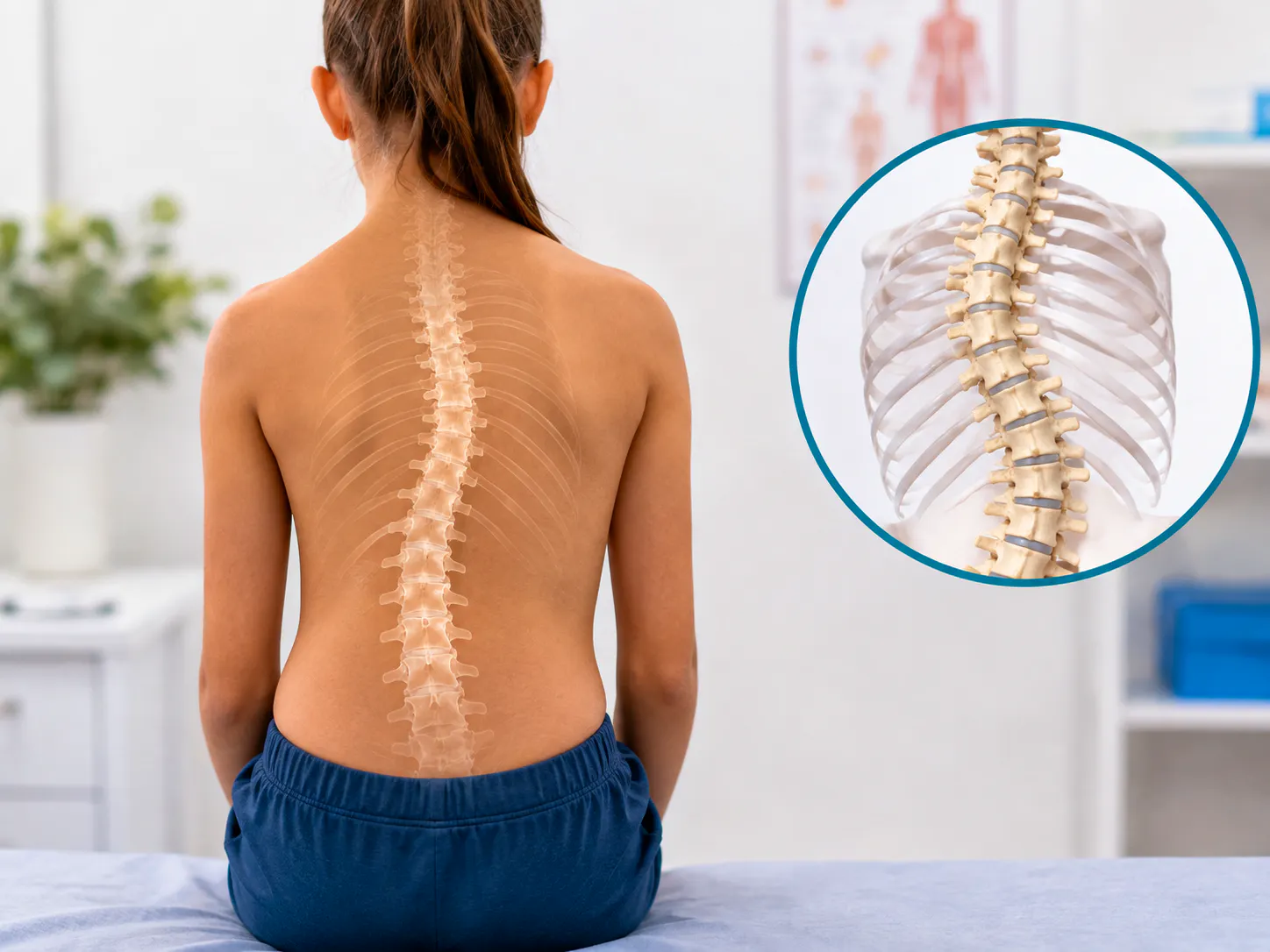
Signs to Watch For
- One shoulder sitting noticeably higher than the other
- One shoulder blade sticking out more than the other
- Unevenness at the waist or hips
- Clothes or hemlines that consistently hang unevenly
- A visible curve or rib prominence when your child bends forward
A Simple Home Check
The Adam’s forward bend test is a simple screening check you can do at home. Ask your child to bend forward at the waist with their arms hanging down and feet together, then look along their back from behind.
In a straight spine, both sides of the back stay roughly even. With scoliosis, one side of the rib cage or lower back often appears higher than the other.
This is a screening check only, not a diagnosis, so if you notice an unevenness it’s worth getting your child properly assessed.
Confirming a Diagnosis: EOS Imaging
If screening suggests a curve, the next step is confirming and measuring it with imaging.
We refer our patients to SKG Radiology for EOS imaging, a low-dose, weight-bearing X-ray system that captures a full standing image of the spine in around 15 seconds.
Research comparing EOS to standard X-ray has found it can reduce radiation dose several times over, with some studies estimating a reduction of up to around 40 times when using EOS’s lowest dose setting.
One study found this translated into roughly a fivefold reduction in the additional lifetime cancer risk that comes from repeated spinal X-rays, a meaningful difference for children who may need several scans while a curve is being monitored.
Scans referred by one of our chiropractors are bulk billed to Medicare.
Gold Standard Care Recommendations by Curve Size
Once a curve is measured in Cobb degrees, established international guidelines set out what level of care is generally recommended.
Your child’s age, remaining growth and curve pattern all factor into the final decision, so these are a general guide rather than a fixed rule.
Not classed as scoliosis, considered a minor spinal asymmetry.
A mild curve, generally monitored with regular reviews rather than active treatment.
In a child who still has significant growth remaining, bracing is the standard recommendation to prevent the curve worsening, often alongside scoliosis specific exercise.
Bracing may still be tried, though surgical consultation becomes a more active consideration, particularly if the curve keeps progressing.
Surgical consultation is generally recommended, as curves at this size tend to keep progressing even once growth has finished.
Where a curve reaches the bracing or surgical thresholds above, generally from around 25° in a child who still has significant growth remaining, we work alongside your GP to refer to a paediatric orthopaedic spine specialist. That specialist determines whether bracing, working alongside an orthotist, or surgical planning is the right next step based on your child’s specific curve and growth remaining. If you’re already seeing a specialist, we’re always happy to coordinate care alongside them.
What the Research Shows
Manual therapy shows benefit when added to other conservative care, though not as a standalone treatment.
A systematic review and meta-analysis by Sun et al. (2023) looked at manual therapy for adolescent idiopathic scoliosis and found a significant benefit, including on Cobb angle, when manual therapy was added alongside other conservative treatment. When manual therapy was used as the sole treatment on its own, no significant benefit was found, pointing to its best use as one part of a broader conservative plan rather than a standalone fix.
Scoliosis specific exercise shows a small but genuine effect on curve size, alongside a clearer benefit for quality of life.
A systematic review and meta-analysis by Ceballos-Laita et al. (2023) examined the Schroth method, a form of exercise developed specifically for scoliosis, and found it produced a significant short-term reduction in Cobb angle and trunk rotation, and improved quality of life, compared to no intervention or other conservative therapies. The authors noted the average reduction in curve size was smaller than what’s generally considered clinically significant on its own, though the quality of life benefit was clear.
An Important Note on Treatment
The research above is genuinely encouraging, but it’s important to be clear about what it does and doesn’t show.
Current research hasn’t established that chiropractic manipulation can reliably correct or permanently reduce a structural scoliotic curve, in either children or adults.
Some small preliminary studies in growing adolescents have reported modest reductions in curve size, but these findings don’t yet support confident conclusions.
Chiropractic care can still play a role in monitoring, comfort and supporting overall spinal function, alongside appropriate medical oversight of the curve itself.
Common Questions
Answers to common questions parents ask about when scoliosis starts, progression, family history and whether surgery is always needed.
How We Can Help
Beyond monitoring the curve itself, treatment focuses on comfort, muscle balance and movement.
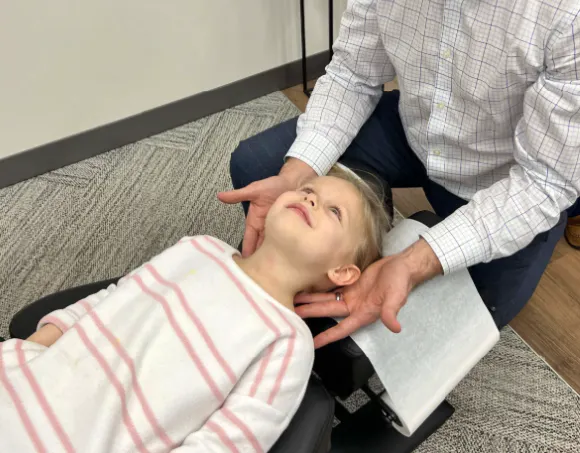
Gentle, age-appropriate manipulation and mobilisation as part of a broader conservative plan, in line with the research above showing benefit when combined with other care rather than used alone.
Hands on work to ease tension in the muscles that often develop asymmetrically around a scoliotic curve, supporting comfort and movement.
Used to address tight, overworked muscles on the more heavily loaded side of the curve.
Taping to support posture and provide movement feedback, particularly useful for older, more body-aware children and teens.
Exercise based approaches, including scoliosis specific exercise principles such as those used in the Schroth method, shown in the research above to improve trunk rotation and quality of life alongside standard care.
References
- Sun Y, Zhang Y, Ma H, Tan M, Zhang Z. Spinal Manual Therapy for Adolescent Idiopathic Scoliosis: A Systematic Review and Meta-Analysis of Randomized Controlled Trials. BioMed Research International. 2023;2023:7928429. PMID 36644168
- Ceballos-Laita L, Carrasco-Uribarren A, Cabanillas-Barea S, Pérez-Guillén S, Pardos-Aguilella P, Jiménez Del Barrio S. The effectiveness of Schroth method in Cobb angle, quality of life and trunk rotation angle in adolescent idiopathic scoliosis: a systematic review and meta-analysis. European Journal of Physical and Rehabilitation Medicine. 2023;59(2):228-236. PMID 36692412
- Rose LD, Williams R, Ajayi B, Abdalla M, Bernard J, Bishop T, Papadakos N, Lui DF. Reducing radiation exposure and cancer risk for children with scoliosis: EOS the new gold standard. Spine Deformity. 2023;11(4):847-851. PMID 36947393
- Negrini S, Donzelli S, Aulisa AG, et al. 2016 SOSORT guidelines: orthopaedic and rehabilitation treatment of idiopathic scoliosis during growth. Scoliosis and Spinal Disorders. 2018;13:3. PMID 29435499
- Di Felice F, Zaina F, Donzelli S, Negrini S. The Natural History of Idiopathic Scoliosis During Growth: A Meta-Analysis. American Journal of Physical Medicine and Rehabilitation. 2018;97(5):346-356. PMID 29493563
- Latalski M, Danielewicz-Bromberek A, Fatyga M, Latalska M, Kröber M, Zwolak P. Current insights into the aetiology of adolescent idiopathic scoliosis. Archives of Orthopaedic and Trauma Surgery. 2017;137(10):1327-1333. PMID 28710669
Disclaimer: This page is intended as general information only and does not replace individual assessment and advice from a qualified health professional. If you're dealing with concerns about your child’s spine or posture, book an appointment with our team so we can assess your specific situation and recommend an appropriate treatment plan.
Location Details

| Day | Hours |
|---|---|
| Sunday | 9:00 AM - 4:00 PM |
| Monday | 9:00 AM - 7:00 PM |
| Tuesday | 8:00 AM - 7:00 PM |
| Wednesday | 8:00 AM - 7:00 PM |
| Thursday | 8:00 AM - 7:00 PM |
| Friday | 8:00 AM - 7:00 PM |
| Saturday | 8:00 AM - 4:00 PM |

