
Shoulder Impingement Treatment in Joondalup and Perth's Northern Suburbs
Pain when lifting your arm or reaching overhead — shoulder impingement is one of the most common causes of shoulder pain in adults, and it responds well to conservative care.
Shoulder impingement syndrome occurs when the tendons or bursa in the shoulder are repeatedly compressed as you lift your arm. It is one of the most frequent shoulder complaints we see at Lakeside Chiropractic.
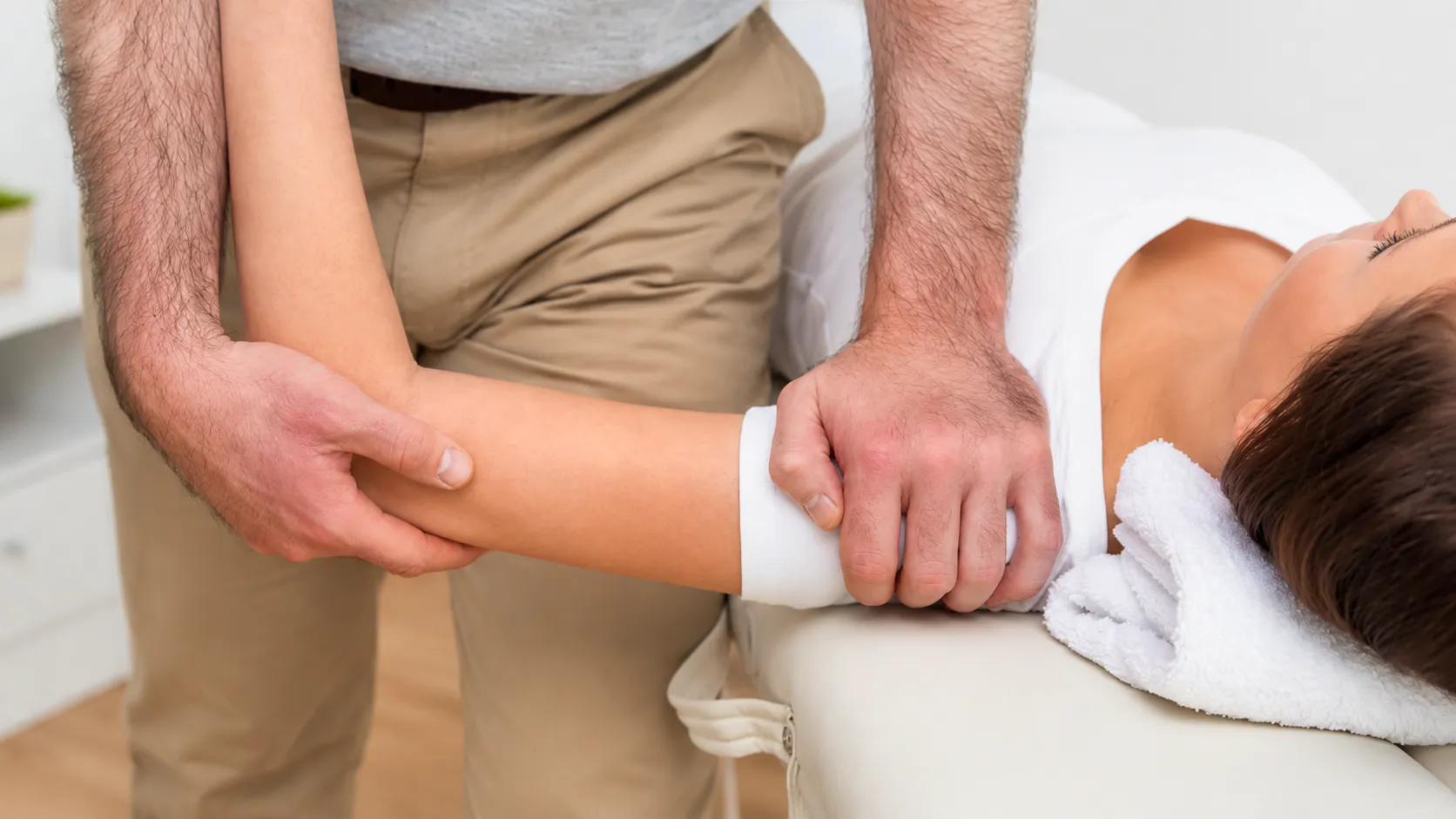
What Is Shoulder Impingement?
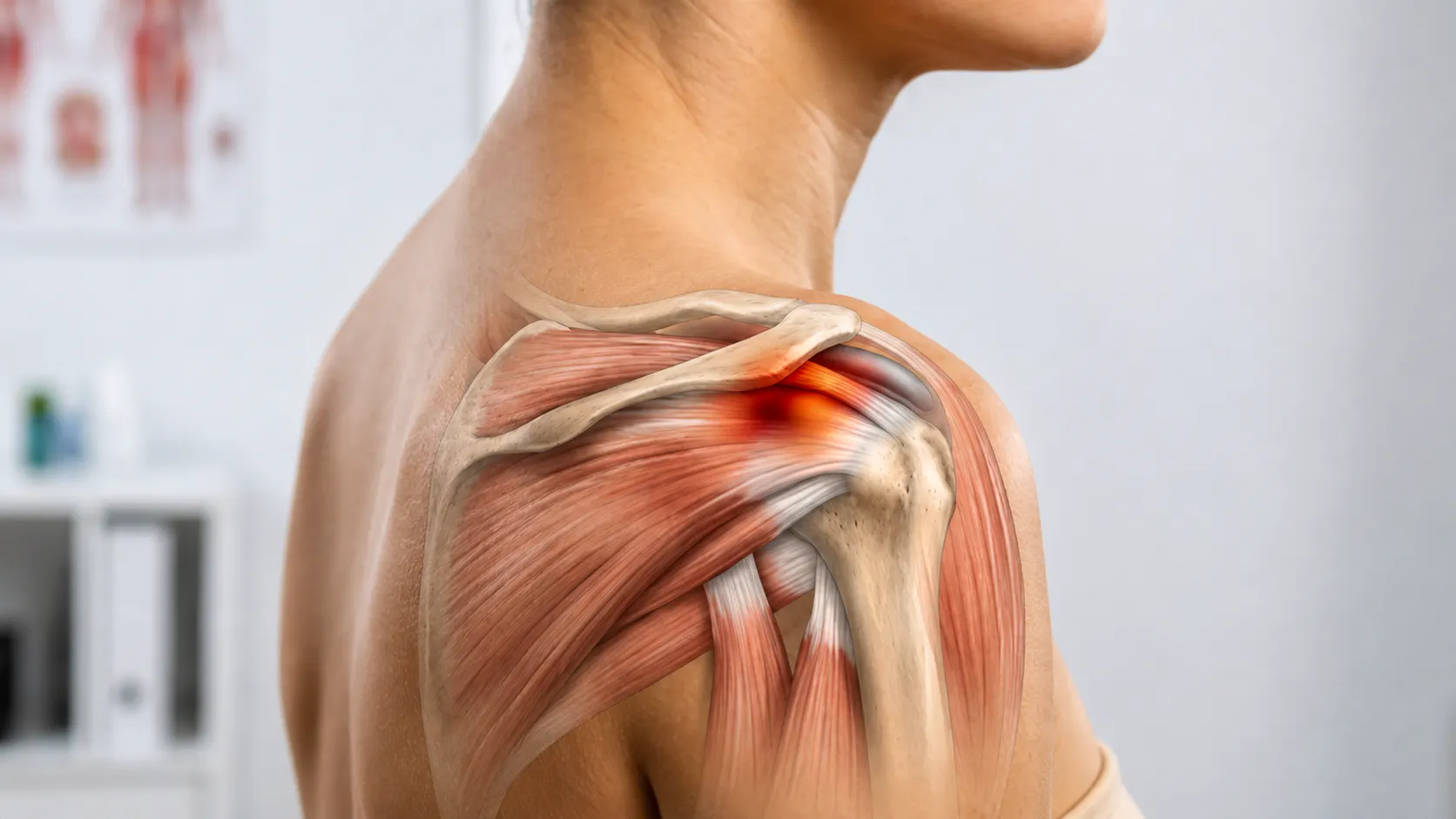
The rotator cuff tendons and the subacromial bursa sit in a narrow space between the ball of the upper arm and the bony arch above it called the acromion.
Impingement happens when this space narrows and the soft tissue inside gets pinched during arm movement, particularly between shoulder and ear height.
This can result from postural changes, muscle imbalance, reduced thoracic mobility, or repetitive overhead loading over time. The bursa often becomes irritated alongside the tendons, contributing to pain and stiffness.
Common Causes
Shoulder impingement often reflects a combination of repetitive loading, muscle imbalance, posture, and restricted movement.
- Repetitive overhead activity at work, in sport, or at home
- Weakness or imbalance in the rotator cuff or scapular stabilisers
- Rounded shoulders or forward head posture that alters shoulder mechanics
- Stiffness in the thoracic spine that limits shoulder-blade movement
- A bone spur or anatomical narrowing of the subacromial space
Symptoms
- Pain when lifting the arm, especially between 60 and 120 degrees of elevation
- A catching or pinching sensation when reaching overhead or behind the back
- Aching at night, particularly when lying on the affected shoulder
- Weakness or fatigue during sustained overhead activity
- Tenderness at the front or side of the shoulder
What the Research Shows
Research supports targeted exercise, with manual therapy and selected modalities providing additional benefit in some cases.
- The 2017 Steuri et al. meta-analysis found that specific targeted exercise outperformed generic exercise, manual therapy added short-term benefit over exercise alone, and low-level laser showed meaningful effects compared with sham treatment.
- The 2017 Hawk et al. review found moderate evidence supporting several passive modalities, with manual therapy and exercise combined being consistently beneficial.
- The 2016 Mintken et al. randomised controlled trial found that adding cervicothoracic manual therapy to exercise significantly improved patient-perceived success at four weeks and six months, even when pain and disability scores were similar between groups.
How We Can Help
Care is selected according to the painful movements, shoulder mechanics, tissue irritability, and strength deficits identified during the assessment.
We release the posterior capsule and posterior rotator cuff, which commonly contribute to an internal-rotation deficit that narrows the subacromial space.
We may target the lower trapezius and serratus anterior, which help rotate the shoulder blade upward as the arm rises.
Cold laser may be applied over the subacromial space to calm an irritated bursa or tendon when pain is limiting the ability to load the shoulder through exercise.
Learn more about Cold Laser Therapy or visit Cold Laser Perth .
A scapular taping technique may hold the shoulder blade in a more supportive position during daily activity and reduce load between appointments.
The program focuses on scapular control and rotator cuff strengthening in comfortable ranges before progressively working into the painful arc as strength and mechanics improve.
Shoulder Pain Is Worth Properly Assessing
Lakeside Chiropractic is based in Joondalup and sees patients from Currambine, Woodvale, Kingsley, Duncraig, Wanneroo, Tapping, Carramar, Heathridge, Edgewater, Mullaloo, Padbury, Banksia Grove, Yanchep, Gnangara, and across Perth's northern suburbs.
Call us on 9300 0095 or visit lakesidechiro.com.au .
Disclaimer: This page provides general health information only and is not a substitute for professional assessment, diagnosis, or treatment. Results vary between individuals. Please consult a qualified health professional to discuss your individual circumstances.
References
- Steuri R, et al. Effectiveness of conservative interventions including exercise, manual therapy and medical management in adults with shoulder impingement. Br J Sports Med. 2017;51(18):1340-1347. PMID 28630217
- Hawk C, et al. Systematic review of nondrug, nonsurgical treatment of shoulder conditions. J Manipulative Physiol Ther. 2017;40(5):293-319. PMID 28554433
- Mintken PE, et al. Cervicothoracic manual therapy plus exercise therapy versus exercise therapy alone in the management of individuals with shoulder pain. J Orthop Sports Phys Ther. 2016;46(8):617-628. PMID 27477473
Location Details

| Day | Hours |
|---|---|
| Sunday | 9:00 AM - 4:00 PM |
| Monday | 9:00 AM - 7:00 PM |
| Tuesday | 8:00 AM - 7:00 PM |
| Wednesday | 8:00 AM - 7:00 PM |
| Thursday | 8:00 AM - 7:00 PM |
| Friday | 8:00 AM - 7:00 PM |
| Saturday | 8:00 AM - 4:00 PM |

