
Morning or Postural Stiffness
Neck stiffness may be worse in the morning or after spending a long time in one position.
Neck stiffness, aching, and reduced movement from wear and tear in the cervical spine. Here is what is happening and what can help.
Cervical osteoarthritis, also called cervical spondylosis, refers to age-related wear and degeneration in the joints, discs, and vertebrae of the neck. It is one of the most common findings in adults over 50, and its management is something we see regularly at Lakeside Chiropractic in Joondalup.
As the spine ages, the discs gradually lose height and hydration, the cartilage lining the facet joints wears thin, and bony spurs can develop at the vertebral edges.
These changes are referred to collectively as cervical spondylosis or cervical osteoarthritis.
One thing worth knowing: degenerative changes on a scan are extremely common and do not reliably predict pain.
A systematic review by Brinjikji et al. (2015) found that disc and joint degeneration is present in a significant proportion of people with no symptoms at all, and that these findings become more common with age whether or not someone has pain.
A scan tells part of the story, but it is not the whole picture.

Symptoms vary considerably from person to person. When they are present, several patterns are commonly reported.
Neck stiffness may be worse in the morning or after spending a long time in one position.
A deep ache may remain local to the neck or spread into the shoulders and upper back.
Rotation and extension may become limited or uncomfortable.
Some people notice grinding, clicking, or other sounds with neck movement.
Irritated upper cervical joints and tight muscles may contribute to headache symptoms.
In some cases, nerve-root irritation may create symptoms into the arm or hand.
Research supports a hands-on, active approach that focuses on movement, function, and education rather than relying on imaging findings alone.
A randomised controlled trial by Maicki et al. (2017) found that manual therapy produced significant reductions in pain and meaningful improvements in daily function in patients with cervical osteoarthritis.
Benefits were still evident at three months.
A systematic review of 11 high-quality clinical practice guidelines by Lin et al. (2019) consistently found that exercise, manual therapy, and patient education produce better outcomes than passive or imaging-driven approaches.
Moving well and staying active matters more than what a scan report says.
The degenerative changes themselves cannot be reversed, but symptoms can often be managed well and function can be maintained or improved with the right approach.
We focus on reducing pain, keeping movement as good as it can be, and supporting the structures around the affected joints.
Gentle, targeted techniques may be used to restore movement at restricted cervical levels and reduce joint irritation. The approach is adapted to what is appropriate for the degree of degeneration present.
Releasing the cervical and upper thoracic musculature may reduce secondary pain and improve comfort when chronic joint degeneration is accompanied by muscle tightness and guarding.
Strengthening the muscles that support the cervical spine reduces load through the affected joints and helps maintain function over time.
Dry needling may help address chronic muscle tension and trigger points that build up around arthritic cervical joints.
Low-level laser may be applied to reduce inflammation and pain in affected joint tissues.
Electrical stimulation may be used to reduce pain and muscle spasm around affected cervical levels, particularly in more symptomatic presentations.
A low-force, instrument-assisted technique may be well suited to patients with significant degeneration where a gentler approach is more appropriate.
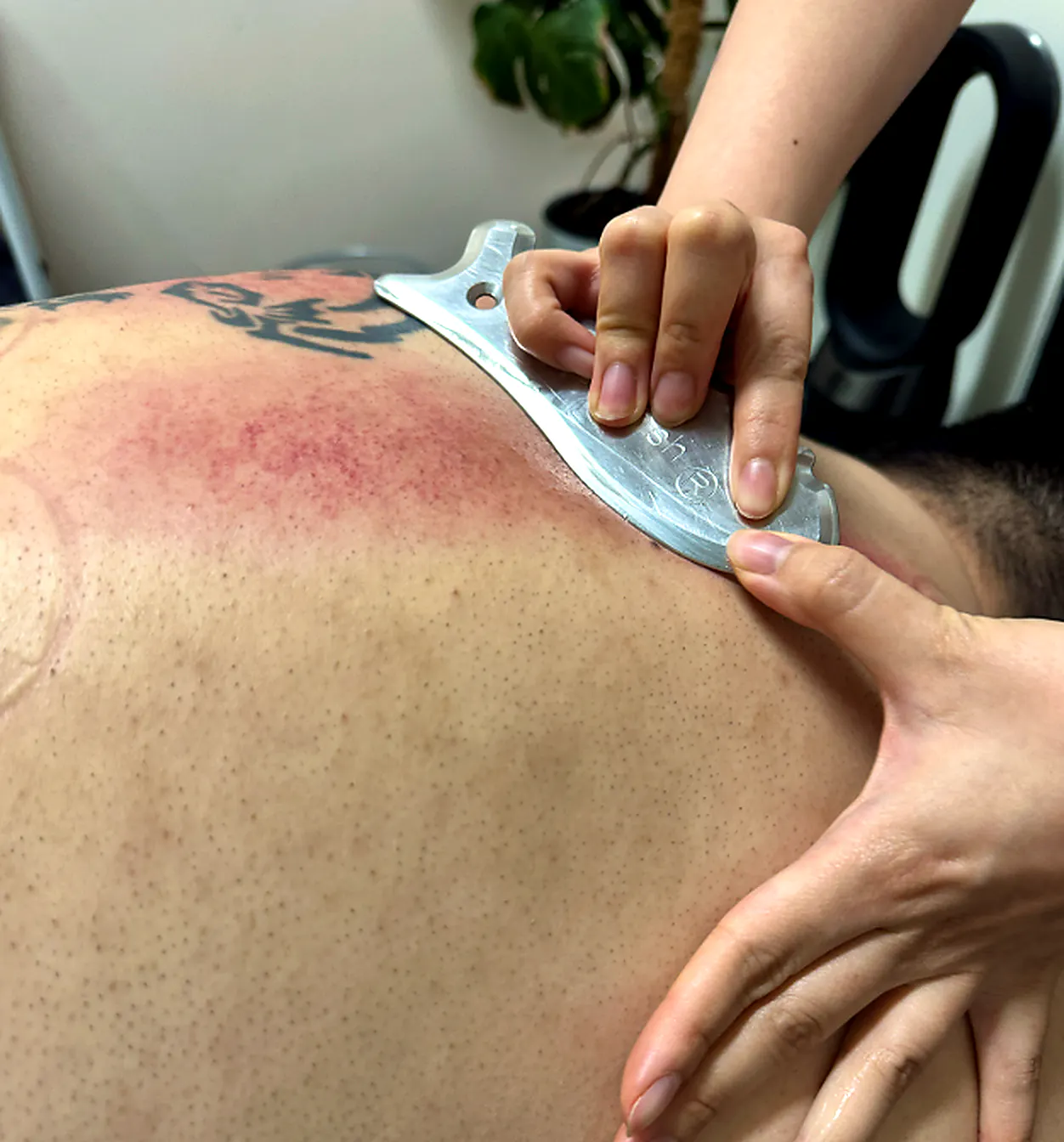
Instrument-assisted soft tissue therapy may be used to address fascial tightness and chronic muscle restrictions in the cervical and upper thoracic region.
A diagnosis of cervical osteoarthritis on a scan is not a reason to stop managing your neck actively. Movement and the right treatment approach can make a real difference to how you feel day to day.
We see patients from Currambine, Woodvale, Kingsley, Duncraig, Wanneroo, Tapping, Carramar, Heathridge, Edgewater, Mullaloo, Padbury, Banksia Grove, Yanchep, Gnangara, and across Perth's northern suburbs.
Call us on 9300 0095 or book online at lakesidechiro.com.au.
Disclaimer: This page provides general health information only and is not a substitute for professional assessment, diagnosis, or treatment. Results vary between individuals. Please consult a qualified health professional to discuss your individual circumstances.

| Day | Hours |
|---|---|
| Sunday | 9:00 AM - 4:00 PM |
| Monday | 9:00 AM - 7:00 PM |
| Tuesday | 8:00 AM - 7:00 PM |
| Wednesday | 8:00 AM - 7:00 PM |
| Thursday | 8:00 AM - 7:00 PM |
| Friday | 8:00 AM - 7:00 PM |
| Saturday | 8:00 AM - 4:00 PM |

