
Femoroacetabular Impingement (FAI) Treatment in Joondalup and Perth's Northern Suburbs
Chiropractic and rehabilitation care for hip impingement (FAI) in Joondalup, Currambine, Woodvale, Wanneroo, and Perth's northern suburbs.
What Is Femoroacetabular Impingement?
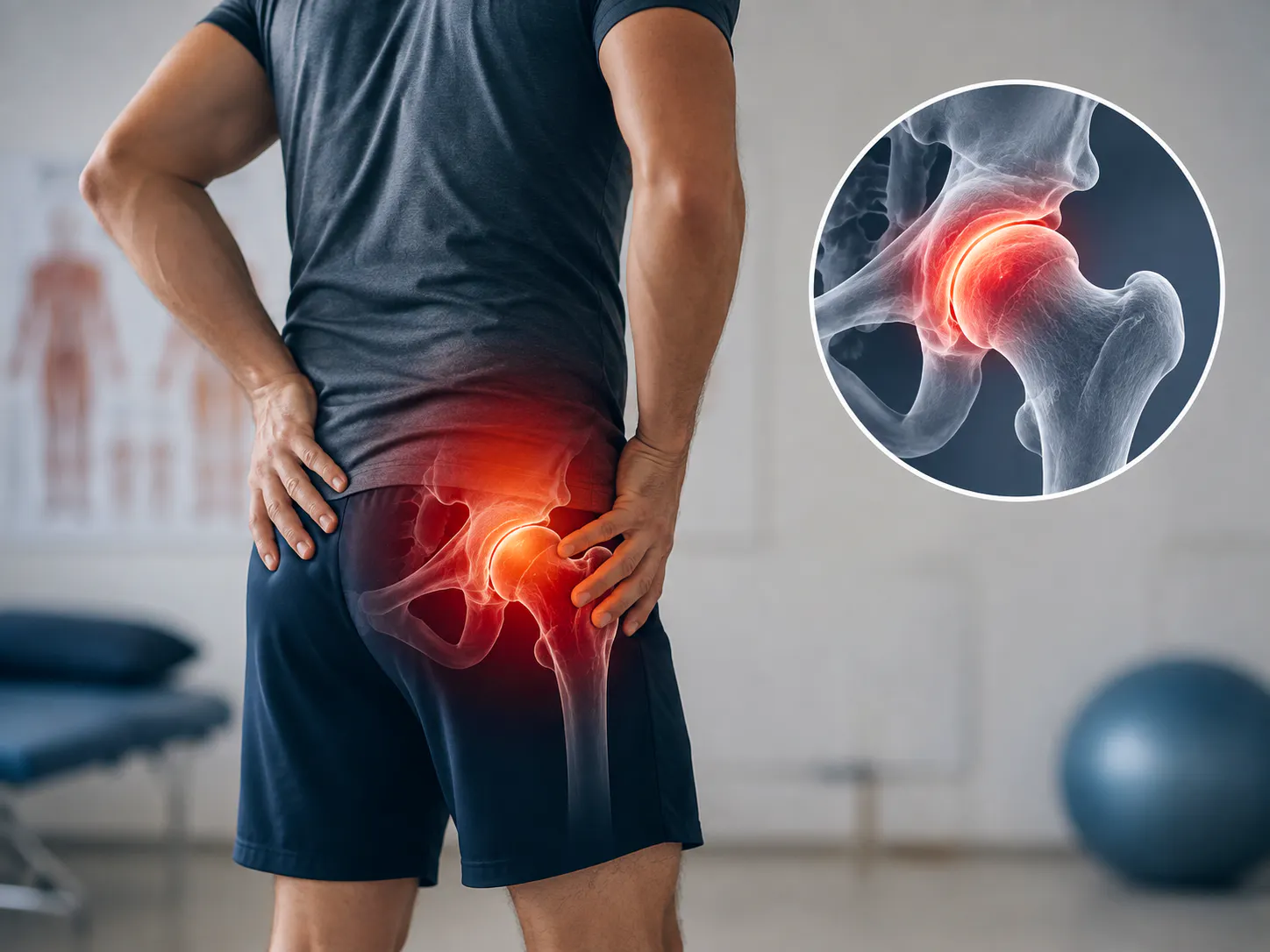
Femoroacetabular impingement (FAI) is a hip condition where the bones of the hip joint, the ball (femoral head) and the socket (acetabulum), make premature contact during movement.
This abnormal contact causes friction and irritation inside the joint, leading to pain, restricted movement, and, over time, potential damage to the cartilage and the labrum (the ring of fibrocartilage that deepens the hip socket).
Cam impingement involves a loss of the normal round shape of the femoral head, creating a bony prominence that catches on the edge of the socket during hip flexion.
Pincer impingement involves over-coverage of the femoral head by the acetabulum, meaning the socket rim contacts the femoral neck during movement. Many people have a combination of both.
FAI most commonly presents as groin pain, often felt deep in the front of the hip. It can also cause pain in the outer hip or buttock. Symptoms are typically aggravated by activities involving hip flexion, such as sitting for long periods, squatting, cycling, kicking, and getting in and out of a car. A clicking or catching sensation in the hip is sometimes reported.
FAI is increasingly recognised as a cause of hip pain in younger adults and athletes, though it is not exclusive to this group. The bony changes are often structural, meaning they are features of how the hip formed, rather than something that developed purely from activity.
Conservative Care vs Surgery
Not everyone with structural FAI on imaging has symptoms, and the presence of bony changes alone is not an indication for surgery.
For many people, symptoms can be managed effectively through conservative care focused on exercise, manual therapy, and activity modification.
A 2019 randomised controlled trial comparing surgery with physiotherapy found that while surgery produced better short-term outcomes in patients referred to secondary care, physiotherapy was still effective at reducing pain and improving function. This highlights that conservative management is a reasonable first line for many people, and surgery remains an option for those who do not progress.
What the Research Shows
Conservative Physical Therapy
A 2019 systematic review and meta-analysis by Mallets et al. in the International Journal of Sports Physical Therapy found that conservative physical therapy produced moderate to large improvements in both pain and physical function for people with FAI in the short term. Manual therapy, activity modification, and strengthening exercises were the most consistently beneficial components.
Surgery Compared With Physiotherapy
A 2019 multicentre randomised controlled trial by Palmer et al. published in the BMJ compared arthroscopic hip surgery with physiotherapy and activity modification for symptomatic FAI. Both groups improved, with the surgery group achieving better average outcomes in secondary care settings, while the physiotherapy group showed meaningful improvements in pain and function without surgery.
Exercise-Based Management
A 2021 review by Terrell et al. in the Journal of Athletic Training outlined key components of conservative FAI management including postural control, core stabilisation, hip strengthening, and movement re-education, all of which align closely with the approach we use at Lakeside Chiropractic.
Treatment at Lakeside Chiropractic
Conservative management of FAI at Lakeside Chiropractic centres on reducing pain, restoring hip movement within its comfortable range, and building the strength and control needed to move with less impingement.
We do not alter the bony structure of the hip, but we can significantly change how the joint functions.
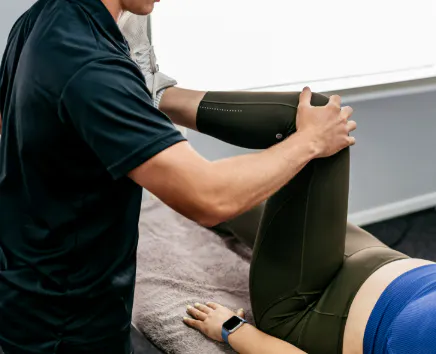
Gentle mobilisation techniques are used to improve hip joint mechanics and reduce the compressive forces that occur with impingement. Traction-based movements that create space in the joint are commonly used.
A progressive exercise program addresses the core, hip stabilisers, and posterior chain muscles. Improving motor control and strength around the hip changes the way load is distributed, reducing impingement with everyday movement.
Treatment to the hip flexors, adductors, and deep external rotators reduces muscle tightness that can draw the femoral head into a less optimal position and aggravate impingement symptoms.
Low-level laser light is applied to painful, inflamed tissue to support cellular repair and reduce pain.
Read more about cold laser at our dedicated website Cold Laser Perth.
Dry needling to the deep hip muscles and iliopsoas can reduce pain and improve tissue quality around the joint.
Activity Modification and Long-Term Management
Part of managing FAI conservatively involves understanding which positions and activities load the hip in ways that aggravate symptoms. Deep squatting, sustained hip flexion, and high-impact running on fatigued muscles are common triggers. We work with you to modify these activities during recovery and develop a long-term approach that keeps you active without repeatedly provoking pain.
For people who are pursuing a referral to an orthopaedic surgeon for consideration of hip arthroscopy, we can help optimise hip strength and mobility beforehand, and support rehabilitation after surgery if needed.
FAI in Joondalup and Perth's Northern Suburbs
We see FAI in a wide range of people across the northern suburbs, including Joondalup, Currambine, Woodvale, Wanneroo, Duncraig, Kingsley, and Edgewater.
It is common in younger and middle-aged adults who are active, including dancers, footballers, cyclists, and gym-goers, as well as people whose jobs involve repetitive bending or squatting.
References
- Mallets E et al. Short-term outcomes of conservative treatment for femoroacetabular impingement: a systematic review and meta-analysis. Int J Sports Phys Ther. 2019;14(4):514-524. PMID 31440404
- Palmer AJR et al. Arthroscopic hip surgery compared with physiotherapy and activity modification for symptomatic FAI: multicentre randomised controlled trial. BMJ. 2019;364:l185. PMID 30733197
- Terrell SL et al. Therapeutic exercise approaches to nonoperative and postoperative management of femoroacetabular impingement syndrome. J Athl Train. 2021;56(1):31-45. PMID 33112956
Disclaimer: This page provides general health information only and is not a substitute for professional assessment, diagnosis, or treatment. Results vary between individuals. Please consult a qualified health professional to discuss your individual circumstances.
Location Details

| Day | Hours |
|---|---|
| Sunday | 9:00 AM - 4:00 PM |
| Monday | 9:00 AM - 7:00 PM |
| Tuesday | 8:00 AM - 7:00 PM |
| Wednesday | 8:00 AM - 7:00 PM |
| Thursday | 8:00 AM - 7:00 PM |
| Friday | 8:00 AM - 7:00 PM |
| Saturday | 8:00 AM - 4:00 PM |

