
Greater Trochanteric Pain Syndrome Treatment in Joondalup and Perth's Northern Suburbs
Chiropractic and rehabilitation care for lateral hip pain, gluteal tendinopathy, and greater trochanteric pain syndrome in Joondalup, Wanneroo, Kingsley, Currambine, and the surrounding northern suburbs.
What Is Greater Trochanteric Pain Syndrome?
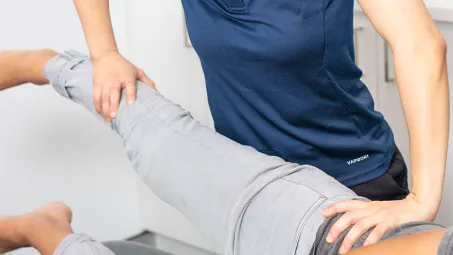
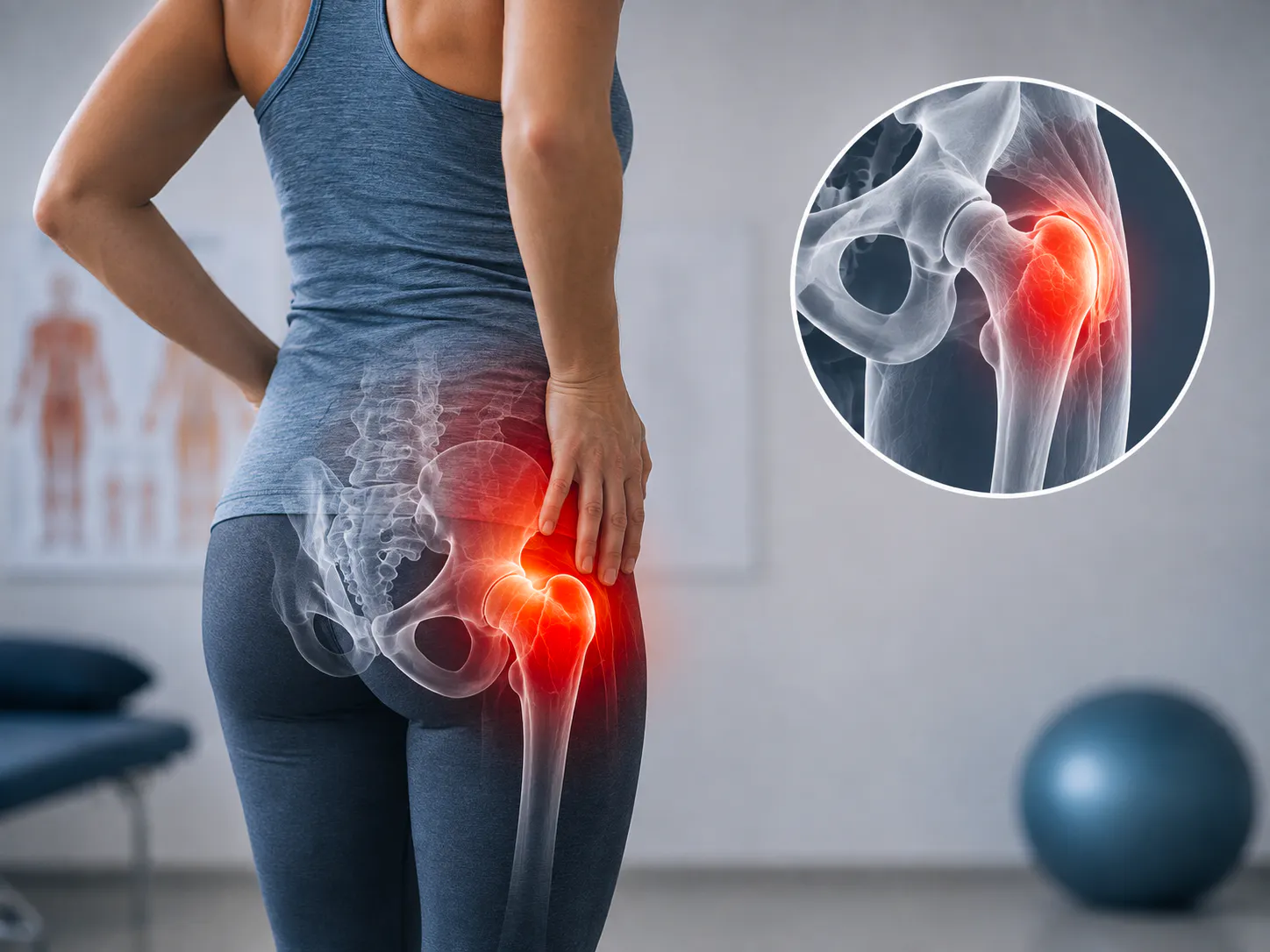
Greater trochanteric pain syndrome (GTPS) is a condition that causes pain on the outer side of the hip, over the bony prominence at the top of the thigh bone known as the greater trochanter.
It is one of the most common causes of lateral hip pain and is particularly prevalent in women aged 40 to 60, though it affects men and younger active people too.
The pain is typically felt on the outer hip and can radiate down into the outer thigh. It is often made worse by lying on the affected side at night, climbing stairs, sitting with crossed legs, or standing on one leg.
Many people describe the pain as deep and aching, and it can significantly interfere with sleep and day-to-day activity.
GTPS Is Commonly Driven by Gluteal Tendinopathy
For many years, this condition was called trochanteric bursitis, because it was thought to be caused mainly by inflammation of the bursa sitting over the greater trochanter.
More recent research has shown that the primary driver is usually gluteal tendinopathy, where the tendons of the gluteus medius and minimus muscles become irritated or degenerate at their attachment to the trochanter. The bursa may also be involved, but it is often a secondary feature.
Understanding this distinction matters because it changes how the condition is best managed. Treatments aimed purely at reducing bursal inflammation, such as repeated cortisone injections, tend to give diminishing returns, while a program of load management and progressive exercise targeting the gluteal tendons produces better long-term results.
How Chiropractic Care Can Help
At Lakeside Chiropractic in Joondalup, our approach to GTPS is built around the evidence: graduated loading of the gluteal tendons, manual therapy to reduce tension and muscle imbalance, and practical education about which movements and positions to avoid while the tendons settle.
Compressive forces on the gluteal tendons, for example crossing the legs, deep hip stretches, or side-lying on the affected hip, can worsen tendon irritation.
One of the most useful things we can do early on is help you modify daily habits that are loading the tendon in ways that delay recovery.
From there, we build progressive strength through the gluteals and hip stabilisers, which is the foundation of long-term improvement.
What the Research Shows
Education Plus Exercise Outperformed Injection
The landmark 2018 LEAP trial by Mellor et al. published in the BMJ compared education plus exercise, corticosteroid injection, and a wait-and-see approach in people with gluteal tendinopathy. The education and exercise program produced the best outcomes both at eight weeks and at 52-week follow-up, including superior pain reduction and higher rates of global improvement compared to injection alone.
Exercise Produced Meaningful Long-Term Improvement
A 2024 systematic review and meta-analysis by Kjeldsen et al. published in Physiotherapy pooled data from six randomised controlled trials and found that exercise produced meaningful long-term reductions in hip pain and disease severity in people with GTPS. Compared to corticosteroid injection, exercise was superior in producing lasting global improvement.
Most Cases Respond to Conservative Treatment
A systematic review by Reid (2016) in the Journal of Orthopaedics concluded that most cases of GTPS respond to conservative treatment, and highlighted progressive loading of the gluteal tendons, load modification, and physiotherapy as the core management strategies.
Treatment at Lakeside Chiropractic
Your treatment plan will depend on how long the condition has been present, how irritable the tendon currently is, and what activities you need to return to.
We usually start with pain management and movement education, then progress into loading as the tendon becomes more resilient.
Hands-on techniques are applied to the gluteal muscles, iliotibial band, and hip rotators to reduce tension and improve the way load is distributed across the hip. This helps take some of the compressive strain off the affected tendons.
A structured, progressive loading program is central to recovery. We begin with isometric holds, static contractions without movement, then gradually progress to isotonic and functional exercises as the tendon adapts. Gluteal strengthening and hip abductor exercises are the core of this program.
Joint mobilisation of the hip, pelvis, and lumbar spine helps address any biomechanical contributors to the condition, including asymmetries in pelvic alignment and movement patterns that increase load on the lateral hip.
Low-level laser light is applied to painful, inflamed tissue to support cellular repair and reduce pain.
Learn more about Cold Laser Therapy or visit Cold Laser Perth .
Dry needling to the gluteal muscles and the piriformis can help reduce muscle guarding and referred pain patterns that often accompany GTPS.
Elastic tape applied to the lateral hip and gluteal region can provide pain relief during activity and help support movement patterns while strength is being rebuilt.
How Long Does Recovery Take?
GTPS is a condition that typically responds well to the right management, but it can take time.
The gluteal tendons are slow to adapt, and pushing too hard too soon is one of the most common reasons people plateau or relapse.
With a structured program, most people see meaningful improvement within six to twelve weeks, though some individuals take longer, particularly if the condition has been present for many months before treatment begins.
Who We See with Lateral Hip Pain
Lateral hip pain is very common among people in Perth's northern suburbs, particularly in Joondalup, Wanneroo, Kingsley, Woodvale, Duncraig, Edgewater, Currambine, and Mullaloo.
We see it frequently in women going through perimenopause, in runners and walkers who have increased their training load, and in people who sit for long periods or have altered gait patterns following other hip or knee problems.
References
- Mellor R et al. Education plus exercise versus corticosteroid injection use versus a wait and see approach on global outcome and pain from gluteal tendinopathy. BMJ. 2018;361:k1662. PMID 29720374
- Kjeldsen T et al. Exercise compared to a control condition or other conservative treatment options in patients with Greater Trochanteric Pain Syndrome: a systematic review and meta-analysis. Physiotherapy. 2024;123:69-80. PMID 38295551
- Reid D. The management of greater trochanteric pain syndrome: a systematic literature review. J Orthop. 2016;13(1):15-28. PMID 26955229
Disclaimer: This page provides general health information only and is not a substitute for professional assessment, diagnosis, or treatment. Results vary between individuals. Please consult a qualified health professional to discuss your individual circumstances.
Location Details

| Day | Hours |
|---|---|
| Sunday | 9:00 AM - 4:00 PM |
| Monday | 9:00 AM - 7:00 PM |
| Tuesday | 8:00 AM - 7:00 PM |
| Wednesday | 8:00 AM - 7:00 PM |
| Thursday | 8:00 AM - 7:00 PM |
| Friday | 8:00 AM - 7:00 PM |
| Saturday | 8:00 AM - 4:00 PM |

