
Patellofemoral Pain Syndrome Treatment in Joondalup: Easing Pain Around the Kneecap
Targeted exercise, taping and manual therapy can help settle patellofemoral pain and get you back to running, squatting and climbing stairs without discomfort.
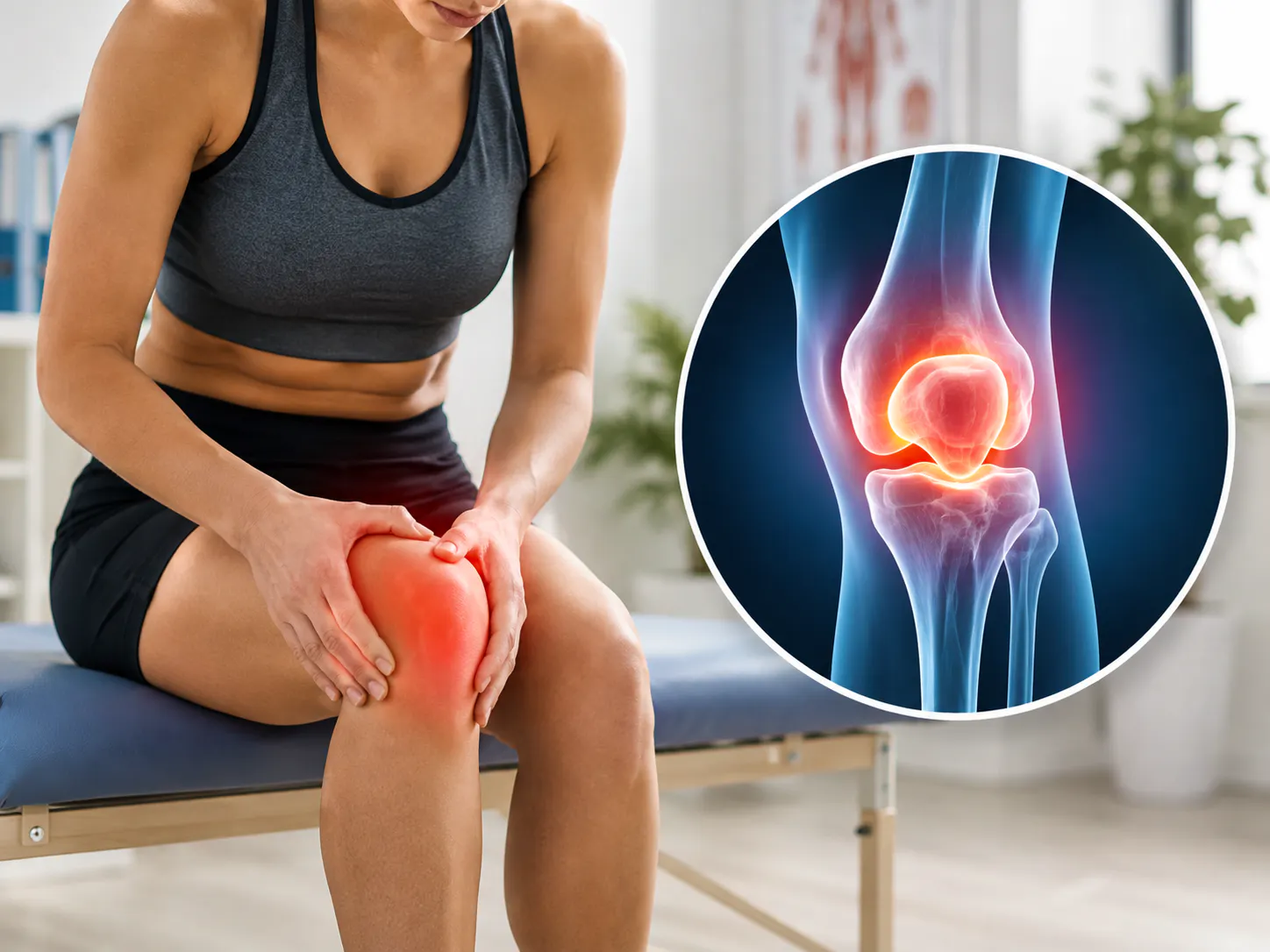
What Is Patellofemoral Pain Syndrome?
Patellofemoral pain syndrome, sometimes just called anterior knee pain, is a common complaint we see from runners, netballers and anyone who spends a lot of time on their feet around Joondalup and Perth’s northern suburbs.
It causes a dull, aching pain around or behind the kneecap that tends to flare up with squatting, stairs, running or sitting for long periods with the knee bent.
The kneecap, or patella, sits in a groove at the front of the thigh bone and glides up and down as you bend and straighten your knee. Patellofemoral pain develops when the forces acting on the kneecap become uneven, often because of how the hip, knee and foot are working together, causing the patella to track slightly off centre in its groove. Over time this irritates the surrounding tissue and cartilage, leading to pain that’s aggravated by activities that load a bent knee.
Symptoms of Patellofemoral Pain
- A dull ache around or behind the kneecap, rather than a sharp, localised pain
- Pain that worsens with squatting, kneeling, running or jumping
- Discomfort after sitting for a long time with the knee bent, sometimes called the “theatre sign”
- Pain going up or, more often, down stairs
- A grinding or crackling sensation under the kneecap
- Mild swelling around the front of the knee in some cases
What Causes Patellofemoral Pain
- Weakness in the hip and gluteal muscles, which affects how the whole leg tracks during movement
- Tightness through the quadriceps, hamstrings or iliotibial band
- A sudden increase in training load, such as running distance or jump frequency
- Foot posture and lower limb alignment, including how the arch of the foot behaves under load
- Muscle imbalance around the kneecap itself, particularly the inner quadriceps
What the Research Shows
An international consensus supports exercise and taping as first line treatment.
The 2016 Patellofemoral Pain Consensus Statement, led by Crossley et al. (2016), reviewed the available evidence and recommended exercise therapy targeting both the hip and the knee as a core treatment, with patellar taping and bracing supported as useful adjuncts for reducing pain during rehabilitation.
Adding hip strengthening to knee exercises outperforms knee exercises alone.
A systematic review and meta-analysis by Nascimento et al. (2018), pooling 14 trials, found that combined hip and knee strengthening programs produced greater reductions in pain and greater improvements in activity than knee strengthening alone, supporting a hip focused approach to rehabilitation rather than one centred only on the knee.
How We Can Help
Because patellofemoral pain is usually driven by how the whole leg moves, treatment looks beyond just the kneecap.
Depending on what we find on assessment, this might include:
A progressive strengthening program focused on the hip and gluteal muscles as well as the quadriceps, targeting the movement patterns most linked to patellofemoral pain in the research.
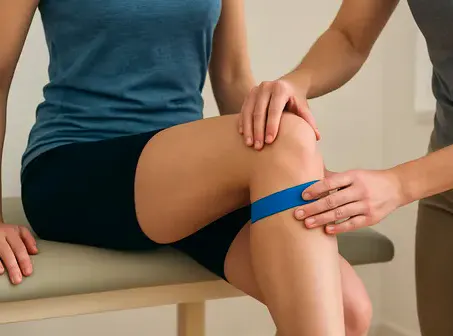
Patellar taping to help reduce pain and improve how the kneecap tracks during activity, particularly useful in the early stages of rehab.
Hands on release of tight quadriceps, hamstrings or iliotibial band tissue that may be pulling the kneecap off its normal track.
An instrument assisted soft tissue technique used to address restrictions in the tissue around the kneecap and thigh that can contribute to poor tracking.
A low-load option that can help manage pain and inflammation around the kneecap, particularly useful in the early stages alongside your exercise program.
Read more about cold laser at our new website Cold Laser Perth.
References
- Crossley KM, van Middelkoop M, Callaghan MJ, Collins NJ, Rathleff MS, Barton CJ. 2016 Patellofemoral pain consensus statement from the 4th International Patellofemoral Pain Research Retreat, Manchester. Part 2: recommended physical interventions. British Journal of Sports Medicine. 2016;50(14):844-852. PMID 27247098
- Nascimento LR, Teixeira-Salmela LF, Souza RB, Resende RA. Hip and knee strengthening is more effective than knee strengthening alone for reducing pain and improving activity in individuals with patellofemoral pain: a systematic review with meta-analysis. Journal of Orthopaedic & Sports Physical Therapy. 2018;48(1):19-31. PMID 29034800
Disclaimer: This page is intended as general information only and does not replace individual assessment and advice from a qualified health professional. If you're dealing with kneecap or anterior knee pain, book an appointment with our team so we can assess your specific situation and recommend an appropriate treatment plan.
Location Details

| Day | Hours |
|---|---|
| Sunday | 9:00 AM - 4:00 PM |
| Monday | 9:00 AM - 7:00 PM |
| Tuesday | 8:00 AM - 7:00 PM |
| Wednesday | 8:00 AM - 7:00 PM |
| Thursday | 8:00 AM - 7:00 PM |
| Friday | 8:00 AM - 7:00 PM |
| Saturday | 8:00 AM - 4:00 PM |

