
Posture Medic — Dynamic Posture Corrector
Active resistance-band posture corrector with Stretch, Strengthen, Stabilise program — not a static brace.
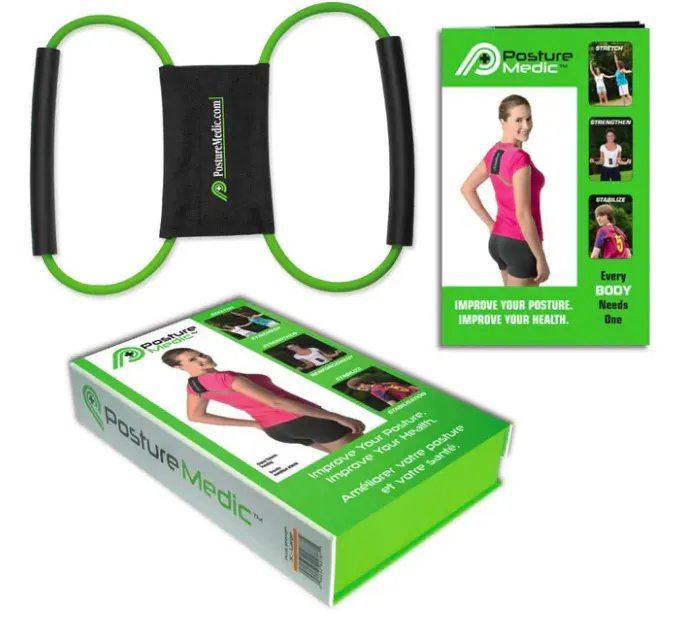
An active alternative to passive posture braces
The Posture Medic is a dynamic posture correction device manufactured by PostureMedic, a PrimeKinetix brand founded in 2012.
Unlike traditional posture braces — which passively pull the shoulders back while the muscles do nothing — the Posture Medic uses elastic resistance tubing to actively engage and strengthen the postural muscles, stretch the tightened pectoral muscles, and provide proprioceptive biofeedback that neurologically retrains the body's postural awareness.
The device is built around a three-function system: Stretch, Strengthen, and Stabilise. Each function uses the same device in a different way, creating a comprehensive programme that addresses the physical and neurological drivers of poor posture simultaneously.
It comes with an exercise instruction guide and includes a stabiliser pad positioned over the thoracic spine.
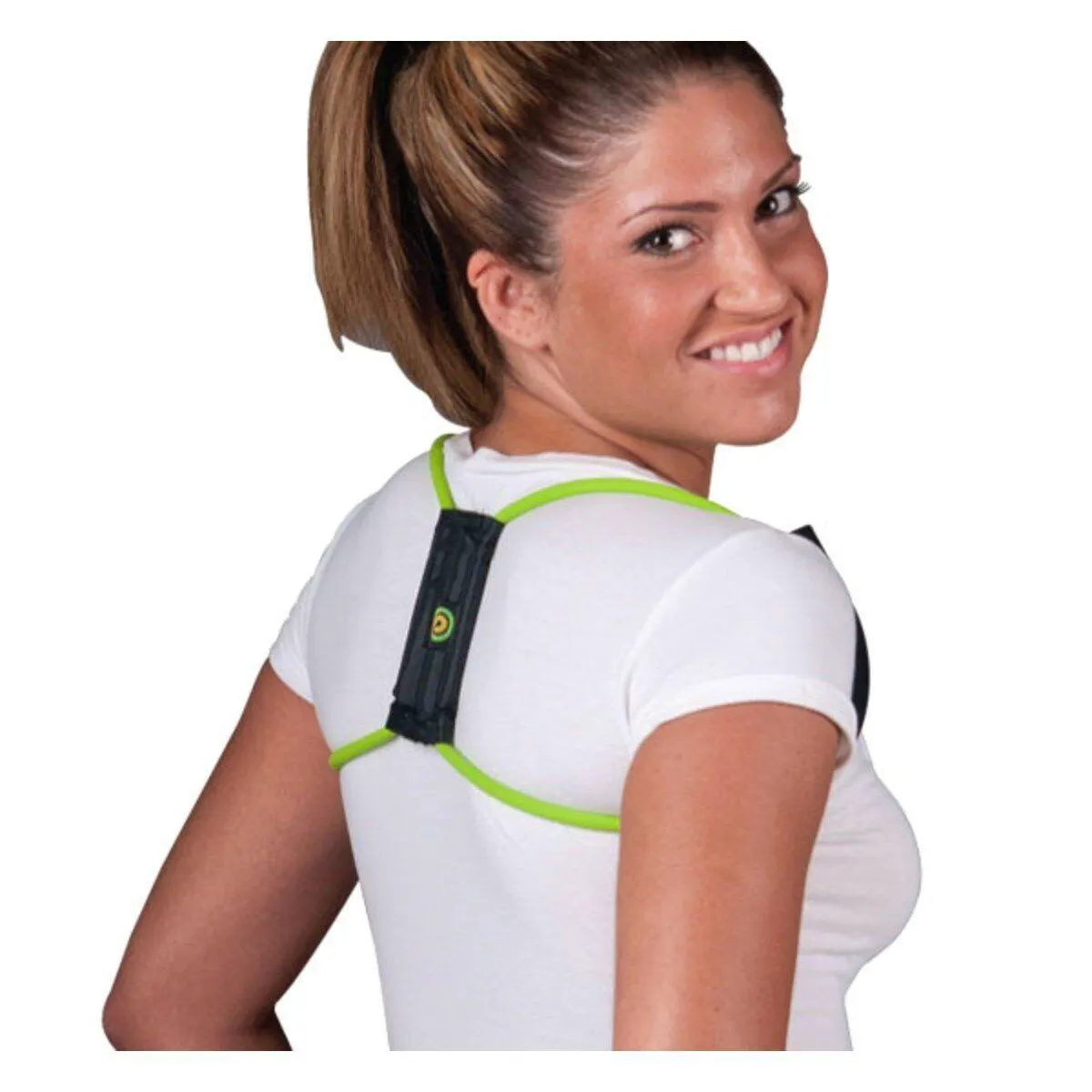
It trains posture instead of simply holding it
Passive braces hold
Standard posture braces hold your shoulders back for you. While worn, they may improve posture, but your muscles are not trained to maintain the position once the brace is removed.
Posture Medic activates
Elastic resistance means your muscles must continuously work against the band to maintain upright posture.
Biofeedback retrains
When posture slips, the band provides more resistance, cueing your body to correct before the rounded position becomes habitual.
Stretch, Strengthen, Stabilise
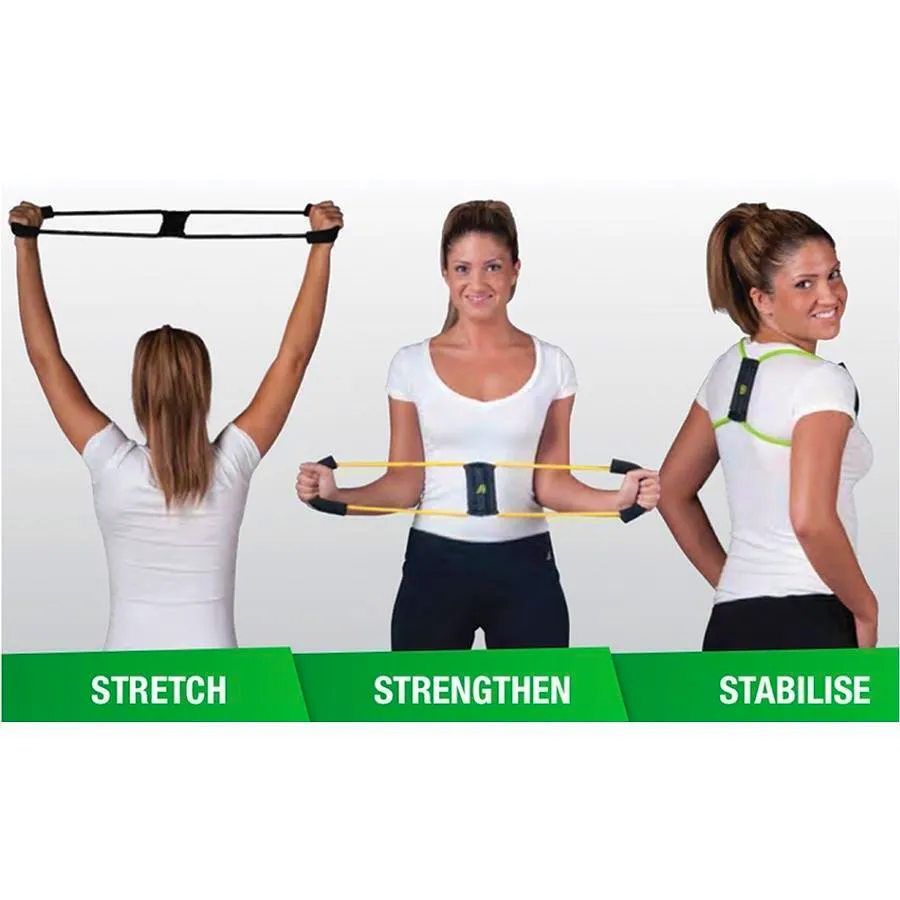
Stretch
Hold the Posture Medic with both hands and raise your arms overhead, using the resistance of the band to open the chest and stretch the pectoral major, pectoral minor, and anterior deltoid. Perform for 30 to 60 seconds, 2 to 3 times.
Strengthen
Hold the device in front of you and pull the handles apart against the band's resistance, activating the rhomboids, middle and lower trapezius, and posterior rotator cuff. Perform 3 sets of 10 to 15 repetitions.
Stabilise
Wear the Posture Medic as a dynamic brace for 15 to 30 minutes daily during activity, with the stabiliser pad positioned over the thoracic spine.
Choose by height, weight, and resistance needs
Sizing is based on height and weight. The resistance of the band increases with size.
| Size | Approx. Height | Approx. Weight |
|---|---|---|
| XS | Under 5'2" (157cm) | Under 55 kg |
| S | 5'2" – 5'6" (157–168cm) | 55 – 70 kg |
| M | 5'6" – 5'10" (168–178cm) | 70 – 85 kg |
| L | 5'10" – 6'2" (178–188cm) | 85 – 100 kg |
| XL | Over 6'2" (188cm+) | Over 100 kg |
Active posture retraining for the upper back and shoulder girdle
Stretches tight chest muscles
Targets pec major, pec minor, and anterior deltoid to reduce the shortening that pulls the shoulders forward.
Strengthens postural muscles
Trains rhomboids, middle and lower trapezius, and posterior rotator cuff.
Provides biofeedback
Band resistance increases when posture lapses, providing a sensory cue to correct.
Retrains patterns
Helps neurologically retrain posture so improvements can persist beyond wear time.
Allows movement
Allows full range of motion during wear for typing, driving, work, and light exercise.
Designed for common upper-crossed posture patterns
- Forward head posture and upper crossed syndrome: The Posture Medic addresses tight pectorals pulling forward and weak scapular retractors failing to hold the shoulders back.
- Neck pain and cervicogenic headaches: Restoring thoracic extension and scapular retraction can reduce mechanical burden on the cervical spine.
- Upper back pain and thoracic stiffness: The stretch and strengthen programme addresses thoracic extension deficits and mid-back postural load.
- Shoulder impingement and rotator cuff conditions: Improving scapular position and posterior shoulder strength supports healthier shoulder mechanics.
- Supporting chiropractic care: Adjustments restore joint mobility and alignment; the Posture Medic trains the muscles to help maintain that alignment between visits.
- Evidence context: High-quality RCT evidence specifically for the Posture Medic device is limited, but its exercise principles are individually well-supported in posture rehabilitation literature.
Getting started with daily use
- Start with 5 to 10 minutes daily using the Stretch and Strengthen functions before progressing to the Stabilise wearing phase.
- For Stabilise, insert both arms through the large loops so the band runs across the upper back with the stabiliser pad centred over the thoracic spine.
- Begin wearing for 15 minutes daily. Progress gradually to 30 minutes as your muscles adapt.
- Use the Stretch function to open the chest and shoulder girdle before wearing.
- Perform the Strengthen exercises daily to directly train the scapular retractors.
- Do not wear the device for extended periods initially — allow the postural muscles to adapt gradually over 2 to 4 weeks before increasing wear time.
- Care: hand wash in mild soapy water. Allow to air dry. Do not use solvents or bleach on the latex tubing.
Important — please read before use
- This product contains latex. Do not use if you have a known latex allergy.
- Do not overtighten or use a size too small — excessive resistance from incorrect sizing can strain the shoulder joints and rotator cuff.
- The Posture Medic is not appropriate for patients with acute shoulder injuries, shoulder dislocations, rotator cuff tears, or acute cervical radiculopathy without prior assessment and clearance.
- Muscle fatigue in the upper back and between the shoulder blades during early use is normal and expected.
- Sharp joint pain, neck pain, or arm symptoms are not normal and warrant stopping.
- This device supports postural retraining but does not replace chiropractic assessment and treatment for the underlying causes of posture-related pain.
Stretch, strengthen, and stabilise

Product and guide
Includes resistance tubing, thoracic stabiliser pad, and exercise instruction guide.

Stabilise configuration
Worn across the upper back for active postural feedback during daily activity.

Three ways to use
Use the same device to stretch, strengthen, and stabilise.

