
Metagenics PainX PEA Advanced — 42 Capsules
TGA-listed practitioner-only PEA supplement — high-strength Levagen+ palmitoylethanolamide with affron saffron and vitamin B1 for mild nerve pain and inflammation.
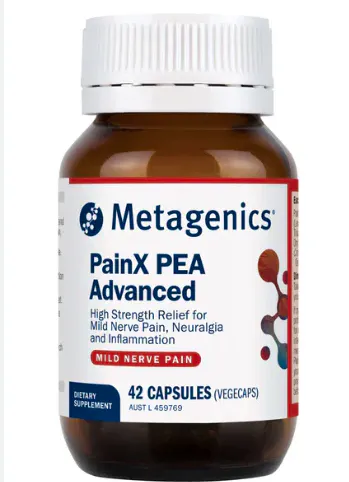
A short-course practitioner-only formula for mild nerve pain
Metagenics PainX PEA Advanced is a TGA-listed complementary medicine manufactured by Metagenics (Aust) Pty Ltd.
It was formerly sold as Bio Absorb PEA Advanced — this is the same formulation under a new name. It provides high-strength palmitoylethanolamide (PEA) in a clinically advanced delivery system, combined with affron saffron extract and vitamin B1.
The product is formulated for the relief of mild nerve pain, neuralgia, and inflammation. Each 42-capsule bottle provides a 21-day course at the recommended dose of 2 capsules daily.
An important label requirement must be noted upfront: this medicine is not to be used for more than 21 consecutive days. It may interact with other prescription analgesic medicines.
PEA, vitamin B1, and affron saffron
Palmidrol (PEA) Levagen+ — 300mg
PEA is a naturally occurring fatty acid amide produced by the body as part of its own pain and inflammation regulation system.
Levagen+ uses LipiSperse technology, a cold-water dispersible delivery system that improves the water solubility and bioavailability of PEA compared to standard PEA powder.
Thiamine hydrochloride — 50mg
Vitamin B1 is essential for normal nervous system function. Thiamine deficiency can cause peripheral neuropathy and nerve dysfunction.
At 100mg daily, this is a therapeutic rather than merely nutritional dose to support nerve cell metabolism and myelin maintenance.
affron saffron — 7.5mg
affron is a clinically standardised saffron extract with anti-inflammatory, antioxidant, and neuroprotective properties.
Its CNS-modulating properties complement PEA’s peripheral analgesic action, targeting both central and peripheral components of pain.
Targets neuroinflammatory and nerve-support pathways
PEA pathway support
PEA modulates neuroinflammation through CB2 receptor and PPAR-alpha activation, reducing mast cell and microglial activation.
Nerve metabolism
Vitamin B1 supports normal nerve cell metabolism and myelin maintenance.
Saffron support
affron saffron contributes anti-inflammatory and neuroprotective activity through crocin and crocetin.
Improved delivery
Levagen+ LipiSperse technology helps convert lipophilic PEA into a cold-water dispersible form.
Vegetarian capsules
Formulated in vegecaps and free from animal products, dairy, wheat, nuts, soy protein, and artificial additives.
PEA research and delivery-system context
- 2022 systematic review and meta-analysis: A PRISMA-compliant review across 933 patients found statistically significant pain reduction with PEA over control, with benefits for quality of life, function, and reduced rescue medication use.
- 2023 double-blind RCT review: A more stringent review found that PEA demonstrated utility in neuropathic and inflammatory pain and warranted consideration as an add-on therapy for chronic pain.
- Musculoskeletal relevance: Included studies evaluated presentations relevant to chiropractic patients, including sciatic nerve pain, lower back pain, and fibromyalgia.
- Mechanism quality: PEA’s action through CB2 and PPAR-alpha provides a credible mechanistic foundation for the observed clinical effects.
- Levagen+ bioavailability: Published pharmacokinetic data demonstrates improved absorption over standard PEA, which matters because PEA is poorly water-soluble.
- affron saffron: affron has published RCT evidence for mood modulation and pain support, including analgesic effects in adults.
For neuroinflammatory and neuropathic pain presentations
- Radiculopathy and sciatica: Nerve root compression or irritation generates a neuroinflammatory response that contributes to burning, shooting, or electric pain.
- Post-adjustment nerve sensitivity: Some patients with long-standing nerve irritation experience heightened sensitivity or flare-up periods during chiropractic care.
- Central sensitisation: PEA’s effects on glial cell activity and CNS neuroinflammation are relevant to amplified pain signalling.
- Fibromyalgia and widespread pain: PEA has been studied in fibromyalgia with positive results in reviewed trials.
Important — please read before use
- This medicine is not to be used for more than 21 consecutive days. This is a TGA-mandated requirement.
- This product may interact with prescription analgesic medicines, including opioids and NSAIDs.
- Suitable for adults 18 years and over only. Not for use in children.
- Not recommended during pregnancy or breastfeeding without specific medical advice.
- Always read the label and follow the directions for use.
- This is a complementary medicine for mild nerve pain and is not appropriate as the sole management strategy for severe or worsening neuropathic pain.
- If you experience new or worsening neurological symptoms, seek urgent medical assessment.
Follow the TGA-listed label directions
- Take 1 capsule twice daily, or as directed by your chiropractor or healthcare professional.
- The 42-capsule bottle provides exactly 21 days at the recommended dose of 2 capsules daily.
- This medicine is not to be used for more than 21 consecutive days without reassessment by your healthcare professional.
- Take with water, with or after food.
- Store below 30 degrees Celsius. Keep out of reach of children.
- If symptoms persist, consult your chiropractor or GP.
Designed for short-course use
The bottle contains 42 capsules, providing a precise 21-day course at the recommended dose of 2 capsules daily. If ongoing pain management is needed beyond 21 days, a clinical reassessment is required before continuing.

