
Allegro Ortho Core Stability Belt
Non-stretch elastic lumbar and pelvic support belt for SIJ instability, low back pain, and post-pregnancy recovery.
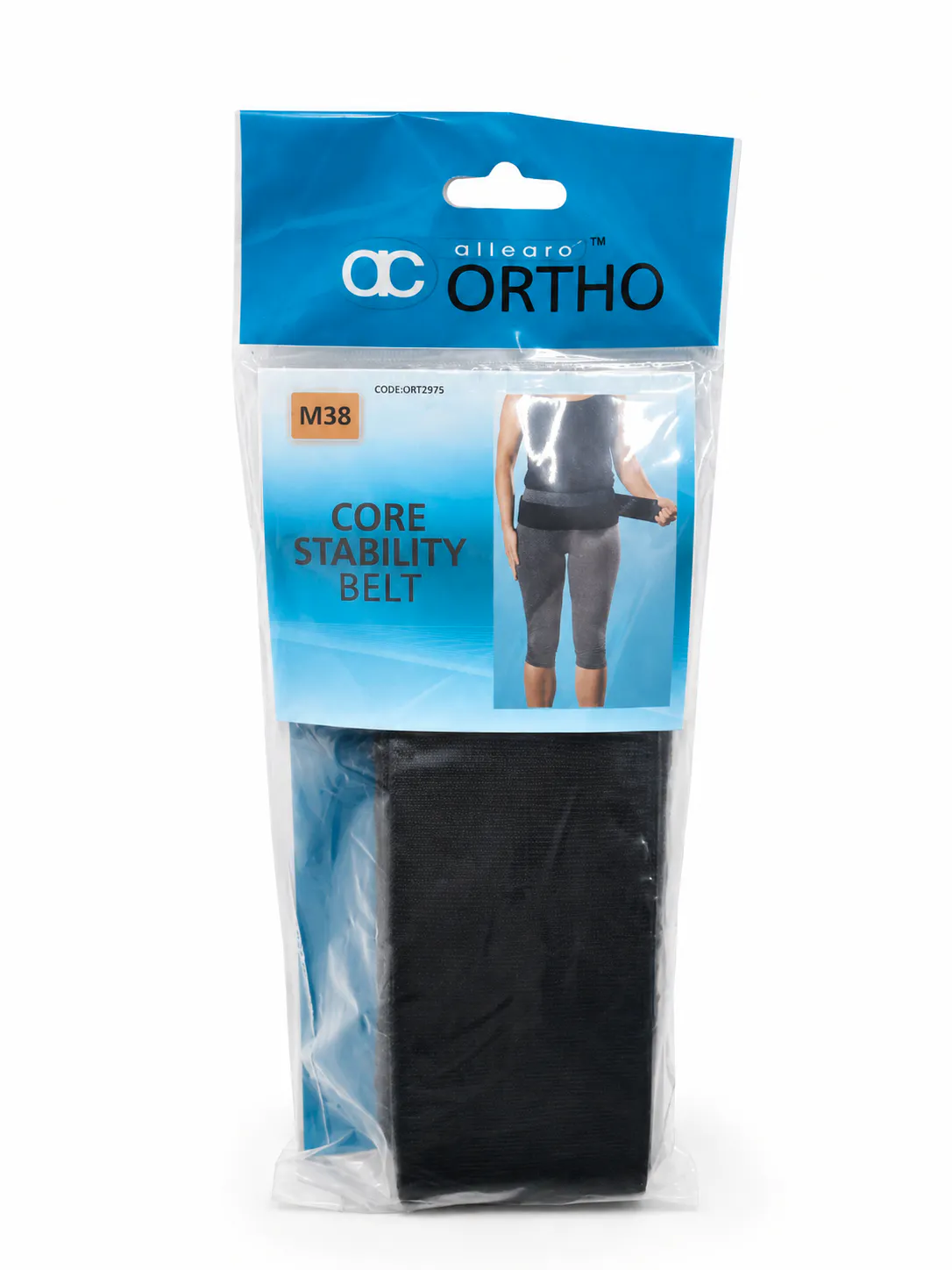
Targeted compression for the lumbar spine, SIJ, and pelvis
The Allegro Ortho Core Stability Belt is a non-stretch elastic support belt manufactured for Wardhan Health and distributed under the Allegro Ortho brand.
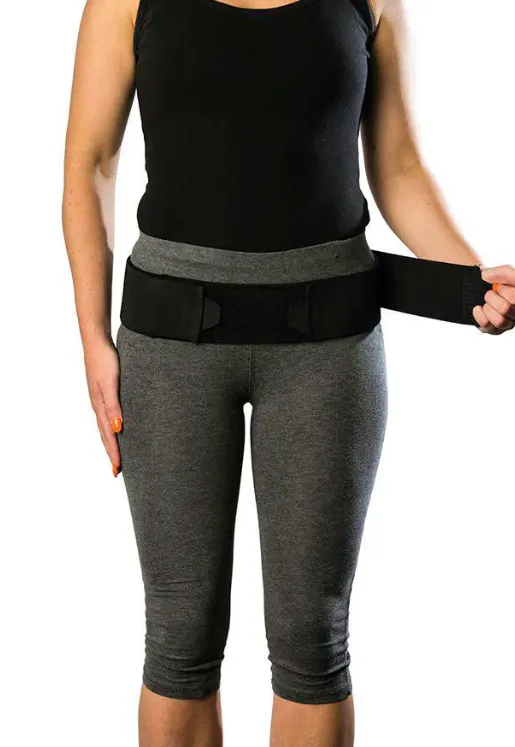
It is designed to provide targeted compression and support to the lumbar spine, abdominal muscles, sacroiliac joints, and surrounding pelvic structures. The belt features a non-stretch main panel with breathable moisture-wicking fabric, an additional web strap along the lower edge for a firmer fit, and a Velcro closure system for adjustable compression.
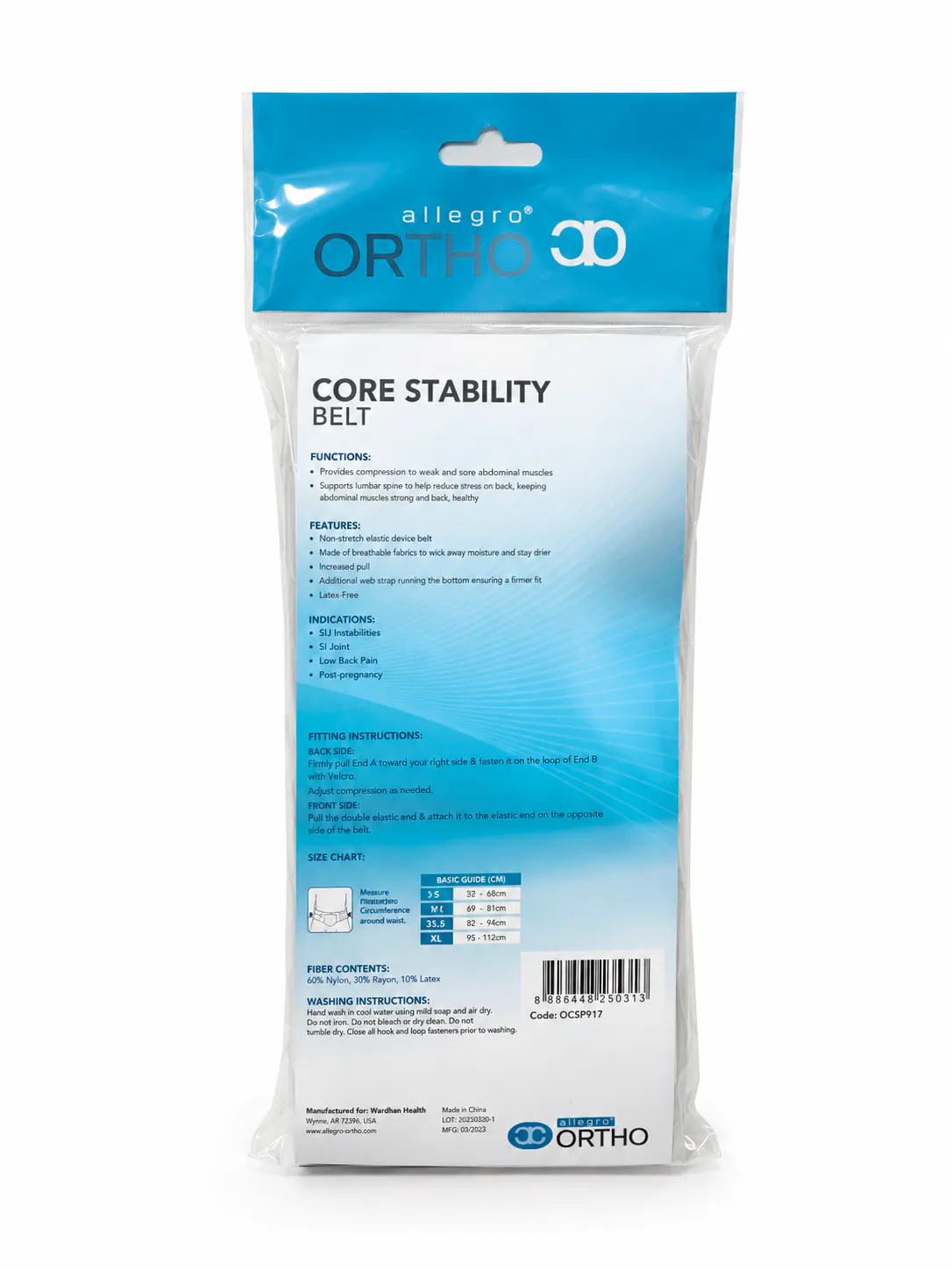
Fibre contents are listed as 60% Nylon, 30% Rayon, and 10% Latex. The document notes that the hardware components contain latex, while the belt itself is latex-free.
Measure your natural waist circumference
Measure around the natural waist to select the correct size.
| Size | Waist Circumference |
|---|---|
| S | 32 – 68 cm |
| M | 69 – 81 cm |
| L / 3S | 82 – 94 cm |
| XL / 3S.S | 95 – 112 cm |
Firm support without fully restricting normal movement
The belt provides compression, lumbar and pelvic support, SIJ stability, and proprioceptive feedback during daily activity.
Abdominal compression
Provides firm, targeted compression to weak or sore abdominal muscles, helping to offload strain from the lumbar spine during daily activity.
Lumbar support
Supports the lumbar spine by stabilising the lumbopelvic region and reducing mechanical stress on joints, discs, and surrounding soft tissue.
SIJ compression
Compresses and supports the sacroiliac joints, which may be relevant for patients experiencing SIJ instability, hypermobility, or pain.
Non-stretch control
The non-stretch panel helps prevent excessive movement at the lumbopelvic junction without fully restricting normal functional range of motion.
Proprioceptive feedback
Provides feedback that can cue the body to activate local stabilising muscles of the core and pelvis.
Breathable fabric
The breathable moisture-wicking fabric manages heat and sweat during prolonged wear throughout the working day.
Short-term support as part of an active recovery plan
- Sacroiliac joint instability and pain: External pelvic compression may help reduce load across the SIJ by increasing joint compression force. The document notes mixed evidence and variable individual responses.
- Low back pain: Lumbar support belts can reduce lumbar flexion load, provide proprioceptive feedback, and limit end-range lumbar movement during aggravating activities.
- Post-pregnancy pelvic girdle pain: Pelvic and lumbar support belts may be used as a low-risk adjunctive tool for reducing pain and improving daily function after pregnancy.
- Core muscle support during recovery: External support can help maintain spinal stability during daily activity while active rehabilitation progresses.
- Abdominal muscle weakness or diastasis recti: Compressive support to the anterior abdominal wall may assist selected patients, depending on practitioner assessment.
Important — please read before use
- This belt is a supportive orthotic aid. It is not a substitute for chiropractic assessment, physiotherapy, or medical diagnosis.
- Prolonged or continuous use without concurrent rehabilitation has been associated with dependency and potential weakening of the core stabilising muscles over time.
- Do not use this belt if you have any skin conditions, wounds, or infections in the area of application.
- If you are pregnant, consult your obstetrician or midwife before using any abdominal or lumbar compression belt.
- If symptoms persist or worsen, book an assessment rather than increasing compression or relying solely on the belt.
Fit snugly, but not so tight that breathing is restricted
- Back side: Firmly pull End A toward your right side and fasten it on the loop of End B with Velcro. Adjust compression as needed.
- Front side: Pull the double elastic end and attach it to the elastic end on the opposite side of the belt.
- The belt should sit snugly but not so tightly that it restricts breathing or causes discomfort. You should be able to take a full breath comfortably with the belt fastened.
- Wear the belt during activities that aggravate your symptoms, such as prolonged standing, walking, or lifting, rather than continuously throughout the day unless directed by your chiropractor.
- Do not wear the belt during sleep or periods of complete rest unless specifically advised by your treating practitioner.
- If symptoms worsen while wearing the belt, or if you experience increased pain, numbness, or vascular symptoms, remove it and consult your chiropractor.
- Washing: Hand wash in cool water using mild soap. Air dry only. Do not iron, bleach, dry clean, or tumble dry. Close all hook and loop fasteners prior to washing.
Use as a bridge, not a replacement
The document describes the belt as a short-term adjunct to chiropractic or physiotherapy assessment. Longer-term recovery should focus on active rehabilitation and core strengthening rather than relying on passive support alone.

