
Denneroll Cervical Orthotic Device
Evidence-based cervical extension traction orthotic for restoring natural cervical lordosis.

Home-use cervical extension traction prescribed by your chiropractor
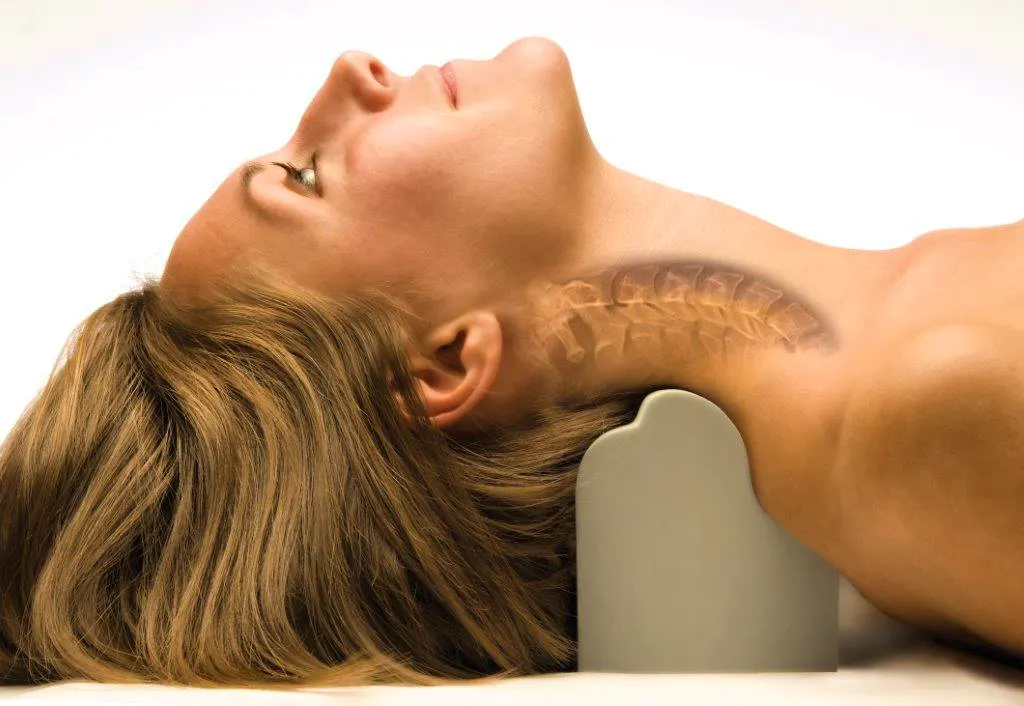
The Denneroll Cervical Orthotic Device is a professionally prescribed, home-use cervical extension traction device engineered based on the Chiropractic BioPhysics evidence-based cervical spine model.
It is designed to restore or improve the natural C-shaped curve of the neck through sustained low-load extension traction applied in the supine position. The device is used by more than 2,500 chiropractors across five continents and is one of the most researched orthotic devices in chiropractic practice.
At Lakeside Chiropractic, the Denneroll is used as a core home-care tool alongside in-clinic treatment for patients with cervical hypolordosis, forward head posture, and related conditions. It cannot be purchased over the counter and must be prescribed and fitted by a trained practitioner.
Size selection is determined clinically
Your chiropractor selects the size based on height, cervical flexibility, and spinal x-ray findings. The following is a general guide only.
Large Cervical Denneroll
Generally indicated for adults approximately 5'9" and taller, or shorter adults with good cervical spine flexibility. The larger height creates a greater extension force and is appropriate for patients whose head comfortably reaches the floor on the Medium version.
Medium Cervical Denneroll
Generally indicated for adults approximately 5'8" and under, or taller adults with reduced cervical flexibility or stiffness. This is the most commonly prescribed starting size for adults.
Small Cervical Denneroll
Primarily designed for children aged approximately 5 to 10 years, and also used for small-framed adults or patients who have difficulty tolerating extension over the larger sizes.
Low-load cervical extension traction
The Denneroll applies a sustained corrective force to encourage the cervical spine toward a healthier lordotic curve.
Three-point bending force
Applies sustained, low-load cervical extension traction in the supine position to gently encourage the cervical vertebrae toward their normal lordotic curve.
Connective tissue remodelling
Targets the ligaments, discs, and joint capsules, allowing gradual remodelling of spinal alignment over repeated sessions.
Mirror-image traction
Applies corrective force opposite to the patient's spinal misalignment, directing the spine back toward the ideal cervical curve.
Joint decompression
When lordosis is restored, intervertebral joint loading may be reduced, which can reduce nerve and vascular impingement.
Head-over-shoulders posture
Repositions the head over the shoulders, reducing the mechanical burden of forward head posture on the cervical musculature and joints.
Studied as part of multimodal chiropractic programs
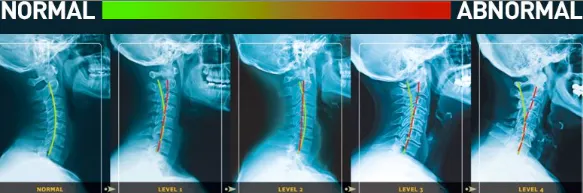
- Cervical hypolordosis and forward head posture: Multiple RCTs have demonstrated that Denneroll use as an adjunct can produce measurable and lasting improvement in cervical lordosis angle.
- Chronic neck pain and cervical myofascial pain syndrome: A 2018 RCT found improvements in pain intensity, neck disability, pressure pain thresholds, and cervical range of motion.
- Cervicogenic headaches: A 2-year RCT found greater improvements in headache frequency, headache disability, and cervical lordosis.
- Cervical radiculopathy: A 2022 RCT found improved pain, disability, and nerve root function in patients with chronic discogenic cervical radiculopathy.
- Cervicogenic dizziness: A 1-year RCT found improvements in dizziness severity, disability, and cervicocephalic kinesthetic sensibility.
- Sensorimotor and autonomic function: A 2021 Scientific Reports RCT found measurable neuroplastic changes in asymptomatic subjects with cervical hypolordosis.
- Postural support between visits: Home use helps reinforce postural corrections achieved in the treatment room.
Important — please read before use
- The Denneroll must be prescribed and sized by a trained chiropractor.
- Using the wrong size, wrong placement, or incorrect protocol can worsen spinal alignment or cause injury.
- Do not use the Denneroll with known cervical disc herniation, spinal stenosis, cervical instability, osteoporosis, or recent cervical trauma or surgery without explicit clearance.
- The Denneroll is a clinical traction device, not a comfort or relaxation product.
- Children must be supervised during use.
- If symptoms worsen or new neurological symptoms appear, stop use immediately and contact your chiropractor.
Follow your chiropractor's specific protocol
Placement position, size, and session duration must be determined by your chiropractor based on your cervical x-ray findings and clinical presentation.
- Lie on a firm surface such as the floor. Do not use a bed or sofa, which will absorb the traction force.
- Place the Denneroll under your neck with the peak positioned at the spinal level your chiropractor has identified.
- Allow your head to relax backward over the device. You should feel a gentle stretch and mild extension pressure, not sharp or radiating pain.
- Begin with sessions of 5 to 10 minutes and build gradually toward the recommended duration. Most research protocols use 15 minutes per session, 3 to 6 times per week.
- Breathe slowly and relax the neck and shoulder muscles during the session.
- After the session, roll to one side and use your arms to push yourself up. Do not sit straight up immediately.
- If you experience sharp, radiating, or severe pain during or after use, stop immediately and contact your chiropractor.

