
LP Support Heelcare Cushion Cups
Medical-grade silicone heel cups for heel pad consolidation, shock absorption, and heel pain relief.
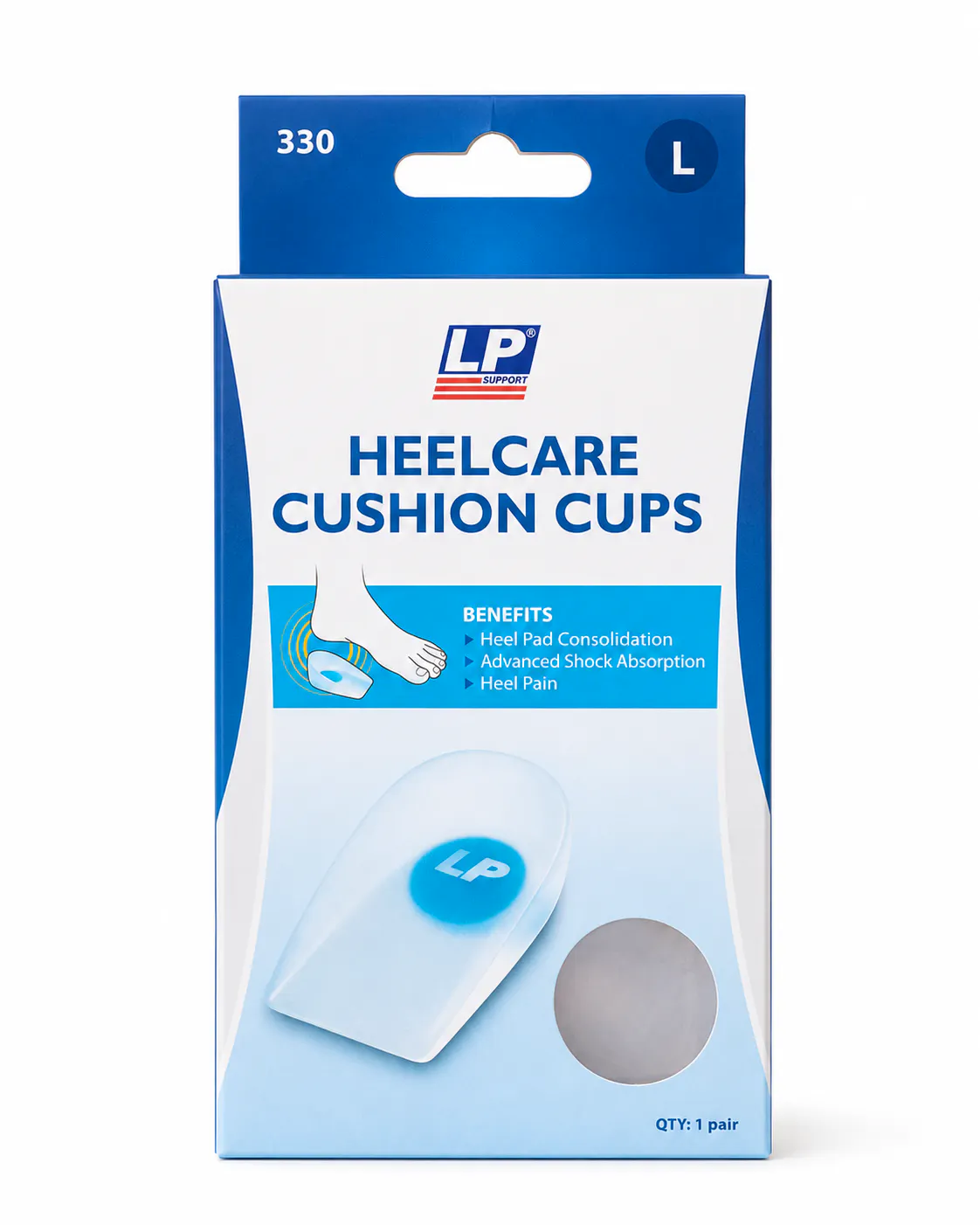
Cupped silicone inserts for cushioning and fat pad support
The LP Support Heelcare Cushion Cups, Product No. 330, are a pair of cupped, medical-grade silicone heel inserts designed to cushion the heel, consolidate the natural fat pad, and reduce the impact forces transmitted through the calcaneus during walking and standing.
Manufactured by La Pointeque Int'l Ltd, the cups are made from 100% medical-grade silicone and carry CE certification. Each box contains one pair and they are suitable for use in most closed footwear.
The product is reusable and washable, making it a practical long-term home management tool for patients with heel pain conditions.
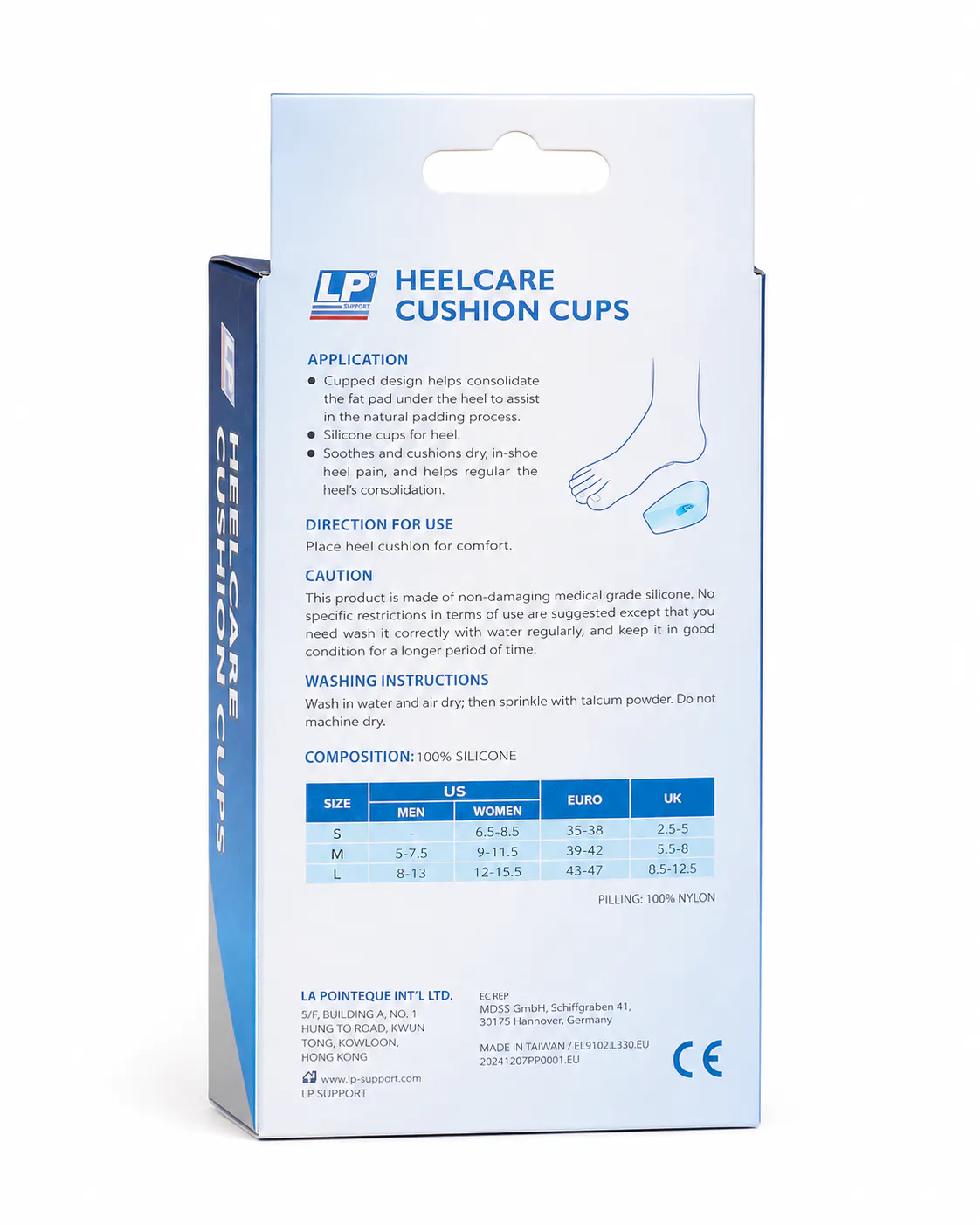
Select your size by shoe size
If you are between sizes, the larger size is generally preferable for comfort.
| Size | Men (US) | Women (US) | Euro | UK |
|---|---|---|---|---|
| S | — | 6.5–8.5 | 35–38 | 2.5–5 |
| M | 5–7.5 | 9–11.5 | 39–42 | 5.5–8 |
| L | 8–13 | 12–15.5 | 43–47 | 8.5–12.5 |
Two complementary cushioning mechanisms
- Fat pad consolidation: The raised cup walls physically confine the heel fat pad, preventing it from splaying laterally under load and helping maintain its cushioning thickness during weight-bearing.
- Shock absorption: The silicone absorbs and dissipates impact energy at heel strike, reducing the peak force transmitted through the calcaneus to the plantar fascia and up the kinetic chain.
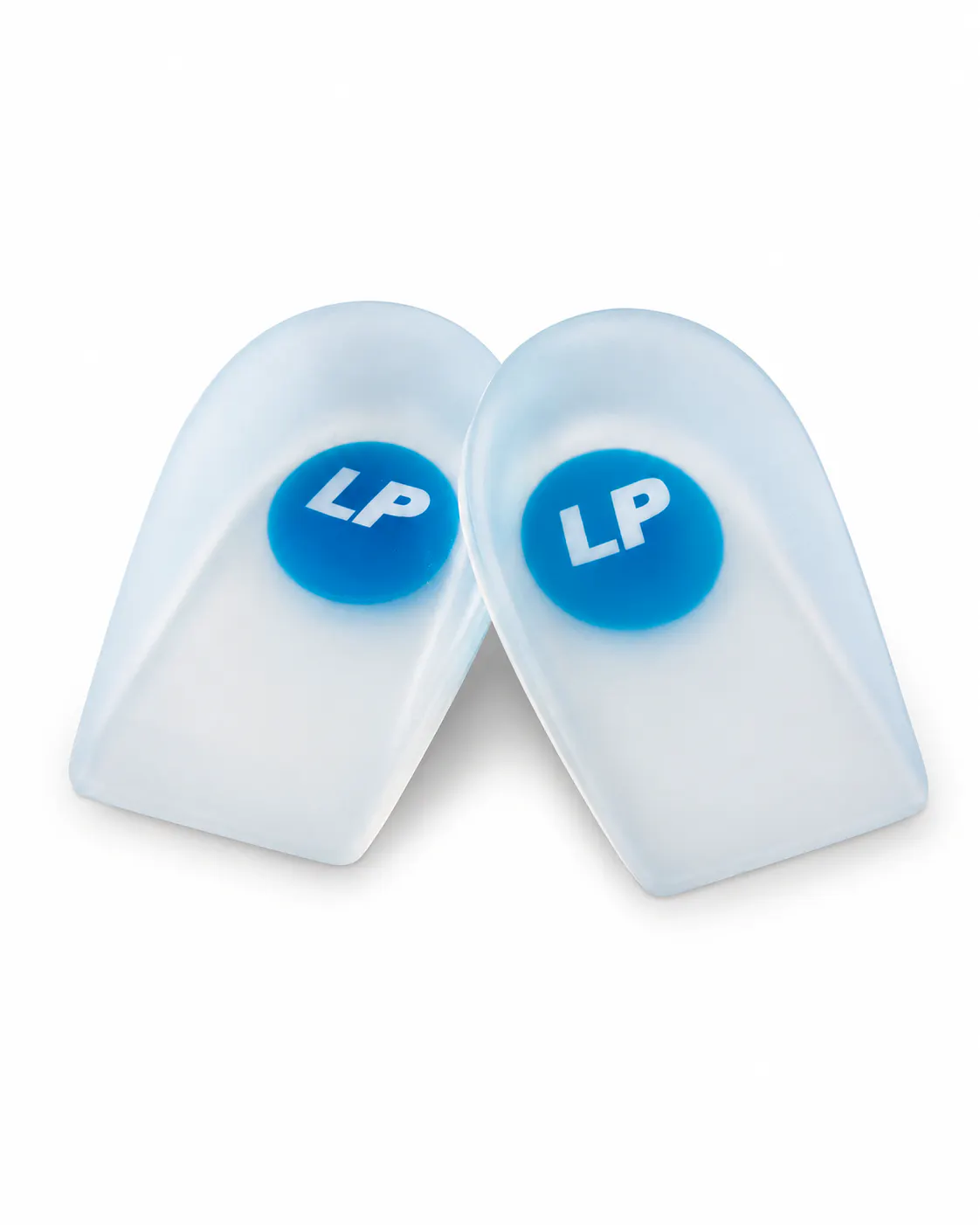
Heel cushioning without significant shoe bulk
The cups sit entirely within the heel section of most closed footwear.
Fat pad support
Consolidates the natural heel fat pad and helps prevent lateral splaying during weight-bearing.
Shock absorption
Absorbs and disperses impact at heel strike, reducing peak calcaneal load.
Slight heel elevation
The cup shape provides modest elevation that may reduce tension on the plantar fascia and Achilles tendon.
Pressure redistribution
Helps move pressure away from painful areas such as the medial calcaneal tubercle or heel spur region.
Daily reusable support
Washable and durable for ongoing management and preventive use.
Useful across several common heel pain presentations
- Plantar fasciitis: Silicone heel cups are commonly recommended as a first-line conservative tool to cushion the heel and reduce load at the plantar fascia origin.
- Heel fat pad atrophy: Cup-shaped silicone inserts can help contain and support a thinning or splayed heel fat pad.
- Calcaneal heel spur: The softer central zone helps offload the spur region while the cup walls maintain fat pad consolidation.
- Insertional Achilles tendinopathy: Modest heel elevation may reduce tensile and compressive load at the Achilles tendon insertion.
- Sever's disease: Silicone heel cups are frequently used as a conservative adjunct for heel pain in growing children.
- Hard surfaces and prolonged standing: Additional shock absorption may improve daily comfort for people who work on concrete or stand for long periods.
- Kinetic chain support: Reducing repeated heel impact may lessen transmitted load through the ankle, knee, hip, and lumbar spine.
Evidence referenced in the source document
Wear a matched pair during weight-bearing activity
- Select the correct size using the size chart. If between sizes, the larger size is generally preferable.
- Place one cup in each shoe with the cupped, concave side facing upward under the heel.
- Position the cup under the existing insole, or on top if the shoe cannot accommodate it underneath.
- Wear the cups in both shoes simultaneously, even if pain is present in only one heel.
- Wear during all weight-bearing activities. Consistent daily use is more effective than intermittent use.
- Rinse with water and air dry. Sprinkle lightly with talcum powder if the silicone feels sticky.
- Inspect regularly and replace when the silicone shows significant compression or deterioration.
Important — please read before use
- Wear in both shoes simultaneously. Using one cup only can create a functional leg length discrepancy.
- Heel cups are a symptomatic management tool and do not address the underlying cause of heel pain.
- If you experience increased pain, new numbness, or tingling, discontinue use and seek assessment.
- Heel cups are not a substitute for supportive footwear.
- Children with heel pain should receive a clinical assessment before relying on heel cups alone.
- If you have diabetes, peripheral neuropathy, or poor circulation, consult your healthcare professional before use.
One reusable pair per box
Retail package
Product No. 330 with one matched pair per box.
Cupped silicone design
Raised walls help contain the heel fat pad during weight-bearing.
Sizing and care guidance
Package instructions include sizing, washing, and placement information.

