
G&W Cork Heel Lifts
High-density cork heel lifts for leg length discrepancy correction and lumbopelvic alignment support.
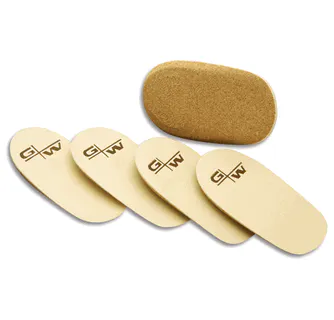
High-density cork lifts for internal shoe use
G&W Heel Lifts are a US-made range of heel lifts and orthotic inserts produced by G&W Heel Lift, Inc., a company that has been manufacturing chiropractic-grade shoe inserts since 1967.
The cork heel lifts are the company's original and most widely used product, designed for internal shoe use to correct leg length discrepancy and support lumbopelvic alignment. They are constructed from high-density cork, which resists compression, and are finished with a high-grade vinyl surface.
Edges are bevelled to lie flat in the heel cup of any shoe, and the front of the lift is tapered to create a smooth transition into the arch. The size and height are embossed on the top of each lift for easy identification.
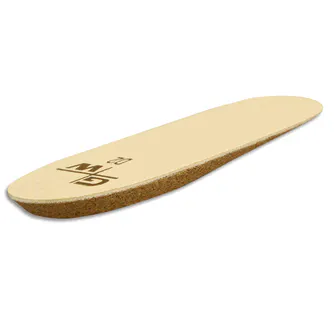
Recommended and sized after leg length assessment
At Lakeside Chiropractic, heel lifts are typically recommended and sized by your chiropractor following a leg length assessment as part of your spinal examination.
Passive correction for weight-bearing alignment
The lift raises the shorter limb side by a prescribed amount to help level the pelvis and reduce asymmetrical loading.
Elevates one heel
Raises one heel by a precise measured amount to compensate for a functional or structural leg length discrepancy.
Levels the pelvis
Raises the shorter limb side, reducing lateral sacral tilt and compensatory scoliotic curvature that can develop with unaddressed LLD.
Reduces asymmetrical loading
Helps reduce uneven load through the lumbar spine, sacroiliac joints, hips, and knees.
Works throughout the day
Provides consistent passive correction across weight-bearing activities without active effort from the patient.
Comfortable shoe fit
The bevelled, tapered design allows use inside most shoe types without discomfort or bunching.
Supports lumbopelvic alignment when LLD is clinically present
- Leg length discrepancy and low back pain: LLD can create pelvic tilt and compensatory lumbar curvature that places asymmetrical load on the intervertebral joints, discs, and sacroiliac joints.
- Sacroiliac joint dysfunction: Correcting the leg length differential may reduce chronic asymmetrical stress through the SIJ and improve response to chiropractic adjustments.
- Lumbar scoliosis, functional: When a lateral spinal curvature is driven by pelvic unlevelness rather than structural spinal change, correcting the LLD can reduce the functional scoliosis over time.
- Hip and knee load reduction: Correcting discrepancy may reduce asymmetrical joint loading and associated discomfort in the lower extremities.
- Chiropractic care maintenance: A heel lift addresses the biomechanical foundation, helping preserve alignment achieved through treatment.
Important — please read before use
- Heel lifts must be prescribed by your chiropractor following a leg length assessment.
- Using the wrong height or placing the lift under the wrong foot can worsen spinal asymmetry and increase pain.
- A heel lift addresses one contributing factor to low back or pelvic pain. It is not a standalone treatment.
- If you experience worsening pain, new hip or knee discomfort, or changes in your walking pattern, contact your chiropractor before continuing.
- Heel lifts are not suitable for every patient with a leg length discrepancy.
- Gradual height increases are safer than starting at maximum correction.
Heel lift correction and low back pain
The document references D'Amico et al. (2022), a Frontiers in Bioengineering and Biotechnology observational study on heel lift correction in LLD-related low back pain.
Use only as prescribed by your chiropractor
The correct height and which foot to place the lift under must be determined as part of a clinical leg length assessment.
- Place the heel lift under the insole of the shoe on the shorter limb side, or on top of the insole if the shoe cannot accommodate it beneath.
- Use the included double-sided tape to secure the lift in position so it does not move during wear.
- Use the lift in all footwear worn for the majority of the day. Consistency is essential.
- Begin with your prescribed height. Some patients are started on a partial correction and increased gradually.
- Expect an adaptation period of several weeks. Initial gait changes or mild muscle fatigue may occur.
- If you change footwear, transfer the lift or use a second lift in the new shoes.
- Bring your footwear to your chiropractic appointment so your chiropractor can confirm positioning.

