
Spikey Massage Ball
Firm PVC spiky massage ball for self-myofascial release, trigger point therapy, and muscle tension relief.
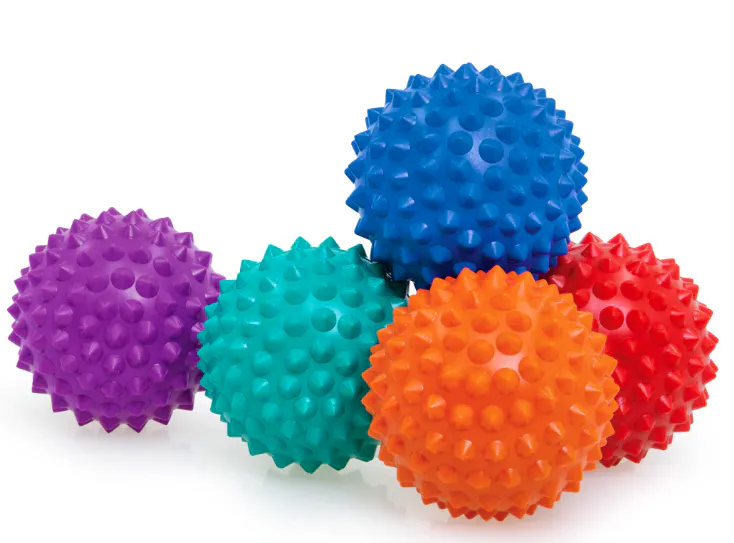
A simple daily tool for targeted muscle tension relief
The Spikey Massage Ball is a firm, rubber-spoked PVC massage ball widely used in physiotherapy, chiropractic, and sports rehabilitation for self-myofascial release, trigger point therapy, and general muscle tension management.
The raised spikes concentrate pressure into smaller contact areas compared to a smooth ball, providing a deeper, more targeted stimulus to the underlying soft tissue.
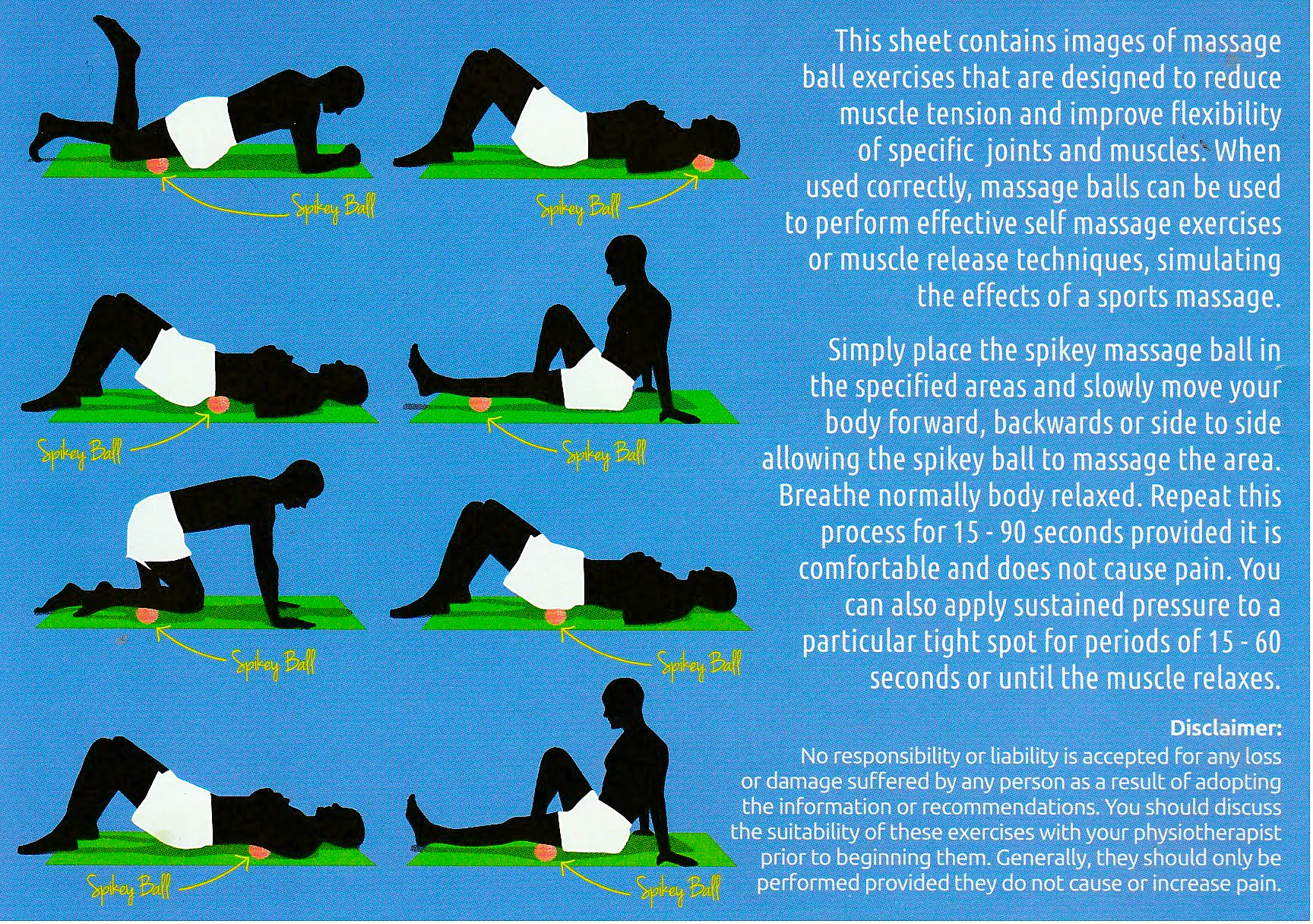
It is available in multiple sizes, typically 6cm to 10cm diameter depending on the colour, and comes with an exercise instruction sheet showing eight body positions for home use.
At Lakeside Chiropractic, the spikey ball is one of our most commonly recommended home tools. It is lightweight, affordable, portable, and effective for patients who need a practical daily tool to manage muscle tension between chiropractic appointments.
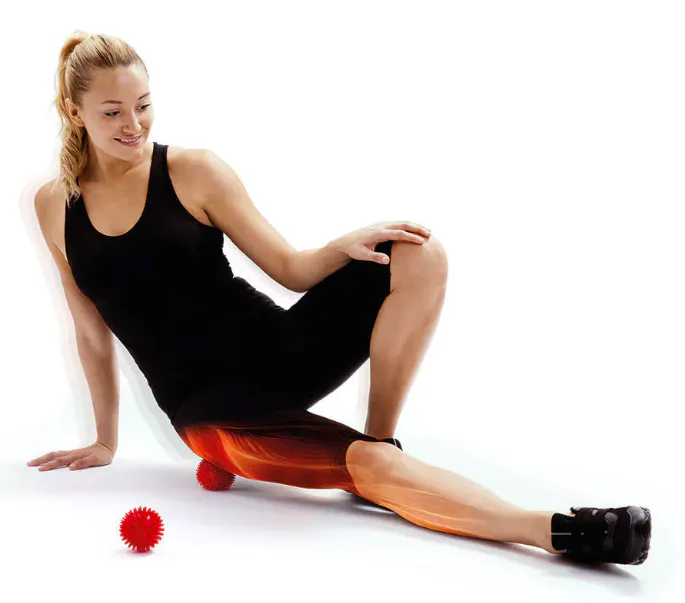
Focused pressure, sensory feedback, and local circulation
Targeted pressure
The spikes concentrate body-weight pressure over a smaller surface area than a smooth ball or foam roller.
Myofascial release
Sustained pressure on trigger points can help reduce palpable tightness and associated tenderness.
Sensory input
Multi-directional spike contact stimulates skin and soft-tissue mechanoreceptors.
Local circulation
Rolling and sustained pressure temporarily compress tissue, followed by a reactive increase in local circulation.
Body areas your chiropractor may recommend
Plantar fascia and foot pain
Roll under the arch of the foot for 60 to 90 seconds, or apply sustained pressure to the tenderest point for 15 to 30 seconds.
Gluteals and piriformis
Sit on the ball and shift body weight over the gluteal and piriformis region for SIJ pain, piriformis syndrome, or sciatic-type buttock pain.
Thoracic paraspinals
Lie with the ball beside the spine, not on the spinous processes, to target thoracic erectors and rhomboids.
Calves
Place the ball under one calf and roll from the ankle upward toward the knee for calf tightness and lower-limb recovery.
Hamstrings
Sit on a chair or firm surface with the ball under the back of the thigh and roll slowly along the hamstring.
Upper trapezius and neck base
Use between the upper trapezius and a wall. Do not roll directly over the cervical vertebrae.
Shoulders and rotator cuff
Use between the posterior shoulder and a wall to access infraspinatus, teres minor, and posterior deltoid.
Foot sensory stimulation
Roll underfoot while seated as an end-of-day relaxation tool for people who stand for extended periods.
Follow the included exercise sheet and your chiropractor's guidance
- Place the spikey ball in the specified area and slowly move your body forward, backwards, or side to side, allowing the ball to massage the area. Breathe normally with your body relaxed.
- Repeat for 15 to 90 seconds, provided it is comfortable and does not cause pain.
- You can also apply sustained pressure to a particular tight spot for 15 to 60 seconds, or until the muscle relaxes.
- Begin with light body weight loading and progress to more pressure as tolerated. Never use so much pressure that it causes sharp or radiating pain.
- The spikey ball can be used on the floor, against a wall, or while seated on a chair, depending on the target area.
- For sensitive areas, start with less body weight and gradually increase pressure over multiple sessions.
- Use once or twice daily for best results. Morning and evening sessions are effective for managing ongoing tightness.
- Keep clean by wiping with a damp cloth. The PVC material is durable and easy to maintain.
Portable spot-treatment tool
Multiple sizes and colours
Colours may indicate size or firmness depending on the stocked range.
Self-massage application
Useful for targeted pressure on curved areas and specific trigger points.
Important — please read before use
- Do not roll directly over the spinal column. Position the ball beside the spine on the paraspinal muscles.
- Do not use on areas of acute injury, open wounds, broken skin, bruising, or active inflammation.
- If you experience sharp, radiating, or neurological pain, stop immediately and consult your chiropractor.
- Patients with known back injuries or disc conditions should confirm appropriate areas of use before self-applying to the lumbar or thoracic region.
- The spikey ball is a self-care comfort and recovery tool. It does not replace chiropractic assessment or treatment.
- Do not use over varicose veins, blood clots, skin conditions, or neuropathic areas with reduced sensation.
- Keep out of reach of young children. The spikes and ball size present a choking and injury hazard.

