
66fit EPP High-Density Foam Roller — 90cm
Professional-grade expanded polypropylene foam roller — 90cm x 15cm — for self-myofascial release, muscle recovery, and mobility work.
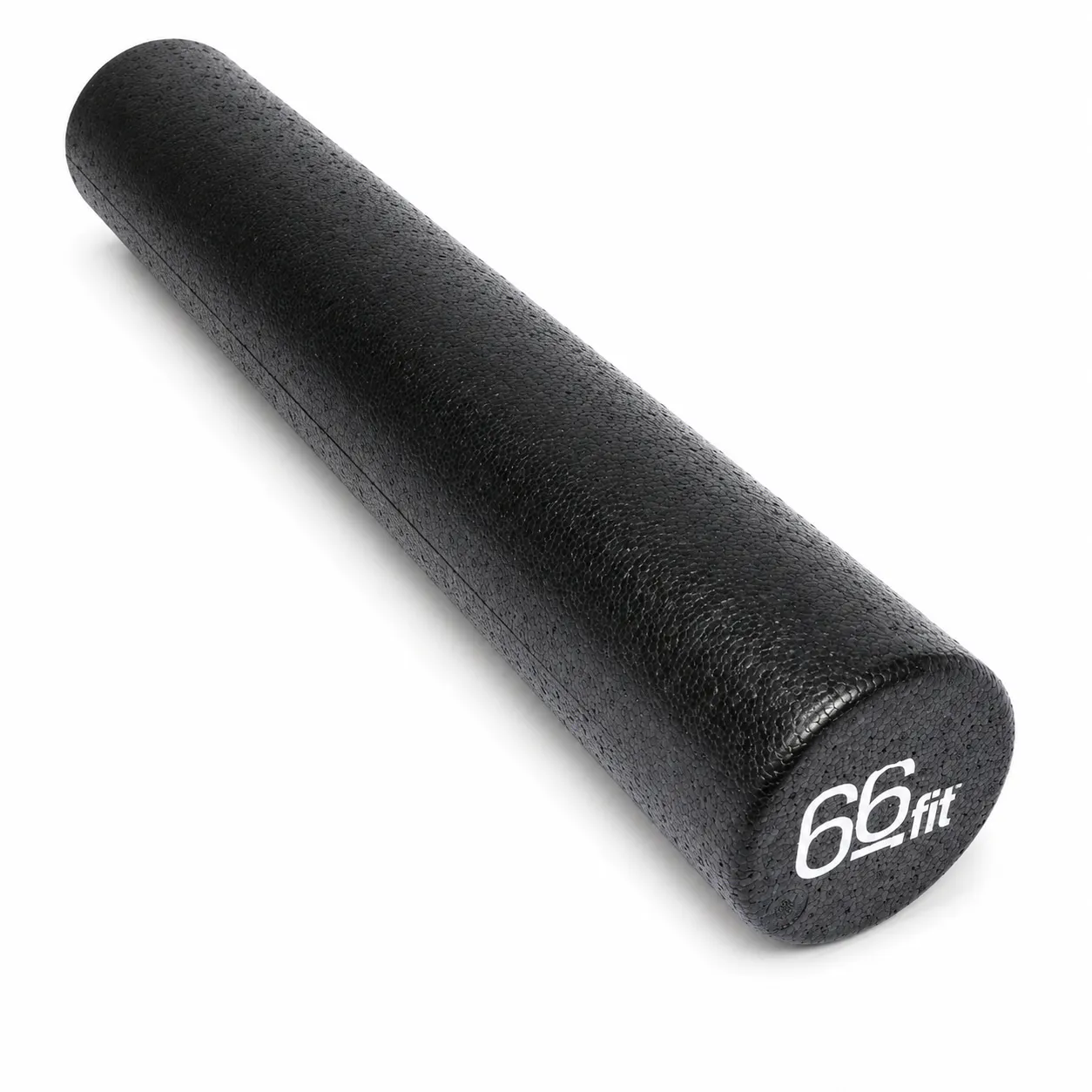
Very firm EPP construction for consistent pressure
The 66fit EPP Foam Roller is a high-density self-myofascial release tool manufactured from expanded polypropylene — a one-piece construction made from heat-moulded, tightly compressed polypropylene beads.
This gives the roller its characteristic very firm density, smooth surface, and exceptional durability compared to standard EVA foam rollers. At 90cm x 15cm and 821g, it is the full-length version of the range and is recommended for intermediate to advanced users who are comfortable with firm pressure on soft tissues.
EPP foam rollers resist compression and shape loss over time, while the smooth surface provides even, consistent pressure across the target tissue rather than concentrated nodular pressure.
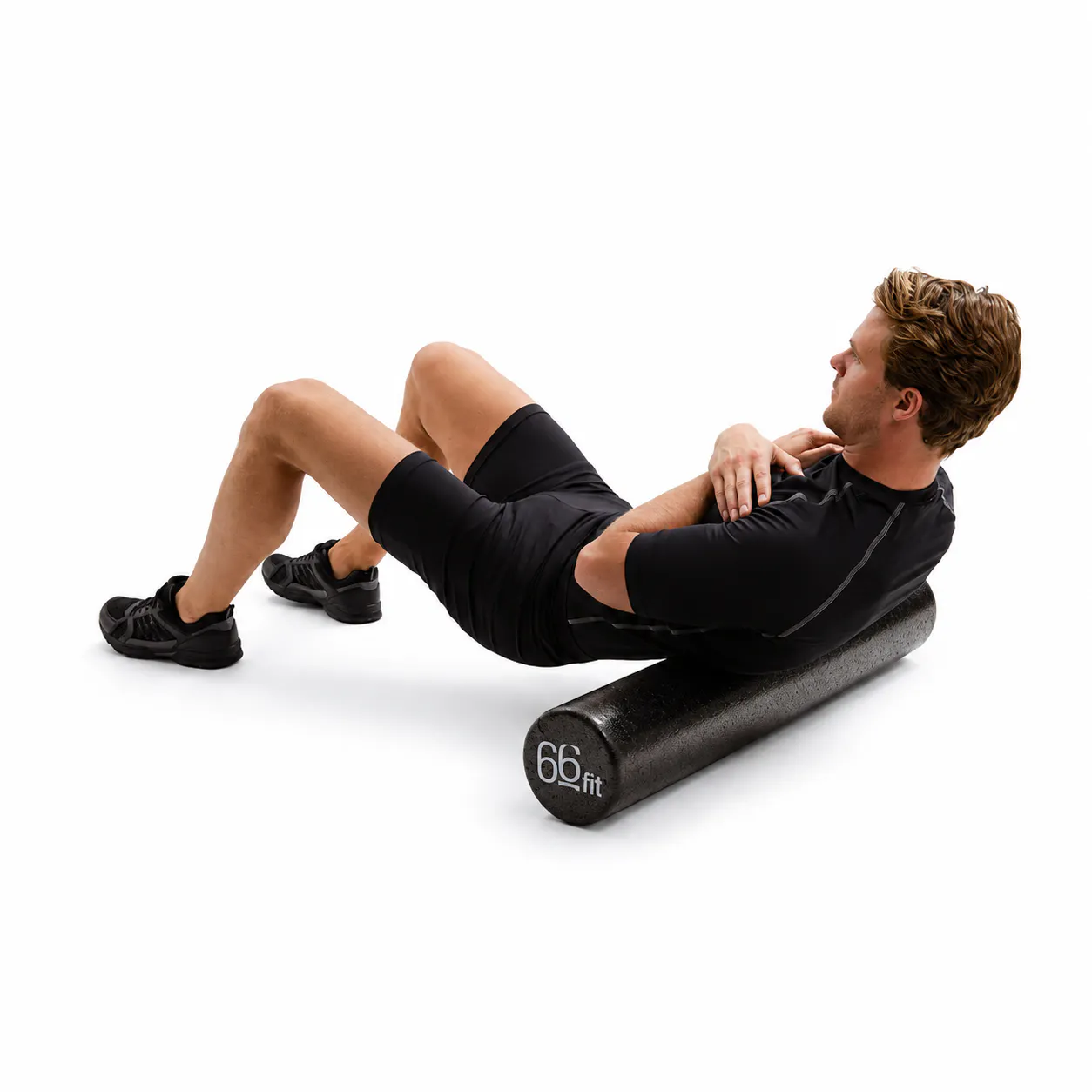
Self-myofascial release, mobility, and recovery support
The roller applies sustained compressive pressure to muscles, fascia, and connective tissue using your own body weight as the load.
Soft tissue pressure
Applies sustained compressive rolling pressure to muscles, fascia, and connective tissue.
Trigger point work
Targets myofascial trigger points and areas of muscle tension by holding pressure until tissue begins to release.
Thoracic mobility
Mobilises the upper back when used in a supine position under the thoracic spine.
Warm-up and recovery
Useful before exercise to increase range of motion and after exercise to reduce delayed onset muscle soreness.
Full-spine support
The 90cm length supports longitudinal use along the spine for passive thoracic extension and chest opening.
Evidence-supported short-term mobility and recovery benefits
- Range of motion: The most consistently supported finding is acute improvement in joint range of motion. The optimum protocol appears to be 90 to 120 seconds per muscle group.
- Delayed onset muscle soreness: Multiple reviews have found that foam rolling after exercise reduces perceived DOMS in the following 24 to 72 hours.
- Thoracic mobility: Extension over the thoracic spine can help mobilise segmental movement and reduce upper back stiffness.
- ITB and lower limb tightness: Rolling the IT band and lateral quadriceps is commonly used in sports rehabilitation, though the IT band itself does not meaningfully stretch.
- Limitations: Chronic long-term effects on flexibility and performance are less well established. Foam rolling is best understood as a short-term recovery and mobility tool.
Clinically relevant exercise areas
These are the most relevant foam rolling applications for Lakeside Chiropractic patients.
Thoracic spine
Used horizontally under the upper back for segmental extension, especially for thoracic stiffness, forward head posture, or desk-related upper back tension.
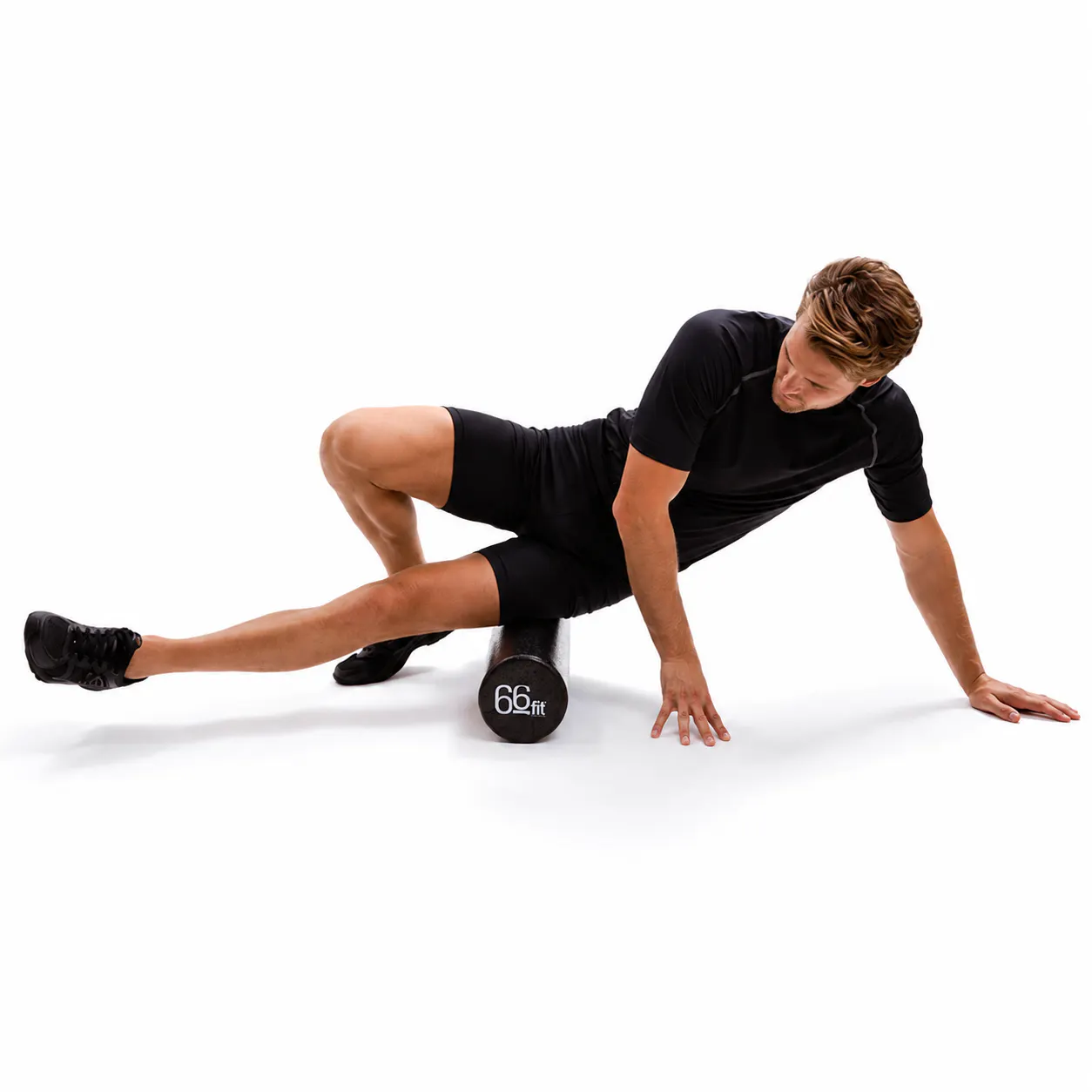
ITB and lateral thigh
Used from just below the hip to just above the knee for ITB-related knee and hip pain, patellofemoral syndrome, and lower limb tightness.
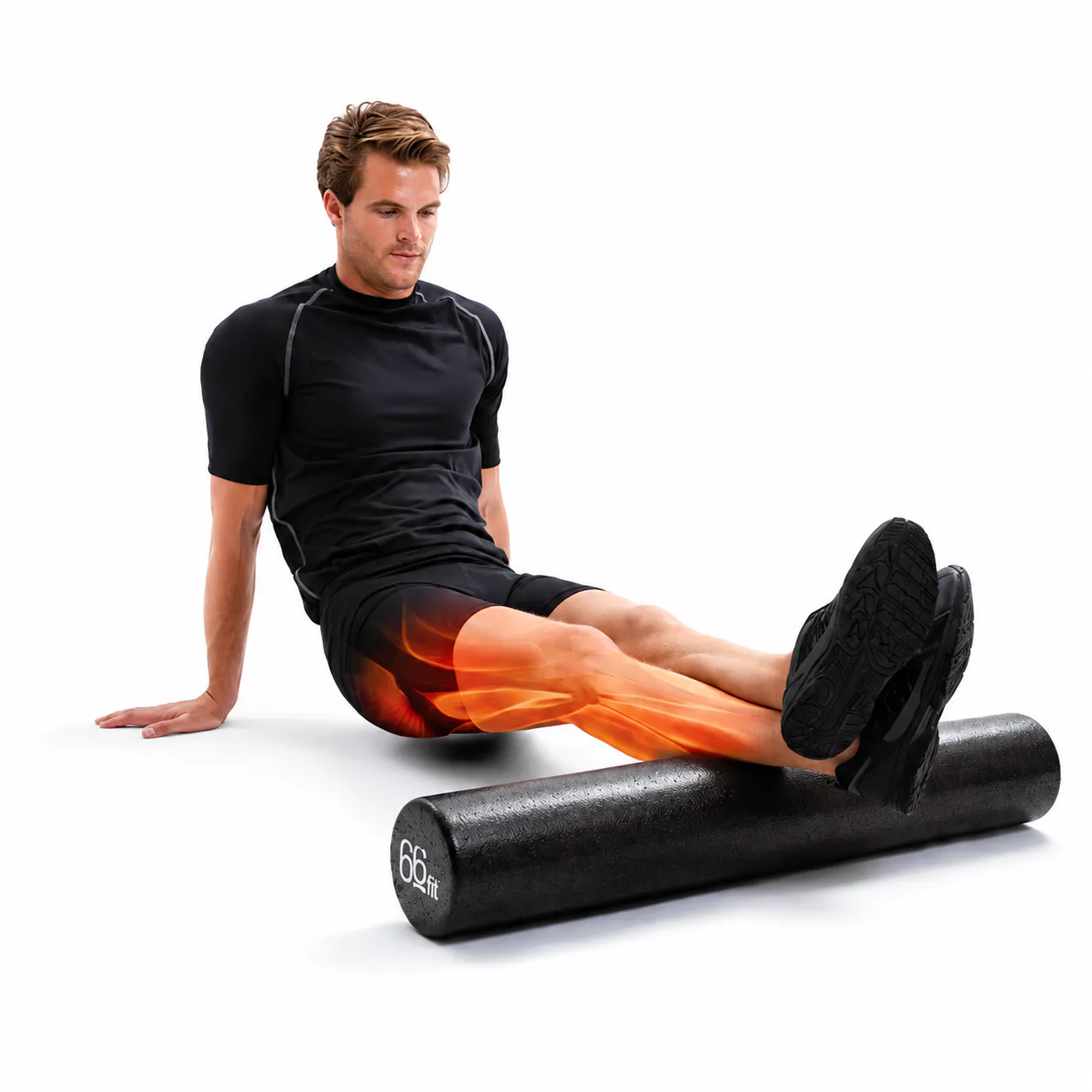
Hamstrings and calves
Used from the knee toward the sitting bones or from the ankle toward the back of the knee for posterior chain tightness and calf tension.
Quadriceps
Roll from just above the knee toward the hip to reduce anterior thigh tension and support knee health.
Gluteals and piriformis
Sit on the roller, cross one ankle over the opposite knee, and lean toward the crossed side for gluteal and piriformis work.
Longitudinal thoracic opening
Place the 90cm roller along the spine and hold for 30 to 60 seconds to support chest opening and thoracic extension.
Slow, controlled pressure with relaxed breathing
- Place the roller on the floor and position the target muscle group on top of it, using your arms or hands to control body weight.
- Slowly roll along the length of the muscle at a pace of about 2.5 to 5 centimetres per second.
- When you find a tender spot, pause and hold sustained pressure for 20 to 30 seconds, or until the tension begins to release.
- For ROM and warm-up benefits, aim for 90 to 120 seconds total per muscle group.
- Do not roll directly over joints, the lower lumbar spine unless instructed, the neck, or areas of acute injury, bruising, or inflammation.
- Breathe slowly and relax the target muscle during rolling. Tensing against the pressure reduces effectiveness.
- Start with lighter body weight loading and progress to full body weight as comfort and familiarity increase.
- Wipe clean with a damp cloth after use and store away from direct sunlight.
Important — please read before use
- Do not roll directly over the lumbar spine, joints, bony prominences, or areas of acute injury, open wounds, skin irritation, or bruising.
- If you experience sharp, radiating, or neurological symptoms such as numbness, tingling, or shooting pain, stop immediately and contact your chiropractor.
- The EPP roller is very firm and recommended for intermediate to advanced users.
- Foam rolling is not a substitute for chiropractic treatment, stretching, or active rehabilitation.
- Patients with osteoporosis, blood clotting disorders, nerve damage, or active inflammatory conditions should consult their chiropractor or GP before use.
- Do not use over the anterior neck, directly on the cervical spine, or over varicose veins.

