
Disc Herniation Treatment in Joondalup, Perth: Can Chiropractic Care Help?
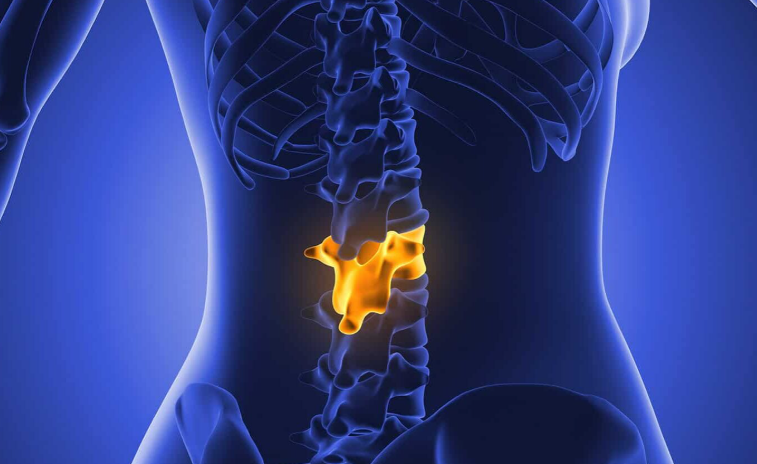
A disc herniation, sometimes called a herniated disc or disc bulge, is a common cause of back pain, sciatica, and nerve irritation. It occurs when part of a spinal disc extends beyond its normal boundary and may irritate nearby nerve structures.
Many people across Joondalup and the northern suburbs of Perth experience symptoms such as lower back pain, leg pain, tingling, or numbness that can interfere with work, exercise, and daily activities.
The good news is that surgery is not always the first step. Clinical recommendations often suggest beginning with conservative care when there are no serious neurological deficits. According to the World Federation of Neurosurgical Societies Spine Committee recommendations on lumbar disc herniation, non-surgical management is commonly considered first-line treatment for many patients with disc-related symptoms.
At Lakeside Chiropractic in Joondalup, care for disc-related back pain begins with a detailed assessment to understand the source of symptoms and determine whether chiropractic care and rehabilitation may be appropriate.
What Is a Disc Herniation?
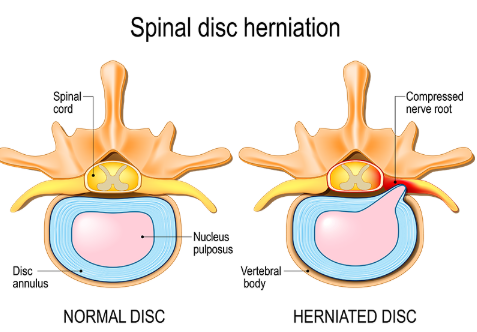
The spine is made up of bones called vertebrae separated by discs that act as cushions and shock absorbers. Each disc contains a softer inner material surrounded by a tougher outer layer.
A disc herniation occurs when the inner material pushes outward through the outer fibres of the disc. When this happens, nearby nerve roots may become irritated, which can lead to symptoms travelling down the arm or leg.
Research has shown that disc herniations are relatively common findings on imaging, even in people without symptoms. This highlights why clinical examination and symptom patterns are important when determining treatment approaches.
Common Symptoms of a Herniated Disc
Symptoms can vary depending on which spinal level is affected and whether a nerve root is involved.
Common symptoms may include:
- Lower back pain or neck pain
- Pain radiating down the leg (commonly called sciatica)
- Tingling or numbness in the limbs
- Muscle weakness
- Pain that worsens with sitting, bending, or lifting
- Reduced mobility or stiffness
In rare cases, severe symptoms such as bladder or bowel changes, saddle numbness, or rapidly progressing weakness require urgent medical assessment.
Conservative Treatment for Disc Herniation
Many disc herniations improve over time with non-surgical care. A large review examining lumbar disc herniation found that spontaneous resorption of the disc material can occur in a significant proportion of cases during conservative treatment.
Conservative care may include:
- soft tissue therapy
- activity modification
- exercise rehabilitation
- manual therapy
- pain management strategies
The goal is typically to reduce symptoms, restore movement, and support the body’s recovery process.
Can Chiropractic Care Help Disc Herniation?
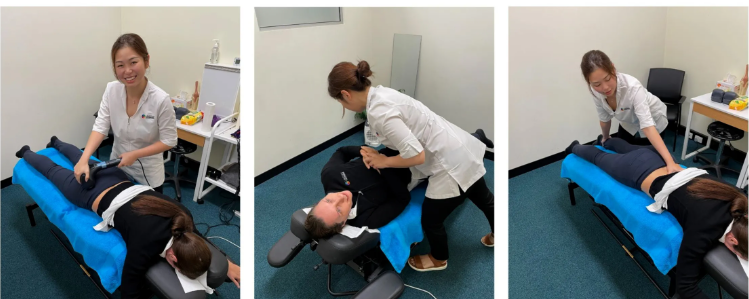
Chiropractic care focuses on improving spinal movement, reducing joint restriction, and addressing muscle tension that may contribute to pain and reduced mobility.
The North American Spine Society clinical guideline on lumbar disc herniation with radiculopathy notes that spinal manipulation may be considered as an option for symptomatic relief in certain patients.
A randomized clinical trial investigating spinal manipulation for lumbar disc herniation with sciatica reported that patients receiving active spinal manipulation experienced greater improvements in pain compared with simulated treatment.
Another randomized study comparing chiropractic spinal manipulation with surgery for selected patients with sciatica found that many patients experienced improvements with conservative care before surgery was considered.
These studies suggest that conservative approaches may play a role in managing symptoms for some individuals, although treatment recommendations should always depend on the individual assessment and clinical presentation.
Chiropractic Treatment Options for Disc Herniation
Management for disc-related back pain often involves a combination of approaches tailored to the individual. Those includes:
-
Chiropractic manipulative therapy : Manual therapy techniques may be used to improve spinal movement and reduce mechanical stress through affected joints.
-
Soft tissue therapy : Muscle tension around the lower back, hips, and gluteal region often develops alongside disc problems. Soft tissue therapy may help address muscle tightness and improve mobility.
-
Exercise rehabilitation : Exercise programs focusing on core strength, spinal stability, and mobility are commonly used in conservative management of lumbar disc herniation. A systematic review examining conservative treatments for lumbar disc herniation found moderate evidence supporting exercise-based rehabilitation approaches in improving pain and disability.
-
Flexion-distraction therapy : At Lakeside Chiropractic, we also use a flexion-distraction table, which allows gentle decompressive spinal movement during treatment. This specialised table enables controlled spinal motion designed to reduce pressure through spinal segments.
Research examining flexion-distraction techniques has reported improvements in spinal mobility and straight leg raise outcomes in patients with disc herniation, although more large-scale research is still needed.
Cold Laser Therapy for Disc Herniation
Another therapy sometimes included in conservative care for spinal pain is cold laser therapy, also known as low level laser therapy (LLLT).
This treatment uses specific wavelengths of light and has been studied for its potential effects on pain and function in some musculoskeletal conditions.
A randomized placebo-controlled study investigating low-level laser therapy for acute and chronic low back pain caused by lumbar disc herniation reported improvements in pain and functional capacity among participants receiving laser therapy.
Another randomized clinical trial examining laser and LED therapy combined with exercise for lumbar disc herniation also reported improvements in pain and disability scores in the treatment group.
More recently, a study comparing low-level laser therapy with TENS for lumbar disc herniation with radiculopathy found both treatments improved symptoms, with laser therapy showing greater reduction in leg pain and neuropathic pain in that study.
Cold laser therapy is typically used alongside other conservative treatments such as chiropractic care and rehabilitation exercises rather than as a standalone treatment.
At Cold Laser Perth, located within Lakeside Chiropractic in Joondalup, laser therapy may be incorporated as part of a multi-modal treatment plan following clinical assessment.
Chiropractic Care for Disc Herniation in Joondalup
Lakeside Chiropractic provides chiropractic care for patients experiencing back pain, sciatica, and mobility issues related to spinal conditions.
Our clinic in Joondalup sees patients from surrounding suburbs including:
Currambine Edgewater Tapping Wanneroo Mullaloo Padbury Kingsley Woodvale Banksia Grove
Treatment plans are based on clinical assessment findings and may include chiropractic care, rehabilitation exercises, postural advice, and other therapies where appropriate.
Frequently Asked Questions
Can a chiropractor fix a herniated disc?
Chiropractic care does not “push a disc back in.” Instead, treatment aims to improve spinal movement, reduce joint stress, and support recovery. Some patients with disc herniation may experience improvements in symptoms through conservative care approaches.
Does a herniated disc always need surgery?
No. Many people improve with conservative treatment. Clinical guidelines often recommend non-surgical management first unless there are serious neurological deficits or other medical concerns.
Can a herniated disc heal naturally?
Research suggests that some herniated discs may decrease in size over time during conservative care, which may contribute to symptom improvement in some patients.
How long does a disc herniation take to recover?
Recovery time can vary widely depending on the size of the disc herniation, symptom severity, and activity level. Some patients improve within weeks, while others may take longer.
Book an Assessment
If you are experiencing persistent back pain, sciatica, or symptoms that may be related to a disc herniation, an assessment may help determine the underlying cause and appropriate treatment options.
📍 Lakeside Chiropractic – Joondalup
📞 (08) 9300 0095
Treatment recommendations depend on your assessment findings and individual presentation.
References
Santilli V, Beghi E, Finucci S. Chiropractic manipulation in the treatment of acute back pain and sciatica with disc protrusion. https://pubmed.ncbi.nlm.nih.gov/16517383/ McMorland G et al. Manipulation or microdiscectomy for sciatica. https://pubmed.ncbi.nlm.nih.gov/21036279/ Ay S, Doğan SK, Evcik D. Is low-level laser therapy effective in acute or chronic low back pain? https://pubmed.ncbi.nlm.nih.gov/20414695/ de Carvalho MEIM et al. Low-intensity laser and LED therapy with exercises in lumbar disc herniation. https://pubmed.ncbi.nlm.nih.gov/27379776/ Karagül S et al. Comparison of TENS and low-level laser therapy in lumbar disc herniation with radiculopathy. https://pubmed.ncbi.nlm.nih.gov/39050992/ Hahne AJ et al. Conservative management of lumbar disc herniation with radiculopathy: systematic review. https://pubmed.ncbi.nlm.nih.gov/20421859/ Zhong M et al. Incidence of spontaneous resorption of lumbar disc herniation: meta-analysis. https://pubmed.ncbi.nlm.nih.gov/28072796/ Oh H et al. Effects of flexion-distraction technique on lumbar disc herniation. https://pubmed.ncbi.nlm.nih.gov/31528006/ WFNS Spine Committee recommendations for lumbar disc herniation. https://pubmed.ncbi.nlm.nih.gov/38389961/ North American Spine Society guideline: Lumbar Disc Herniation with Radiculopathy. https://www.spine.org/portals/0/assets/downloads/researchclinicalcare/guidelines/lumbardischerniation.pdf
Latest Posts

Why Does My Lower Back Hurt When I Wake Up?
October 15, 2026


