
Chiropractic Adjustments for Improved Range of Motion

When joints feel “stuck,” everyday movements such as turning your head, reaching overhead or bending to tie your shoes can feel stiff, tight, or limited. Many people seek chiropractic care to improve range of motion (ROM). Below, we explain how chiropractic adjustments may help, what the science says, and who’s most likely to benefit.
What “range of motion” actually means and how chiropractic adjustments may help
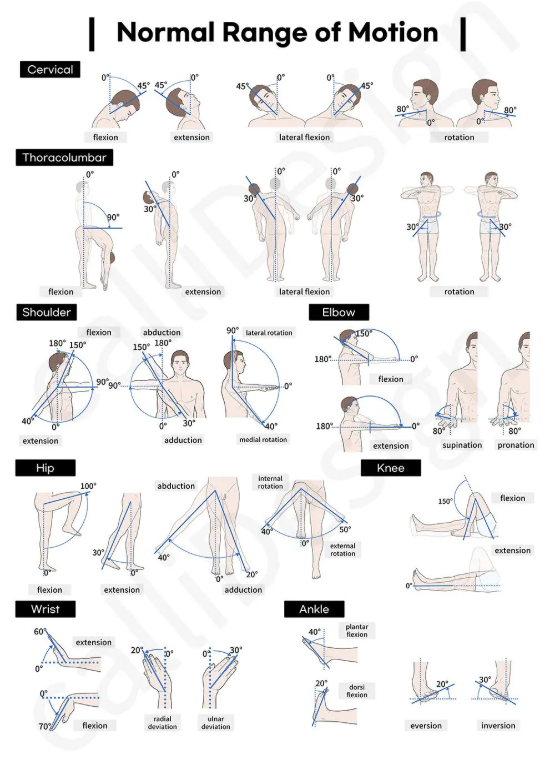
Range of motion is the amount of movement available at a joint (e.g., how far your neck rotates or your lower back bends). Reduced ROM can come from joint restriction, protective muscle guarding, pain, previous injury, or simply being too sedentary. Improving ROM is not about becoming “hypermobile”; it’s about restoring normal, comfortable movement so your body can do daily tasks.
Chiropractic adjustments (high-velocity, low-amplitude thrusts or HVLA) and mobilisations (gentler, graded movements) target restricted segments to restore motion. Modern research suggests the benefits are multi-factorial:
-
Neurophysiological response: A brief, targeted mechanical stimulus can modulate the nervous system, decreasing pain sensitivity and altering muscle tone, often within minutes. Recent research into manual therapy mechanisms highlight these rapid, system-wide responses rather than large structural changes.
-
Biomechanical effects: HVLA thrusts create small, rapid joint movements that can transiently change segmental stiffness and allow freer gliding. Contemporary reviews summarise measurable biomechanical changes during/after thrusts, even though the exact link to clinical outcomes varies by person and region.
What the evidence shows about ROM
-
Neck and upper back: Multiple studies report immediate and short-term improvements in cervical ROM after thoracic or cervical manipulation, particularly in people with neck pain. A recent clinical study found thoracic manipulation produced short-term gains in pain and cervical ROM. Newer trials continue to compare different manipulation set-ups to maximise neck flexion improvements.
-
Muscle-driven limitations: When tight, painful myofascial trigger points limit motion, manual therapy approaches (including needling, soft tissue, and joint techniques combined) can improve ROM, especially when followed by active exercise. A 2022 systemic review in Pain Medicine supports ROM benefits in trigger-point–related restrictions.
Bottom line: The best ROM improvements generally occur when we treat the right level and combine adjustments with exercise, load management, and self-care rather than relying on manipulation alone.
How quickly will ROM change?
Many patients feel easier movement immediately after treatment. Objective changes are often short-term initially; consolidation requires repeated exposure and exercise over days to weeks. Current evidence suggests manipulation can create a window of reduced pain and stiffness which is ideal for retraining motion and strength.
Is it safe and will it fix my problem long-term?
For adults without contraindications, spinal manipulation is generally considered safe when performed by a trained clinician. Your chiropractor will screen you carefully and discuss options. Adjustments are most effective as part of a plan that pairs manual therapy with mobility work, strength training, and load modification. That’s how you build durable ROM and function. Read research here
What to expect during care at Lakeside Chiropractic
-
Assessment first: We screen red flags, test baseline ROM (neck rotation, lumbar flexion/extension, shoulder elevation, etc.), and identify which segments are contributing to your restriction.
-
Targeted treatment: Depending on your exam and preferences, we may use spinal adjustments, gentle mobilisations, soft-tissue work, and neuromuscular techniques.
-
Active reinforcement: You’ll get simple mobility drills and strengthening to “lock in” gains (e.g., deep-neck flexor activation after cervical manipulation, or hip hinge/lumbar control drills after low-back work).
-
Progress tracking: We’ll re-measure ROM and function over visits to ensure you’re improving in what matters to you (e.g., reversing a car, looking over your shoulder when cycling, picking up your kids).
Ready to move better?
If your neck, back, or shoulders feel stiff, we can help you find the cause and restore comfortable motion with a personalised plan. At Lakeside Chiropractic, we are committed to providing personalized care tailored to your specific needs. Our experienced team employs evidence-based chiropractic techniques to ensure optimal outcomes for our patients. If you’re dealing with back pain that just won’t ease up, book in for an assessment to find out what might be the causes behind it.
📍 Find us in Joondalup
📅 Book online: https://www.lakesidechiro.com.au/
While outcomes can vary, many patients find this multi-modal approach helps improve over time. If you are having back pain or any pain in general, feel free to contact us on 9300 0095 to see how we may be able to help, or visit our website for more information.
📍 Serving the Joondalup & Northern Suburbs of Perth Lakeside Chiropractic is central to the northern suburbs of Perth, located in the City of Joondalup. If you are in the surrounding suburbs such as Yanchep - 6035, Tapping - 6065, Carramar - 6031, Currambine - 6028, Wanneroo - 6065, Heathridge - 6027, Edgewater - 6027, Gnangara - 6077, Mullaloo - 6027, Padbury - 6025, Kingsley - 6026, Woodvale - 6026, Banksia Grove - 6031, or Duncraig - 6023, our team is here to assist you.
References
- Keter DL, Bialosky JE, Brochetti K, Courtney CA, Funabashi M, Karas S, Learman K, Cook CE. The mechanisms of manual therapy: A living review of systematic, narrative, and scoping reviews. PloS one. 2025 Mar 18;20(3):e0319586. https://journals.plos.org/plosone/article?id=10.1371/journal.pone.0319586
- Langenfeld A, Baechler M, Swanenburg J, Mühlemann M, Nyirö L, Streuli D, Wirth B, Schweinhardt P. Systematic review on biomechanical effects of high-velocity, low amplitude spinal manipulation. Plos one. 2025 Jul 18;20(7):e0328048. https://pubmed.ncbi.nlm.nih.gov/?term=Systematic+review+on+biomechanical+effects+of+high-velocity%2C+low+amplitude+spinal+manipulation
- Young IA, Pozzi F, Dunning J, Linkonis R, Michener LA. Immediate and short-term effects of thoracic spine manipulation in patients with cervical radiculopathy: a randomized controlled trial. journal of orthopaedic & sports physical therapy. 2019 May;49(5):299-309. https://scholar.google.com/scholar?hl=en&as_sdt=0%2C5&q=Immediate+and+Short-term+Effects+of+Thoracic+Spine+Manipulation+in+Patients+With+Cervical+Radiculopathy%3A+A+Randomized+Controlled+Trial&btnG=
- Guzmán-Pavón MJ, Cavero-Redondo I, Martínez-Vizcaíno V, Torres-Costoso AI, Reina-Gutiérrez S, Álvarez-Bueno C. Effect of manual therapy interventions on range of motion among individuals with myofascial trigger points: a systematic review and meta-analysis. Pain Medicine. 2022 Jan 1;23(1):137-43. https://pubmed.ncbi.nlm.nih.gov/?term=Effect+of+Manual+Therapy+Interventions+on+Range+of+Motion+Among+Individuals+with+Myofascial+Trigger+Points%3A+A+Systematic+Review+and+Meta-Analysis
Latest Posts


